Loading...
Axayacatl vs Julius Caesar
Julius Caesar leads by 26.1 pts · 2 figures compared
…
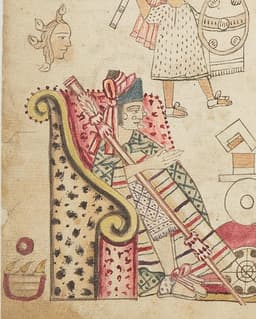
Axayacatl
Emperor · Medieval
56.7Total

Julius Caesar
General · Ancient
82.8Total
Basic Information
Born
1449
-100
Died
1481
-44
Era
Medieval
Ancient
Nationality
Aztec Empire
Roman Republic
Occupation
Emperor
General
Civilization
Western
Western
Score Comparison
Military (10%)
70.0
88.0
Political (20%)
54.7
78.0
Influence (20%)
56.4
85.0
Legacy (20%)
47.5
82.0
Leadership (15%)
65.0
80.0
Strategy (15%)
57.5
85.0
TOTAL
56.7
82.8
Axayacatl — Complete Timeline
1469 AD
Coronation as Tlatoani of TenochtitlanPolitical Action◆ Major
Axayacatl succeeded his grandfather Moctezuma I as the sixth tlatoani of Tenochtitlan. His coronation campaign against the Matlatzinca was successful, capturing many prisoners for sacrifice and establishing his military credentials.
Impact: national
1473 AD
Conquest of TlatelolcoWar◆ Major
Axayacatl led Tenochtitlan forces against the neighboring city-state of Tlatelolco, which had rebelled against Aztec dominance. The war ended with the defeat of Tlatelolco and the death of its tlatoani Moquihuix, incorporating Tlatelolco into Tenochtitlan.
Impact: regionaldestructive
1478 AD
Campaign against the Tarascan EmpireWar◆ Major
Axayacatl led a large Aztec army into the Tarascan Empire (Pur
Impact: regionaldestructive
1481 AD
Construction of the Great Temple of TenochtitlanCultural◆ Major
Axayacatl oversaw the expansion of the Templo Mayor in Tenochtitlan, dedicating a new phase of construction. The temple was the religious center of the Aztec Empire, and this expansion included new sculptures and offerings.
Impact: nationalconstructive
Death of AxayacatlOther
Axayacatl died after a short illness, possibly from a disease or complications from wounds. His death led to the succession of his brother Tizoc, whose weak reign contrasted with Axayacatl's earlier successes.
Impact: national
Julius Caesar — Complete Timeline
58 BC
Gallic WarsWar◆ Major
Caesar, as proconsul of Gaul, launched a series of campaigns that conquered all of Gaul (modern France, Belgium, and parts of Switzerland). He fought numerous battles, including against the Helvetii, the Belgae, and the Gallic chieftain Vercingetorix. The wars brought immense wealth and a loyal army to Caesar.
Gallic WarsConquestRoman Expansion
Impact: regional
49 BC
Crossing the RubiconPolitical Action◆ Major
Caesar led Legio XIII across the Rubicon River into Italy, defying the Roman Senate's order to disband his army. This act triggered a civil war against Pompey and the Optimates, ultimately leading to Caesar's dictatorship and the end of the Roman Republic.
Roman Civil WarEnd of RepublicPower Struggle
Impact: global
48 BC
Battle of PharsalusWar◆ Major
Caesar's outnumbered army defeated the larger forces of Pompey the Great at Pharsalus in Greece. Caesar's tactical use of a reserve line to counter Pompey's cavalry charge proved decisive. Pompey fled to Egypt, where he was assassinated, leaving Caesar as the undisputed master of the Roman world.
Roman Civil WarBattleDecisive Victory
Impact: regional
44 BC
Appointment as Dictator for LifePolitical Action◆ Major
The Roman Senate appointed Caesar dictator perpetuo (dictator for life), granting him unprecedented personal power. This move concentrated military, legislative, and judicial authority in one person, effectively ending the Roman Republic's traditional system of checks and balances and alarming many senators.
DictatorshipEnd of RepublicPower Consolidation
Impact: regionaldestructive
Assassination on the Ides of MarchPolitical Action◆ Major
A group of Roman senators, led by Marcus Junius Brutus and Gaius Cassius Longinus, stabbed Caesar to death at a meeting of the Senate in the Theatre of Pompey. The assassination was intended to restore the Republic, but instead triggered another civil war that led to the rise of the Roman Empire.
AssassinationRoman PoliticsEnd of Republic
Impact: globaldestructive
Expert Analysis
Julius Caesar vs Axayacatl
# The Emperor and the General: Two Paths to Power in Worlds Apart
On a summer day in 1473, the Aztec emperor Axayacatl stood atop the Great Temple of Tenochtitlan and watched his warriors storm the causeways of Tlatelolco, the rival city that had dared to challenge his authority. The waters of Lake Texcoco ran red with blood. Less than three decades later and half a world away, on a winter morning in 49 BCE, a Roman general named Julius Caesar stood on the banks of a small river called the Rubicon, knowing that the moment he crossed it with his legions, he would ignite a civil war that would end the Roman Republic forever. One man fought to preserve an empire; the other fought to remake one. Both succeeded, but their fates could not have been more different—and in that difference lies a story about how history bends to the ambitions of singular men, and how it breaks them.
Origins
Axayacatl was born into a world of stone and sacrifice. The year was 1449, and the Aztec Empire was still young, its capital of Tenochtitlan rising from the marshes like a vision of jade and obsidian. As the grandson of the great Moctezuma I, Axayacatl was trained from childhood to be a tlatoani—"the one who speaks"—a ruler whose words carried the weight of gods. His education was one of war, ritual, and the endless calculus of tribute and terror that held the empire together. Every Aztec emperor was a warrior-priest, and Axayacatl learned early that the sun itself demanded blood.
Julius Caesar, born in 100 BCE, came from a very different world—one of marble and law, of senators and scrolls. His family, the Julii, claimed descent from the goddess Venus, but they were patricians in name only, lacking the wealth and influence of Rome’s great houses. Young Caesar grew up in the shadow of the Forum, where politics was a blood sport fought with words and alliances, not obsidian knives. He watched as generals like Marius and Sulla tore the Republic apart, and he understood that in Rome, power was not inherited but seized. Both men were born into systems that demanded greatness, but the Aztec world demanded obedience to the cosmic order, while the Roman world rewarded those who dared to break it.
Rise to Power
Axayacatl’s path was straightforward: at age twenty, in 1469, he inherited the throne upon the death of his grandfather. His coronation was a sacred affair, a ritual of blood and fire that bound him to the gods of Tenochtitlan. But an Aztec emperor had to prove himself immediately, and so Axayacatl launched a coronation campaign against the rebellious city of Tlatelolco, a rival that had once been the commercial heart of the valley. The conquest of Tlatelolco in 1473 was his defining moment—a brutal, decisive victory that secured his rule and sent a message across Mesoamerica: the new tlatoani was not to be challenged.
Caesar’s rise was anything but straightforward. He climbed the Roman political ladder through a combination of charm, debt, and calculated risk. He served as a military tribune, then as quaestor in Spain, then as aedile, spending fortunes he did not have on games and festivals to win the people’s love. In 60 BCE, at age forty, he formed the First Triumvirate with Pompey and Crassus—an alliance of ambition that allowed him to secure the governorship of Gaul. While Axayacatl inherited his throne, Caesar had to build his power brick by brick, alliance by alliance, and when the bricks crumbled, he was ready to build anew with blood.
Leadership & Governance
As a ruler, Axayacatl was a builder and a consolidator. He oversaw the expansion of the Great Temple of Tenochtitlan, dedicating new phases of construction in 1481 that would make it the center of the Aztec universe. He managed the complex system of tribute that fed the empire’s insatiable appetite for wealth and victims. But his governance was constrained by tradition: an Aztec tlatoani was not an absolute monarch but a mediator between gods and men, bound by prophecy and ritual. When he launched a massive campaign against the Tarascan Empire in 1478, leading an army of perhaps 30,000 warriors into western Mexico, he suffered a devastating defeat. The Tarascans, with their superior bronze weapons and disciplined ranks, shattered the Aztec forces. Axayacatl returned to Tenochtitlan in shame, and the empire never again threatened the Tarascan lands.
Caesar’s governance was revolutionary. As dictator of Rome, he reformed the calendar, granted citizenship to provincials, launched massive public works, and centralized power in ways that would define the empire for centuries. His military genius was unmatched: in Gaul, he conquered a territory larger than Italy itself, writing his own propaganda in the *Commentaries* that still read like a thriller today. Where Axayacatl was defeated by the Tarascans, Caesar faced the Gallic chieftain Vercingetorix at Alesia in 52 BCE and won through a combination of siegecraft, discipline, and sheer audacity. Caesar understood that war was politics by other means, and politics was war fought with laws and legions.
Triumph & Tragedy
Axayacatl’s greatest triumph was the conquest of Tlatelolco, a victory that secured Tenochtitlan’s dominance in the Valley of Mexico. His greatest tragedy was the Tarascan defeat, which exposed the limits of Aztec military power. He died in 1481 at the age of thirty-two, after a short illness—possibly from wounds or disease—leaving an empire that was still expanding but already showing cracks. His son, the young Montezuma II, would inherit a throne that rested on a foundation of fear and tribute, a foundation that would collapse when the Spanish arrived forty years later.
Caesar’s triumph was the conquest of Gaul and the defeat of his rivals in the civil war. His tragedy was the Ides of March, 44 BCE, when sixty senators stabbed him to death in the Theatre of Pompey. The man who had crossed the Rubicon and declared "the die is cast" fell bleeding at the foot of a statue of his former enemy. His last words—"Et tu, Brute?"—have echoed through history as the ultimate betrayal. Where Axayacatl died in his bed, Caesar died on the Senate floor, a victim of the very system he had tried to transcend.
Character & Destiny
Axayacatl was a traditionalist, a man who believed in the sacred order of the Aztec world. His decisions were shaped by the need to maintain cosmic balance, to feed the sun with human hearts, to expand the empire as the gods demanded. He was cautious after the Tarascan defeat, and his early death may have spared him from seeing the empire’s collapse. His character was one of duty, not ambition.
Caesar was a revolutionary, a man who believed that the world could be remade by will and intellect. He pardoned his enemies, seduced his rivals’ wives, and gambled everything on the belief that his destiny was greater than the Republic’s. His character was one of boundless ambition, tempered by a cynical clemency that he hoped would bind Rome to him. It did not. His destiny was to be murdered by the men he had spared.
Legacy
Axayacatl is remembered today as a footnote in Aztec history, overshadowed by his grandfather Moctezuma I and his son Montezuma II. His conquest of Tlatelolco is a chapter in the story of a civilization that would be erased by Cortés. His legacy score of 62.8 reflects a ruler who did his duty but did not change the world.
Caesar’s legacy is immeasurable. His name became synonymous with emperor—Kaiser, Tsar—and his reforms outlived the Republic he destroyed. His legacy score of 82.0 places him among the most influential figures in Western history. The Rubicon remains a metaphor for the point of no return, and the Ides of March a warning to all who seize power.
Conclusion
Standing on the causeways of Tenochtitlan, Axayacatl saw a world that was eternal and unchanging, a world of gods and sacrifice where the emperor was a servant of the sun. Standing on the banks of the Rubicon, Caesar saw a world that was his to remake, a world of men and laws where the general could become a god. One died in his bed, the other on the Senate floor. One left an empire that would fall to strangers, the other left a name that would conquer history itself. The difference between them is the difference between duty and ambition, between serving a world and remaking it—and history, in the end, remembers those who dared to break the world, even if it breaks them in return.
Rankings
🥇
Julius CaesarLeader
Mil: 88.0Pol: 78.0Inf: 85.0
82.8
🥈
Axayacatl
Mil: 70.0Pol: 54.7Inf: 56.4
56.7
+26.1 behind
How This Comparison Works
Algorithm
Each figure is scored on 6 dimensions (0—100 scale) based on structured historical data: Military (10%), Political (20%), Influence (20%), Legacy (20%), Leadership (15%), Strategy (15%). The weighted total produces the final ranking.
Data Sources
Scores are computed from structured sub-indicators in the database. Scale factors adjust for era (Ancient ×0.85, Modern ×1.0) and civilization size (Eastern ×1.05, Other ×0.80) to account for differences in population and military scale.
Maximum 3 Figures
Comparisons are limited to 2—3 figures to ensure readability and statistical meaningfulness.
Error Margins
±5 points per dimension — Sub-scores are derived from historical records with inherent uncertainty. Two figures within 5 points on a dimension should be considered roughly equivalent in that area.
Total Score Accuracy
±3 points overall — The weighted combination of 6 dimensions produces a total score with approximately ±3 points of uncertainty. Differences of less than 3 points are not statistically significant— the figures are effectively tied.
Known Limitations
- Historical records are incomplete and uneven across civilizations
- Figures from oral-tradition societies may be underrepresented
- Occupation labels can misclassify multi-role figures
- Scores measure capability and impact, not moral character
- Quantitative scoring is a comparison tool, not absolute truth
Capability Radar
Military (10%) — Battles & Warfare
Battles
55
95
Win Rate
60
92
Expansion
60
97
Political (20%) — Governance & Reform
Reform
45
90
Diplomacy
50
85
Economy
45
82
Influence (20%) — Cultural & Global Reach
Cultural
40
88
Global
30
94
Legacy (20%) — Historical Impact
Historical
45
95
Longevity
40
96
Leadership (15%) — Power & Stability
Tenure
50
75
Stability
50
60
Strategy (15%) — Tactics & Innovation
Strategy
55
94
Tactics
50
96
Reform
40
88
Similar Comparisons
Comments & Discussion
CAMP VERITAS6/16/2026
Axayacatl’s Tenochtitlan vs. Caesar’s Rome? Please. One inherited an empire built on fragile tributary threats, the other personally forged a military machine. Caesar crossing the Rubicon wasn’t just ambition—it was calculated genius, knowing his legions’ loyalty beat any senate decree. Axayacatl crushed Tlatelolco but couldn’t stop Cortés’s guns and germs 50 years later. Caesar’s legacy? Five centuries of empire. Axayacatl’s? A footnote to Spanish conquest. No contest.
湖上血狮6/16/2026
把阿萨亚卡特尔和恺撒并列,简直是对历史的侮辱。恺撒跨过卢比孔河是一记政治核弹,直接炸碎罗马共和国的外壳,为帝国铺路。而阿萨亚卡特尔?他打赢特拉特洛尔科战役,却发现墨西加帝国的根基是强制贡赋和血腥祭祀堆成的沙塔。1473年湖面染红?那是内部镇压,不是战略扩张。一个重塑世界秩序,一个只能守着一座危机四伏的湖城。军事天赋?不在一个维度。
SALAD DAYS SCEPTIC6/16/2026
This comparison romanticizes both figures way too much. Fact: Caesar’s Gaul campaign killed an estimated 1 million people, enslaved another million—hardly a “singular genius” narrative. And Axayacatl’s “victory” at Tlatelolco? He was mopping up a rebellion caused by his own brutal tax policies. Both inherited systems of violence and perpetuated them. Calling them heroic “path to power” ignores the body counts. History loves a dramatic story, but I’ll take the dry ledger over hagiography any day.
帝国余灰6/16/2026
你们只看见恺撒的辞藻和华服,却看不见他跨过卢比孔河时已经身陷绝境——债台高筑,政敌逼近,不反就是个死。阿萨亚卡特尔倒是稳坐王座,用血祭巩固统治。可结果呢?一个被刺杀在元老院地板,一个战败后猝死——死因至今成谜,有人说是手术失败,有人说是心理创伤。所谓“历史宠儿”,不过是后人强行赋予的剧本。现实比史诗残酷多了,我选现实。