Loading...
Avitus vs Sindae of Goguryeo
Sindae of Goguryeo leads by 2.7 pts · 2 figures compared
…

Avitus
Emperor · Ancient
41.6Total
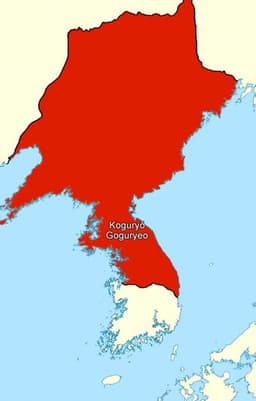
Sindae of Goguryeo
Emperor · Ancient
44.3Total
Basic Information
Born
395
165
Died
457
179
Era
Ancient
Ancient
Nationality
Western Roman Empire
Goguryeo
Occupation
Emperor
Emperor
Civilization
Western
Eastern
Score Comparison
Military (10%)
47.5
47.5
Political (20%)
35.0
36.5
Influence (20%)
42.4
44.0
Legacy (20%)
34.2
35.8
Leadership (15%)
49.9
65.0
Strategy (15%)
50.0
43.7
TOTAL
41.6
44.3
Avitus — Complete Timeline
455 AD
Proclaimed Western Roman EmperorPolitical Action◆ Major
After the death of Petronius Maximus, the Visigothic king Theodoric II and the Gallo-Roman general Avitus were proclaimed Western Roman Emperor at Toulouse. Avitus was a former praetorian prefect of Gaul and had the support of the Gallic aristocracy.
Imperial SuccessionGallic Support
Impact: regional
456 AD
Deposed by RicimerPolitical Action◆ Major
The magister militum Ricimer, along with Majorian, rebelled against Avitus. They defeated Avitus's forces at the Battle of Placentia. Avitus was captured, forced to abdicate, and was later appointed Bishop of Placentia.
DepositionCivil WarPower Struggle
Impact: regionaldestructive
Sindae of Goguryeo — Complete Timeline
165 AD
Overthrow of Chadae and accessionPolitical Action◆ Major
Sindae, another brother of Chadae, led a coup that deposed the tyrant. He ascended the throne and immediately began restoring order, pardoning many of Chadae's victims and rebuilding the royal administration.
CoupRestorationRegime Change
Impact: nationalconstructive
166 AD
Restoration of peace and stabilityReform◆ Major
Sindae implemented policies to heal the divisions caused by Chadae's tyranny. He restored the traditional clan-based power structure, reduced taxes, and reestablished the grain loan system, bringing a period of peace and recovery.
ReconciliationReformStabilization
Impact: nationalconstructive
Expert Analysis
Origins
Avitus was born around 385 AD into a Gallo-Roman aristocratic family in the Auvergne region. He received a classical education and became a prominent figure in Gaul, serving as a high-ranking official under Emperor Petronius Maximus. His background was deeply tied to the Visigoths, as he had a personal friendship with King Theodoric II.
Sindae of Goguryeo (also known as Sindae or Shindae) was born around 180 AD, a prince of the Goguryeo kingdom in present-day Korea. He was the younger brother of King Chadae, whose tyrannical rule had caused widespread suffering. Little is known of his early life, but he likely grew up within the royal court, witnessing the political intrigues and the brutality of his brother's reign.
Rise to Power
Avitus rose to power in 455 AD after the death of Petronius Maximus. With the support of the Visigothic king Theodoric II, he was proclaimed Western Roman Emperor at Toulouse. His legitimacy relied heavily on Gothic military backing, which alienated him from the Roman aristocracy and the army in Italy. He entered Rome but faced immediate opposition from the magister militum Ricimer.
Sindae gained power by overthrowing his brother Chadae in a coup around 165 AD. Chadae's tyranny had alienated the nobility and the people, leading to a conspiracy. Sindae led the revolt, deposed and executed Chadae, and ascended the throne. His rise was based on restoring order and justice, appealing to the traditional clan leaders.
Leadership & Governance
Avitus's leadership was marked by his reliance on the Visigoths. He appointed Gauls to key positions, neglecting the Italian aristocracy. His governance score of 35.0 reflects his failure to secure broad support. He attempted to maintain Roman traditions but lacked the military strength to enforce his authority. His policies favored Gaul over Italy, deepening divisions.
Sindae, in contrast, focused on reconciliation. He pardoned many who had been persecuted by Chadae, reduced taxes, and restored the power of the clans. His political score of 36.5 is slightly higher than Avitus's 35.0. He implemented policies to heal the kingdom, such as returning confiscated lands and promoting local autonomy. His leadership score of 65.0 is significantly higher, indicating effective governance.
Triumph & Tragedy
Avitus's greatest triumph was being proclaimed emperor, a rare achievement for a Gallic noble. However, his tragedy was his swift downfall. In 456 AD, Ricimer and Majorian rebelled, defeating Avitus at the Battle of Placentia. He was captured, forced to become a bishop, and died shortly after, possibly executed. His reign lasted only about a year.
Sindae's triumph was restoring peace after Chadae's tyranny. He successfully stabilized the kingdom and is remembered as a just ruler. His tragedy is that his reign is poorly documented, and his long-term impact is limited. He died around 179 AD, succeeded by his son, but Goguryeo faced future turmoil.
Character & Destiny
Avitus was a skilled diplomat but a poor politician. His friendship with Theodoric II gave him power but also made him dependent. He underestimated Ricimer's ambition and the hostility of the Italian elite. His character, described as cultured and ambitious, led him to seek a throne he could not hold.
Sindae is portrayed as a wise and merciful ruler. His decision to pardon enemies and reduce taxes showed strategic thinking. However, his reliance on clan structures may have limited central authority. His character shaped a peaceful reign but not a transformative one.
Legacy
Avitus's legacy is minimal. He is a footnote in the fall of the Western Roman Empire, remembered primarily for being deposed by Ricimer. His influence score of 42.4 reflects his brief impact. No major institutions or policies survived him.
Sindae's legacy is more significant in Korean history. He is recorded in the Samguk Sagi as a restorer of peace. His policies of reconciliation set a precedent for future rulers. However, his legacy score of 35.8 is modest, as his achievements were overshadowed by later kings.
Conclusion
Sindae of Goguryeo had a greater impact than Avitus. With a total score of 44.3 versus Avitus's 41.6, Sindae's leadership (65.0 vs 49.9) and political acumen (36.5 vs 35.0) gave him a slight edge. While Avitus's reign was a failure, Sindae successfully stabilized his kingdom. However, neither figure was transformative; both ruled briefly in turbulent times. Sindae's restoration of peace had more lasting effects than Avitus's ephemeral emperorship.
Rankings
🥇
Sindae of GoguryeoLeader
Mil: 47.5Pol: 36.5Inf: 44.0
44.3
🥈
Avitus
Mil: 47.5Pol: 35.0Inf: 42.4
41.6
+2.7 behind
How This Comparison Works
Algorithm
Each figure is scored on 6 dimensions (0—100 scale) based on structured historical data: Military (10%), Political (20%), Influence (20%), Legacy (20%), Leadership (15%), Strategy (15%). The weighted total produces the final ranking.
Data Sources
Scores are computed from structured sub-indicators in the database. Scale factors adjust for era (Ancient ×0.85, Modern ×1.0) and civilization size (Eastern ×1.05, Other ×0.80) to account for differences in population and military scale.
Maximum 3 Figures
Comparisons are limited to 2—3 figures to ensure readability and statistical meaningfulness.
Error Margins
±5 points per dimension — Sub-scores are derived from historical records with inherent uncertainty. Two figures within 5 points on a dimension should be considered roughly equivalent in that area.
Total Score Accuracy
±3 points overall — The weighted combination of 6 dimensions produces a total score with approximately ±3 points of uncertainty. Differences of less than 3 points are not statistically significant— the figures are effectively tied.
Known Limitations
- Historical records are incomplete and uneven across civilizations
- Figures from oral-tradition societies may be underrepresented
- Occupation labels can misclassify multi-role figures
- Scores measure capability and impact, not moral character
- Quantitative scoring is a comparison tool, not absolute truth
Capability Radar
Military (10%) — Battles & Warfare
Battles
5
20
Win Rate
5
25
Expansion
0
15
Political (20%) — Governance & Reform
Reform
5
35
Diplomacy
10
30
Economy
5
30
Influence (20%) — Cultural & Global Reach
Cultural
5
20
Global
5
10
Legacy (20%) — Historical Impact
Historical
10
25
Longevity
5
20
Leadership (15%) — Power & Stability
Tenure
10
40
Stability
5
60
Strategy (15%) — Tactics & Innovation
Strategy
10
20
Tactics
10
20
Reform
0
15
Similar Comparisons
Comments & Discussion
No comments yet. Be the first to share your thoughts!