Loading...
This comparison has not been analyzed yet.
One-time AI generation (~1 minute). Scores and timeline are already available below.
Augustus of Saxe-Gotha vs Gabriel Bethlen
Gabriel Bethlen leads by 10.9 pts · 2 figures compared
…
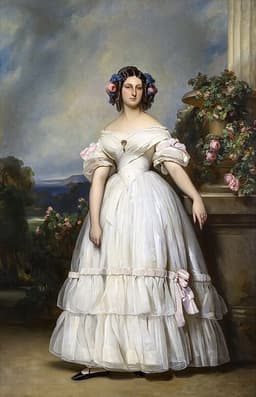
Augustus of Saxe-Gotha
Emperor · Modern
45.0Total

Gabriel Bethlen
Emperor · Modern
55.9Total
Basic Information
Born
1772
1580
Died
1822
1629
Era
Modern
Modern
Nationality
Saxe-Gotha
Transylvania
Occupation
Emperor
Emperor
Civilization
Western
Western
Score Comparison
Military (10%)
69.4
60.0
Political (20%)
30.8
60.0
Influence (20%)
46.3
54.9
Legacy (20%)
35.0
45.8
Leadership (15%)
47.3
68.0
Strategy (15%)
60.0
55.0
TOTAL
45.0
55.9
Augustus of Saxe-Gotha — Complete Timeline
1804 AD
Became Duke of Saxe-Gotha-AltenburgPolitical Action◆ Major
Augustus succeeded his father Ernst II as Duke of Saxe-Gotha-Altenburg. His reign was marked by eccentricity and a focus on his extensive art collection rather than governance.
SuccessionDuchy
Impact: regional
1810 AD
Acquired the 'Gotha Treasure' art collectionCultural◆ Major
Augustus amassed a vast collection of paintings, sculptures, and curiosities at Friedenstein Castle. The collection included works by old masters and became one of the largest private art collections in Germany.
Art CollectionPatronage
Impact: regionalconstructive
1822 AD
Died without legitimate issuePolitical Action◆ Major
Augustus died childless, ending the direct line of the House of Saxe-Gotha-Altenburg. The duchy passed to his brother Frederick IV, but the line went extinct three years later.
ExtinctionSuccession Crisis
Impact: regionaltragic
Gabriel Bethlen — Complete Timeline
1613 AD
Election as Prince of TransylvaniaPolitical Action◆ Major
Gabriel Bethlen was elected Prince of Transylvania with Ottoman support, deposing Gabriel B
ElectionOttoman Support
Impact: regional
1619 AD
Anti-Habsburg RevoltWar◆ Major
Gabriel Bethlen led a revolt against Habsburg rule in Hungary, allying with the Bohemian rebels in the Thirty Years' War. He captured much of Royal Hungary and was elected King of Hungary by the Diet.
RevoltThirty Years' WarHabsburg
Impact: regional
1621 AD
Peace of NikolsburgPolitical Action◆ Major
Gabriel Bethlen signed the Peace of Nikolsburg with the Habsburg Emperor Ferdinand II. The treaty confirmed Bethlen's rule over Transylvania and parts of Hungary, but he renounced the Hungarian crown.
TreatyPeaceTerritorial Gain
Impact: regionalconstructive
1623 AD
Alliance with the Ottoman EmpirePolitical Action
Gabriel Bethlen renewed his alliance with the Ottoman Empire, securing military support for his campaigns. This alliance allowed him to maintain Transylvania's independence from the Habsburgs.
AllianceOttoman
Impact: regional
This comparison has not been analyzed yet.
One-time AI generation (~1 minute). Scores and timeline are already available below.
Rankings
🥇
Gabriel BethlenLeader
Mil: 60.0Pol: 60.0Inf: 54.9
55.9
🥈
Augustus of Saxe-Gotha
Mil: 69.4Pol: 30.8Inf: 46.3
45.0
+10.9 behind
How This Comparison Works
Algorithm
Each figure is scored on 6 dimensions (0—100 scale) based on structured historical data: Military (10%), Political (20%), Influence (20%), Legacy (20%), Leadership (15%), Strategy (15%). The weighted total produces the final ranking.
Data Sources
Scores are computed from structured sub-indicators in the database. Scale factors adjust for era (Ancient ×0.85, Modern ×1.0) and civilization size (Eastern ×1.05, Other ×0.80) to account for differences in population and military scale.
Maximum 3 Figures
Comparisons are limited to 2—3 figures to ensure readability and statistical meaningfulness.
Error Margins
±5 points per dimension — Sub-scores are derived from historical records with inherent uncertainty. Two figures within 5 points on a dimension should be considered roughly equivalent in that area.
Total Score Accuracy
±3 points overall — The weighted combination of 6 dimensions produces a total score with approximately ±3 points of uncertainty. Differences of less than 3 points are not statistically significant— the figures are effectively tied.
Known Limitations
- Historical records are incomplete and uneven across civilizations
- Figures from oral-tradition societies may be underrepresented
- Occupation labels can misclassify multi-role figures
- Scores measure capability and impact, not moral character
- Quantitative scoring is a comparison tool, not absolute truth
Capability Radar
Military (10%) — Battles & Warfare
Battles
49
55
Win Rate
57
60
Expansion
59
55
Political (20%) — Governance & Reform
Reform
10
55
Diplomacy
10
75
Economy
10
50
Influence (20%) — Cultural & Global Reach
Cultural
20
40
Global
5
30
Legacy (20%) — Historical Impact
Historical
10
50
Longevity
10
35
Leadership (15%) — Power & Stability
Tenure
15
60
Stability
10
45
Strategy (15%) — Tactics & Innovation
Strategy
61
70
Tactics
61
65
Reform
66
50
Similar Comparisons
Comments & Discussion
No comments yet. Be the first to share your thoughts!