Loading...
Analysis will be generated on first visit.
Scores and timeline are available below. The page will refresh automatically when ready.
Auguste de Marmont vs Napoleon Bonaparte
Napoleon Bonaparte leads by 14.4 pts · 2 figures compared
…
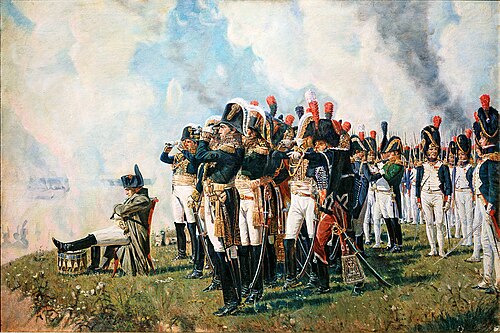
Auguste de Marmont
General · Modern
68.0Total
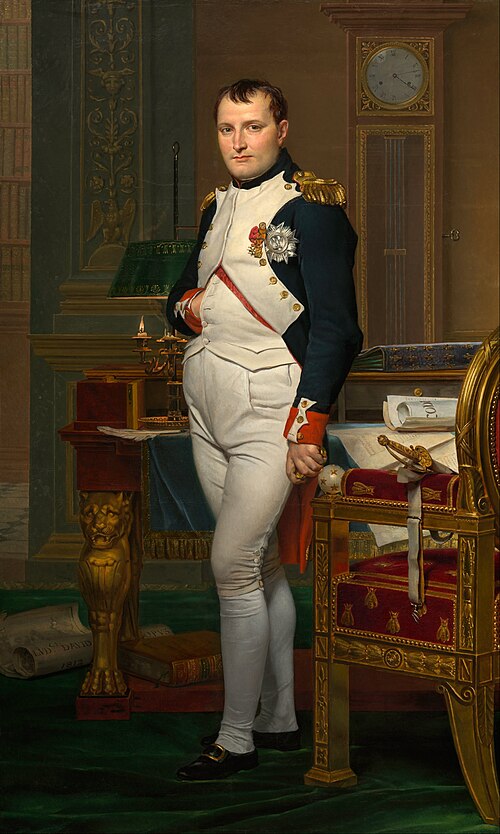
Napoleon Bonaparte
General · Modern
82.4Total
Basic Information
Born
1774
1769
Died
1852
1821
Era
Modern
Modern
Nationality
France
France
Occupation
General
General
Civilization
Western
Western
Score Comparison
Military (10%)
71.5
94.0
Political (20%)
72.0
75.0
Influence (20%)
72.6
82.0
Legacy (20%)
64.2
78.0
Leadership (15%)
70.0
80.0
Strategy (15%)
57.1
93.0
TOTAL
68.0
82.4
Rankings
🥇
Napoleon BonaparteLeader
Mil: 94.0Pol: 75.0Inf: 82.0
82.4
🥈
Auguste de Marmont
Mil: 71.5Pol: 72.0Inf: 72.6
68.0
+14.4 behind
How This Comparison Works
Algorithm
Each figure is scored on 6 dimensions (0—100 scale) based on structured historical data: Military (10%), Political (20%), Influence (20%), Legacy (20%), Leadership (15%), Strategy (15%). The weighted total produces the final ranking.
Data Sources
Scores are computed from structured sub-indicators in the database. Scale factors adjust for era (Ancient ×0.85, Modern ×1.0) and civilization size (Eastern ×1.05, Other ×0.80) to account for differences in population and military scale.
Maximum 3 Figures
Comparisons are limited to 2—3 figures to ensure readability and statistical meaningfulness.
Error Margins
±5 points per dimension — Sub-scores are derived from historical records with inherent uncertainty. Two figures within 5 points on a dimension should be considered roughly equivalent in that area.
Total Score Accuracy
±3 points overall — The weighted combination of 6 dimensions produces a total score with approximately ±3 points of uncertainty. Differences of less than 3 points are not statistically significant— the figures are effectively tied.
Known Limitations
- Historical records are incomplete and uneven across civilizations
- Figures from oral-tradition societies may be underrepresented
- Occupation labels can misclassify multi-role figures
- Scores measure capability and impact, not moral character
- Quantitative scoring is a comparison tool, not absolute truth
Capability Radar
Military (10%) — Battles & Warfare
Battles
65
95
Win Rate
55
90
Expansion
40
95
Political (20%) — Governance & Reform
Reform
20
95
Diplomacy
30
80
Economy
25
85
Influence (20%) — Cultural & Global Reach
Cultural
20
85
Global
25
90
Legacy (20%) — Historical Impact
Historical
40
95
Longevity
30
90
Leadership (15%) — Power & Stability
Tenure
45
85
Stability
15
70
Strategy (15%) — Tactics & Innovation
Strategy
55
95
Tactics
60
98
Reform
30
92
Analysis will be generated on first visit.
Scores and timeline are available below. The page will refresh automatically when ready.
Auguste de Marmont — Complete Timeline
1809 AD
Battle of WagramWar◆ Major
Marmont commanded the XI Corps at Wagram. His corps held the French left flank against Austrian attacks, and he was promoted to Marshal of the Empire for his performance.
Napoleonic WarsBattlePromotion
Impact: regional
Governor-General of Illyrian ProvincesPolitical Action◆ Major
Marmont was appointed Governor-General of the Illyrian Provinces. He administered the region, implemented French legal and administrative reforms, and improved infrastructure.
GovernorshipIllyriaReforms
Impact: regionalconstructive
1812 AD
Battle of SalamancaWar◆ Major
Marmont commanded the French Army of Portugal at Salamanca. His forces were defeated by Wellington's Anglo-Portuguese army, and Marmont was wounded, leading to a French retreat from Spain.
Peninsular WarBattleDefeatWounded
Impact: regional
1814 AD
Battle of ParisWar◆ Major
Marmont commanded the French VI Corps defending Paris. After a day of fighting, he surrendered the city to the Allies, a decision that contributed to Napoleon's abdication.
Napoleonic WarsBattleSurrender
Impact: global
Defection to the BourbonsPolitical Action◆ Major
Marmont defected to the Bourbon monarchy after the fall of Paris. He led his corps to the Allied lines, a move seen as betrayal by Napoleon and his supporters.
BetrayalBourbon RestorationNapoleonic Era
Impact: nationaldestructive
1852 AD
Exile and DeathPolitical Action
Marmont went into exile after the July Revolution of 1830, refusing to serve Louis-Philippe. He died in Venice, having spent his final years writing memoirs defending his actions.
ExileMemoirsDeath
tragic
Similar Comparisons
Comments & Discussion
No comments yet. Be the first to share your thoughts!