Loading...
This comparison has not been analyzed yet.
One-time AI generation (~1 minute). Scores and timeline are already available below.
Asif Ali Zardari vs Chuan Leekpai
Chuan Leekpai leads by 0.9 pts · 2 figures compared
…
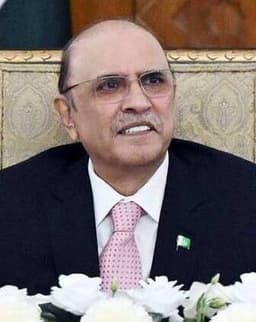
Asif Ali Zardari
Politician · Modern
49.2Total

Chuan Leekpai
Politician · Modern
50.1Total
Basic Information
Born
1955
1938
Died
—
—
Era
Modern
Modern
Nationality
Pakistan
Thailand
Occupation
Politician
Politician
Civilization
Indian
Eastern
Score Comparison
Military (10%)
47.5
11.8
Political (20%)
37.9
55.0
Influence (20%)
51.0
54.9
Legacy (20%)
41.7
45.0
Leadership (15%)
64.0
79.8
Strategy (15%)
60.0
37.1
TOTAL
49.2
50.1
Asif Ali Zardari — Complete Timeline
1987 AD
Married Benazir BhuttoPolitical Action
Asif Ali Zardari married Benazir Bhutto, the former Prime Minister of Pakistan. The marriage was politically significant, uniting two influential political families.
MarriageBenazir BhuttoPolitical Alliance
Impact: nationalconstructive
1996 AD
Imprisoned on Corruption ChargesPolitical Action◆ Major
Zardari was arrested and imprisoned on corruption charges following the dismissal of Benazir Bhutto's government. He spent over eight years in prison, earning the nickname 'Mr. 10 Percent' for alleged kickbacks.
ImprisonmentCorruptionPolitical Persecution
Impact: nationaldestructive
2007 AD
Assassination of Benazir BhuttoPolitical Action
Benazir Bhutto was assassinated in a suicide attack after a political rally in Rawalpindi. Zardari became the co-chairman of the Pakistan Peoples Party (PPP) following her death.
AssassinationBenazir BhuttoPPP
Impact: nationaltragic
2008 AD
Elected President of PakistanPolitical Action◆ Major
Zardari was elected as the 11th President of Pakistan by the electoral college. He served from 2008 to 2013, during a period of political instability and conflict with the judiciary.
PresidencyPPPHead of State
Impact: nationalconstructive
2010 AD
Repealed the 17th Constitutional AmendmentReform
Zardari signed the 18th Constitutional Amendment, which repealed the 17th Amendment and devolved powers from the presidency to the prime minister and provinces. This restored parliamentary democracy.
Constitutional AmendmentDevolutionParliamentary Democracy
Impact: nationalconstructive
2013 AD
End of Presidential TermPolitical Action
Zardari's presidential term ended, and he was succeeded by Mamnoon Hussain. He returned to a role in the PPP leadership, focusing on party politics.
Presidential TermSuccessionPPP
Impact: national
Chuan Leekpai — Complete Timeline
1992 AD
First Term as Prime MinisterPolitical Action◆ Major
Chuan Leekpai became Prime Minister after the Black May uprising, leading a coalition government. His first term focused on democratic reforms, economic liberalization, and addressing corruption, but was marked by political instability.
Prime MinisterDemocracyReform
Impact: nationalconstructive
1997 AD
1997 Asian Financial Crisis ResponseReform◆ Major
During his second term, Chuan's government managed Thailand's response to the 1997 Asian financial crisis. He implemented IMF-backed austerity measures, floated the baht, and restructured the financial sector, leading to economic recovery but also social hardship.
Financial CrisisIMFEconomic Reform
Impact: national
Promotion of Good Governance and Anti-CorruptionReform◆ Major
Chuan's government enacted the 1997 Constitution, which introduced reforms to strengthen democratic institutions, human rights, and anti-corruption measures. The constitution established independent bodies like the Election Commission and the National Anti-Corruption Commission.
ConstitutionReformGood Governance
Impact: nationalconstructive
2001 AD
Loss of Power in 2001 ElectionPolitical Action◆ Major
Chuan's Democrat Party lost the 2001 general election to Thaksin Shinawatra's Thai Rak Thai Party. The defeat marked the end of Chuan's political dominance and the beginning of a new populist era in Thai politics.
ElectionDefeatPolitical Transition
Impact: national
This comparison has not been analyzed yet.
One-time AI generation (~1 minute). Scores and timeline are already available below.
Rankings
🥇
Chuan LeekpaiLeader
Mil: 11.8Pol: 55.0Inf: 54.9
50.1
🥈
Asif Ali Zardari
Mil: 47.5Pol: 37.9Inf: 51.0
49.2
+0.9 behind
How This Comparison Works
Algorithm
Each figure is scored on 6 dimensions (0—100 scale) based on structured historical data: Military (10%), Political (20%), Influence (20%), Legacy (20%), Leadership (15%), Strategy (15%). The weighted total produces the final ranking.
Data Sources
Scores are computed from structured sub-indicators in the database. Scale factors adjust for era (Ancient ×0.85, Modern ×1.0) and civilization size (Eastern ×1.05, Other ×0.80) to account for differences in population and military scale.
Maximum 3 Figures
Comparisons are limited to 2—3 figures to ensure readability and statistical meaningfulness.
Error Margins
±5 points per dimension — Sub-scores are derived from historical records with inherent uncertainty. Two figures within 5 points on a dimension should be considered roughly equivalent in that area.
Total Score Accuracy
±3 points overall — The weighted combination of 6 dimensions produces a total score with approximately ±3 points of uncertainty. Differences of less than 3 points are not statistically significant— the figures are effectively tied.
Known Limitations
- Historical records are incomplete and uneven across civilizations
- Figures from oral-tradition societies may be underrepresented
- Occupation labels can misclassify multi-role figures
- Scores measure capability and impact, not moral character
- Quantitative scoring is a comparison tool, not absolute truth
Capability Radar
Military (10%) — Battles & Warfare
Battles
42
17
Win Rate
45
16
Expansion
51
20
Political (20%) — Governance & Reform
Reform
25
55
Diplomacy
40
60
Economy
20
55
Influence (20%) — Cultural & Global Reach
Cultural
20
30
Global
25
30
Legacy (20%) — Historical Impact
Historical
30
40
Longevity
20
30
Leadership (15%) — Power & Stability
Tenure
60
60
Stability
15
50
Strategy (15%) — Tactics & Innovation
Strategy
54
21
Tactics
57
24
Reform
61
29
Similar Comparisons
Comments & Discussion
No comments yet. Be the first to share your thoughts!