Loading...
Ashur-uballit I vs Julius Caesar
Julius Caesar leads by 31.4 pts · 2 figures compared
…
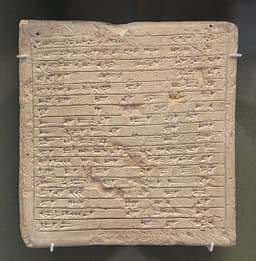
Ashur-uballit I
Emperor · Ancient
51.4Total

Julius Caesar
General · Ancient
82.8Total
Basic Information
Born
-1363
-100
Died
-1328
-44
Era
Ancient
Ancient
Nationality
Assyria
Roman Republic
Occupation
Emperor
General
Civilization
Middle Eastern
Western
Score Comparison
Military (10%)
50.0
88.0
Political (20%)
43.7
78.0
Influence (20%)
51.0
85.0
Legacy (20%)
44.2
82.0
Leadership (15%)
67.0
80.0
Strategy (15%)
60.0
85.0
TOTAL
51.4
82.8
Ashur-uballit I — Complete Timeline
1363 BC
First Assyrian ruler to claim the title 'King of Assyria'Political Action
Ashur-uballit I was the first ruler to use the title 'King of Assyria' (
TitleKingshipAssyria
Impact: regionalconstructive
1350 BC
Defeated the Mitanni and expanded Assyrian territoryWar◆ Major
Ashur-uballit I launched military campaigns against the Mitanni kingdom, which had previously dominated Assyria. He defeated them and annexed their territories, significantly expanding Assyrian control in northern Mesopotamia and establishing Assyria as a major power.
ConquestMitanniExpansion
Impact: regional
Corresponded with the Pharaoh of EgyptPolitical Action◆ Major
Ashur-uballit I exchanged letters with the Egyptian Pharaoh, likely Akhenaten, as documented in the Amarna letters. This correspondence indicates Assyria's growing diplomatic status and its recognition as an independent power by Egypt.
DiplomacyEgyptAmarna
Impact: regional
1345 BC
Intervened in Babylonian successionPolitical Action
Ashur-uballit I intervened in Babylonian affairs by supporting a claimant to the throne, demonstrating Assyrian influence over Babylon. This intervention marked the beginning of Assyrian involvement in Babylonian politics, a recurring theme in later history.
BabylonInterventionPolitics
Impact: regional
Julius Caesar — Complete Timeline
58 BC
Gallic WarsWar◆ Major
Caesar, as proconsul of Gaul, launched a series of campaigns that conquered all of Gaul (modern France, Belgium, and parts of Switzerland). He fought numerous battles, including against the Helvetii, the Belgae, and the Gallic chieftain Vercingetorix. The wars brought immense wealth and a loyal army to Caesar.
Gallic WarsConquestRoman Expansion
Impact: regional
49 BC
Crossing the RubiconPolitical Action◆ Major
Caesar led Legio XIII across the Rubicon River into Italy, defying the Roman Senate's order to disband his army. This act triggered a civil war against Pompey and the Optimates, ultimately leading to Caesar's dictatorship and the end of the Roman Republic.
Roman Civil WarEnd of RepublicPower Struggle
Impact: global
48 BC
Battle of PharsalusWar◆ Major
Caesar's outnumbered army defeated the larger forces of Pompey the Great at Pharsalus in Greece. Caesar's tactical use of a reserve line to counter Pompey's cavalry charge proved decisive. Pompey fled to Egypt, where he was assassinated, leaving Caesar as the undisputed master of the Roman world.
Roman Civil WarBattleDecisive Victory
Impact: regional
44 BC
Appointment as Dictator for LifePolitical Action◆ Major
The Roman Senate appointed Caesar dictator perpetuo (dictator for life), granting him unprecedented personal power. This move concentrated military, legislative, and judicial authority in one person, effectively ending the Roman Republic's traditional system of checks and balances and alarming many senators.
DictatorshipEnd of RepublicPower Consolidation
Impact: regionaldestructive
Assassination on the Ides of MarchPolitical Action◆ Major
A group of Roman senators, led by Marcus Junius Brutus and Gaius Cassius Longinus, stabbed Caesar to death at a meeting of the Senate in the Theatre of Pompey. The assassination was intended to restore the Republic, but instead triggered another civil war that led to the rise of the Roman Empire.
AssassinationRoman PoliticsEnd of Republic
Impact: globaldestructive
Expert Analysis
Origins
Ashur-uballit I, who reigned from approximately 1365 to 1330 BCE, was the son of Eriba-Adad I, an Assyrian ruler who had begun to assert independence from Mitanni control. Born into the ancient city of Ashur, Ashur-uballit grew up during a period when Assyria was a vassal state under the Mitanni empire. His early life was shaped by the need to navigate the complex diplomatic and military landscape of the Near East. In contrast, Julius Caesar was born in 100 BCE into the patrician Julian family in Rome, but his family was not among the city's wealthiest or most powerful. Caesar's early life was marked by political turmoil, including the dictatorship of Sulla, from whom he had to flee. His upbringing instilled in him a keen awareness of the importance of political alliances and military glory.
Rise to Power
Ashur-uballit I rose to power by capitalizing on the weakening of the Mitanni kingdom, which had been devastated by Hittite incursions. He launched military campaigns against Mitanni, defeating them and expanding Assyrian territory. His correspondence with the Egyptian Pharaoh, likely Akhenaten, as evidenced by the Amarna letters, demonstrates his diplomatic efforts to gain recognition as a major power. Ashur-uballit's key turning point was his successful intervention in Babylonian succession, where he supported a claimant to the throne, thereby extending Assyrian influence over Babylon. Julius Caesar's rise was more dramatic and centered on the Gallic Wars (58–50 BCE). As proconsul of Gaul, Caesar conquered all of Gaul, amassing wealth and a loyal army. His crossing of the Rubicon River in 49 BCE defied the Senate and triggered a civil war. Caesar defeated his rival Pompey at the Battle of Pharsalus in 48 BCE, using a tactical reserve line. He was appointed dictator for life in 44 BCE, centralizing power.
Leadership & Governance
Ashur-uballit I's leadership style was that of a traditional Near Eastern monarch, focusing on military expansion and diplomatic correspondence. He was the first Assyrian ruler to claim the title 'King of Assyria' (šar māt Aššur), signaling a shift from city-state to territorial kingdom. His governance relied on vassal treaties and tribute from conquered peoples. Julius Caesar, in contrast, was a populist reformer. He implemented land reforms, extended Roman citizenship to provincials, and reformed the calendar (the Julian calendar). His governance centralized power in his own hands, reducing the authority of the Senate. Caesar's military leadership was innovative, as seen in his use of engineering (siege of Alesia) and rapid troop movements.
Triumph & Tragedy
Ashur-uballit I's greatest success was establishing Assyria as an independent and expansionist power. He scored 46.7 in military and 45.4 in political, reflecting his role in founding the Assyrian Empire. However, his failure was that his gains were not fully consolidated; after his death, Assyria experienced a period of decline under his successors. Julius Caesar's triumphs were monumental: he conquered Gaul (scoring 88.0 in military), defeated his political enemies, and became dictator. His reforms had lasting impact. His tragedy was his assassination on the Ides of March 44 BCE, orchestrated by senators fearing his monarchical ambitions. Caesar's death plunged Rome into another civil war, ultimately leading to the end of the Republic.
Character & Destiny
Ashur-uballit I was a pragmatic and ambitious ruler, using both war and diplomacy to elevate Assyria. His correspondence with Egypt shows a shrewd understanding of international politics. His destiny was to lay the foundation for the Assyrian Empire, but his immediate successors failed to maintain momentum. Julius Caesar was charismatic, ruthless, and a brilliant strategist. His ambition to be king-like led to his downfall. Historians note his clemency toward former enemies, but his concentration of power made him a target. Caesar's destiny was to be both the destroyer of the Roman Republic and the catalyst for the Roman Empire.
Legacy
Ashur-uballit I's legacy is as the founder of the Assyrian Empire. He scored 58.8 in legacy and 68.2 in influence. His establishment of the title 'King of Assyria' set a precedent for future Assyrian rulers who would build one of the largest empires of the ancient Near East. Julius Caesar's legacy is far more pervasive. He scored 82.0 in legacy and 85.0 in influence. His name became synonymous with imperial rule (Kaiser, Tsar). The Julian calendar was used for centuries. His military campaigns and political reforms directly influenced the transition from Republic to Empire. The Roman Empire, which his adopted heir Augustus founded, dominated the Mediterranean for centuries.
Conclusion
While Ashur-uballit I was instrumental in launching Assyria on its imperial path, his impact is dwarfed by that of Julius Caesar. Caesar's military and political scores (88.0 and 78.0) far exceed Ashur-uballit's (46.7 and 45.4). Caesar's influence on Western civilization—through language, law, governance, and military tactics—is profound. Ashur-uballit's achievements were significant for the Near East, but they did not reshape global history to the same degree. Therefore, Julius Caesar had the greater impact. The score gap of 31.4 points underscores this disparity.
Rankings
🥇
Julius CaesarLeader
Mil: 88.0Pol: 78.0Inf: 85.0
82.8
🥈
Ashur-uballit I
Mil: 50.0Pol: 43.7Inf: 51.0
51.4
+31.4 behind
How This Comparison Works
Algorithm
Each figure is scored on 6 dimensions (0—100 scale) based on structured historical data: Military (10%), Political (20%), Influence (20%), Legacy (20%), Leadership (15%), Strategy (15%). The weighted total produces the final ranking.
Data Sources
Scores are computed from structured sub-indicators in the database. Scale factors adjust for era (Ancient ×0.85, Modern ×1.0) and civilization size (Eastern ×1.05, Other ×0.80) to account for differences in population and military scale.
Maximum 3 Figures
Comparisons are limited to 2—3 figures to ensure readability and statistical meaningfulness.
Error Margins
±5 points per dimension — Sub-scores are derived from historical records with inherent uncertainty. Two figures within 5 points on a dimension should be considered roughly equivalent in that area.
Total Score Accuracy
±3 points overall — The weighted combination of 6 dimensions produces a total score with approximately ±3 points of uncertainty. Differences of less than 3 points are not statistically significant— the figures are effectively tied.
Known Limitations
- Historical records are incomplete and uneven across civilizations
- Figures from oral-tradition societies may be underrepresented
- Occupation labels can misclassify multi-role figures
- Scores measure capability and impact, not moral character
- Quantitative scoring is a comparison tool, not absolute truth
Capability Radar
Military (10%) — Battles & Warfare
Battles
45
95
Win Rate
50
92
Expansion
55
97
Political (20%) — Governance & Reform
Reform
40
90
Diplomacy
45
85
Economy
35
82
Influence (20%) — Cultural & Global Reach
Cultural
35
88
Global
30
94
Legacy (20%) — Historical Impact
Historical
45
95
Longevity
40
96
Leadership (15%) — Power & Stability
Tenure
50
75
Stability
40
60
Strategy (15%) — Tactics & Innovation
Strategy
45
94
Tactics
40
96
Reform
35
88
Similar Comparisons
Comments & Discussion
No comments yet. Be the first to share your thoughts!