Loading...
Ashur-resh-ishi I vs Majorian
Majorian leads by 6.8 pts · 2 figures compared
…

Ashur-resh-ishi I
Emperor · Ancient
52.5Total
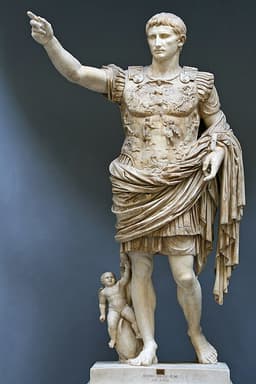
Majorian
Emperor · Ancient
59.3Total
Basic Information
Born
-1132
420
Died
-1115
461
Era
Ancient
Ancient
Nationality
Assyria
Western Roman Empire
Occupation
Emperor
Emperor
Civilization
Middle Eastern
Western
Score Comparison
Military (10%)
70.0
61.7
Political (20%)
45.1
70.0
Influence (20%)
49.4
58.0
Legacy (20%)
42.5
52.0
Leadership (15%)
67.0
55.3
Strategy (15%)
57.5
68.0
TOTAL
52.5
59.3
Ashur-resh-ishi I — Complete Timeline
1120 BC
Defeat of Nebuchadnezzar IWar◆ Major
Ashur-resh-ishi I defeated the Babylonian king Nebuchadnezzar I in battle, halting Babylonian expansion into Assyrian territory. This victory restored Assyrian dominance in the region and secured the northern border.
Assyrian-Babylonian WarMilitary Victory
Impact: regional
1118 BC
Restoration of Assyrian PowerPolitical Action◆ Major
Following his military successes, Ashur-resh-ishi I reasserted Assyrian control over key trade routes and vassal states. His reign marked a resurgence of Assyrian influence after a period of decline under Mitanni domination.
Imperial RevivalConsolidation
Impact: regionalconstructive
Majorian — Complete Timeline
458 AD
Reconquest of GaulWar◆ Major
Majorian led a successful campaign to recover Gaul from the Visigoths and Burgundians. He defeated the Visigoths at the Battle of Arelate and forced them to return to Aquitaine, temporarily restoring Roman authority in the region.
Military CampaignGaulVisigoths
Impact: regionalconstructive
460 AD
Naval Expedition Against the VandalsWar◆ Major
Majorian assembled a large fleet in Spain to invade Vandal North Africa. The Vandals, under King Gaiseric, launched a surprise attack and destroyed the Roman fleet at Cartagena, forcing Majorian to abandon the campaign.
VandalsNaval BattleNorth Africa
Impact: regionaltragic
461 AD
Deposition and ExecutionPolitical Action
Majorian was deposed by his magister militum Ricimer, who had him arrested and executed. His death ended the last serious attempt to restore the Western Roman Empire, leading to a period of puppet emperors.
Court IntrigueRicimerFall of Rome
Impact: nationaltragic
Expert Analysis
Origins
Ashur-resh-ishi I (c. 1132–1115 BCE) was a king of the Middle Assyrian Empire, born into the royal lineage that had seen decline after the reign of Tukulti-Ninurta I. His father was likely Mutakkil-Nusku, though details of his early life are sparse. He ascended the throne during a period when Assyria was pressed by Babylon to the south and Aramean tribes from the west. His reign is documented in inscriptions and the Assyrian King List, but his childhood and education remain obscure.
Majorian (c. 420–461 CE), born Julius Valerius Majorianus, was a Roman aristocrat from a military family. His father was a high-ranking officer under the Western Roman Empire. Majorian received a thorough education in military tactics and administration, serving under the magister militum Aetius. His early career included campaigns in Gaul, where he gained experience and reputation. He was proclaimed emperor in 457 CE after the death of Avitus, with the support of the general Ricimer.
Rise to Power
Ashur-resh-ishi I came to power at a time when Assyria was weak, with Babylonian king Nebuchadnezzar I expanding northward. The decisive clash came around 1120 BCE when Nebuchadnezzar I invaded Assyria. Ashur-resh-ishi I met him in battle and defeated him, halting Babylonian expansion and restoring Assyrian control over the region. This victory was a turning point, allowing Ashur-resh-ishi to reassert Assyrian dominance over trade routes and vassal states. His military success cemented his authority and initiated a resurgence in Assyrian power.
Majorian rose to prominence under Emperor Avitus, but after Avitus's death, he was proclaimed emperor by his troops in 457 CE. He faced immediate challenges: the Western Roman Empire was crumbling under barbarian invasions, with Gaul and Hispania lost to Visigoths and Suebi, and North Africa under Vandal control. Majorian's legitimacy was contested by the Eastern Emperor Leo I, but he secured recognition through diplomacy. His rise was marked by a determination to restore Roman authority, relying on his military skills and the support of Ricimer, who later betrayed him.
Leadership & Governance
Ashur-resh-ishi I ruled as an absolute monarch, typical of Assyrian kings, with a focus on military expansion and consolidation. He reorganized the army and fortified key cities, such as Ashur. His governance centered on restoring Assyrian prestige through campaigns and tribute from vassals. He did not implement major administrative reforms but stabilized the kingdom, preparing the ground for later expansion under his successors. His score of 67.0 in leadership reflects his ability to rally Assyria after a period of decline.
Majorian, scoring 55.3 in leadership, attempted to reform the Western Roman Empire from within. He issued laws to protect the poor and curb corruption, and he tried to revive the navy. His leadership style was energetic and hands-on, personally leading campaigns in Gaul. However, he lacked the political support to sustain his reforms. His reliance on Ricimer, who held the real power, proved fatal. Majorian's governance was a mix of military competence and political naivety, unable to overcome the entrenched decay of the empire.
Triumph & Tragedy
Ashur-resh-ishi I's greatest triumph was his defeat of Nebuchadnezzar I, which saved Assyria from Babylonian domination and restored its power. This victory allowed him to reclaim lost territories and reestablish Assyrian influence. His tragedy lies in the limits of his success: he did not fully destroy Babylon or begin the vast expansion that later Assyrian kings achieved. His reign was a recovery, not a peak. He scored 70.0 in military, but his political score of 45.1 shows limited statecraft.
Majorian's triumph was his reconquest of Gaul in 458–459 CE, defeating the Visigoths at the Battle of Arelate and forcing them back into Aquitaine. He also subdued the Burgundians, restoring Roman control over much of Gaul. His tragedy was the failed naval expedition against the Vandals in 460 CE: his fleet was destroyed by Gaiseric's surprise attack in Spain, ruining his plan to reclaim North Africa. Shortly after, Ricimer deposed and executed him (461 CE), ending the last serious attempt to revive the Western Empire. Majorian's military score of 61.7 and political score of 70.0 highlight his strategic abilities but fatal political miscalculation.
Character & Destiny
Ashur-resh-ishi I was a determined and pragmatic ruler, focused on the immediate goal of restoring Assyria's position. He did not overreach, consolidating gains rather than pursuing total conquest. His character was shaped by the need to rebuild, and his destiny was to be a restorer, not a conqueror. Historical assessments credit him with halting decline, but his later successors like Tiglath-Pileser I overshadowed him.
Majorian was idealistic and energetic, believing he could reverse Rome's decline. His character combined military competence with a reformist zeal, but he lacked the ruthlessness to eliminate rivals like Ricimer. His destiny was tragic: his best efforts were undone by betrayal and the structural collapse of the empire. Historians view him as the last capable Western emperor, but his death marked the point of no return.
Legacy
Ashur-resh-ishi I's legacy is that of a stabilizer. He reestablished Assyrian power, enabling the later Middle Assyrian Empire to thrive. His defeat of Nebuchadnezzar I is remembered as a key event in Assyrian history, but his influence score of 49.4 and legacy score of 42.5 indicate that his impact was limited compared to more famous Assyrian kings. He is not widely known outside specialist circles.
Majorian's legacy is more enduring in popular memory. He is seen as the last hope of the Western Roman Empire, a ruler who nearly succeeded in restoring its fortunes. His reforms and campaigns are studied as examples of late Roman resilience. With a legacy score of 52.0 and influence of 58.0, he has a higher cultural footprint. However, his failure meant the empire's final collapse within two decades.
Conclusion
Majorian had a greater impact than Ashur-resh-ishi I, as reflected in his higher total score of 59.3 versus 52.5. Majorian's attempts to restore the Western Roman Empire, though unsuccessful, had a profound historical significance: his death marked the end of any realistic chance of revival. Ashur-resh-ishi I's achievements, while important for Assyria, were a temporary recovery that did not change the broader course of history. Majorian's legacy as the last capable Western emperor outweighs Ashur-resh-ishi's role as a regional restorer. The 6.8-point score gap is justified by Majorian's higher political and strategic scores, reflecting the greater complexity of his challenges. Ashur-resh-ishi I's higher military score (70.0 vs 61.7) cannot compensate for his lower influence and legacy. Thus, Majorian stands as the more impactful figure, even in failure.
Rankings
🥇
MajorianLeader
Mil: 61.7Pol: 70.0Inf: 58.0
59.3
🥈
Ashur-resh-ishi I
Mil: 70.0Pol: 45.1Inf: 49.4
52.5
+6.8 behind
How This Comparison Works
Algorithm
Each figure is scored on 6 dimensions (0—100 scale) based on structured historical data: Military (10%), Political (20%), Influence (20%), Legacy (20%), Leadership (15%), Strategy (15%). The weighted total produces the final ranking.
Data Sources
Scores are computed from structured sub-indicators in the database. Scale factors adjust for era (Ancient ×0.85, Modern ×1.0) and civilization size (Eastern ×1.05, Other ×0.80) to account for differences in population and military scale.
Maximum 3 Figures
Comparisons are limited to 2—3 figures to ensure readability and statistical meaningfulness.
Error Margins
±5 points per dimension — Sub-scores are derived from historical records with inherent uncertainty. Two figures within 5 points on a dimension should be considered roughly equivalent in that area.
Total Score Accuracy
±3 points overall — The weighted combination of 6 dimensions produces a total score with approximately ±3 points of uncertainty. Differences of less than 3 points are not statistically significant— the figures are effectively tied.
Known Limitations
- Historical records are incomplete and uneven across civilizations
- Figures from oral-tradition societies may be underrepresented
- Occupation labels can misclassify multi-role figures
- Scores measure capability and impact, not moral character
- Quantitative scoring is a comparison tool, not absolute truth
Capability Radar
Military (10%) — Battles & Warfare
Battles
55
65
Win Rate
60
70
Expansion
50
60
Political (20%) — Governance & Reform
Reform
40
85
Diplomacy
50
70
Economy
35
75
Influence (20%) — Cultural & Global Reach
Cultural
30
50
Global
25
40
Legacy (20%) — Historical Impact
Historical
40
65
Longevity
35
55
Leadership (15%) — Power & Stability
Tenure
45
40
Stability
45
30
Strategy (15%) — Tactics & Innovation
Strategy
55
80
Tactics
50
75
Reform
40
85
Similar Comparisons
Comments & Discussion
No comments yet. Be the first to share your thoughts!