Loading...
Ashur-nadin-ahhe II vs Julius Caesar
Julius Caesar leads by 46.1 pts · 2 figures compared
…
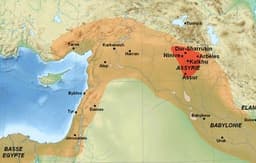
Ashur-nadin-ahhe II
Emperor · Ancient
36.7Total

Julius Caesar
General · Ancient
82.8Total
Basic Information
Born
-1390
-100
Died
-1381
-44
Era
Ancient
Ancient
Nationality
Assyria
Roman Republic
Occupation
Emperor
General
Civilization
Middle Eastern
Western
Score Comparison
Military (10%)
10.2
88.0
Political (20%)
30.7
78.0
Influence (20%)
45.5
85.0
Legacy (20%)
34.2
82.0
Leadership (15%)
44.5
80.0
Strategy (15%)
45.0
85.0
TOTAL
36.7
82.8
Ashur-nadin-ahhe II — Complete Timeline
1385 BC
Diplomatic Contact with EgyptPolitical Action◆ Major
Ashur-nadin-ahhe II received a gift of gold from Pharaoh Amenhotep III of Egypt, recorded in the Amarna letters. This marked one of the earliest known diplomatic exchanges between Assyria and Egypt, signaling Assyria's growing international recognition.
DiplomacyInternational Relations
Impact: regionalconstructive
Julius Caesar — Complete Timeline
58 BC
Gallic WarsWar◆ Major
Caesar, as proconsul of Gaul, launched a series of campaigns that conquered all of Gaul (modern France, Belgium, and parts of Switzerland). He fought numerous battles, including against the Helvetii, the Belgae, and the Gallic chieftain Vercingetorix. The wars brought immense wealth and a loyal army to Caesar.
Gallic WarsConquestRoman Expansion
Impact: regional
49 BC
Crossing the RubiconPolitical Action◆ Major
Caesar led Legio XIII across the Rubicon River into Italy, defying the Roman Senate's order to disband his army. This act triggered a civil war against Pompey and the Optimates, ultimately leading to Caesar's dictatorship and the end of the Roman Republic.
Roman Civil WarEnd of RepublicPower Struggle
Impact: global
48 BC
Battle of PharsalusWar◆ Major
Caesar's outnumbered army defeated the larger forces of Pompey the Great at Pharsalus in Greece. Caesar's tactical use of a reserve line to counter Pompey's cavalry charge proved decisive. Pompey fled to Egypt, where he was assassinated, leaving Caesar as the undisputed master of the Roman world.
Roman Civil WarBattleDecisive Victory
Impact: regional
44 BC
Appointment as Dictator for LifePolitical Action◆ Major
The Roman Senate appointed Caesar dictator perpetuo (dictator for life), granting him unprecedented personal power. This move concentrated military, legislative, and judicial authority in one person, effectively ending the Roman Republic's traditional system of checks and balances and alarming many senators.
DictatorshipEnd of RepublicPower Consolidation
Impact: regionaldestructive
Assassination on the Ides of MarchPolitical Action◆ Major
A group of Roman senators, led by Marcus Junius Brutus and Gaius Cassius Longinus, stabbed Caesar to death at a meeting of the Senate in the Theatre of Pompey. The assassination was intended to restore the Republic, but instead triggered another civil war that led to the rise of the Roman Empire.
AssassinationRoman PoliticsEnd of Republic
Impact: globaldestructive
Expert Analysis
ashur-nadin-ahhe-ii-vs-julius-caesar
The General and the King
On a day in 44 BCE, Julius Caesar walked into the Senate chamber, unarmed and surrounded by men he had appointed. Moments later, he lay bleeding on the marble floor, stabbed twenty-three times by those same senators. Across the centuries and thousands of miles, another ruler—Ashur-nadin-ahhe II of Assyria—sat on his throne in the ancient city of Ashur, receiving a gift of gold from the distant Pharaoh of Egypt. One man would reshape the Western world; the other would barely leave a whisper in history. What made the difference? Why did Caesar’s name thunder through millennia while Ashur-nadin-ahhe II is remembered only by specialists deciphering clay tablets?
Origins
Julius Caesar was born into a patrician family in Rome, a city already drunk on power and ripe for transformation. The Roman Republic in 100 BCE was a cauldron of ambition, where generals fought not just foreign enemies but each other, and the old senatorial aristocracy clung to fading traditions. Caesar’s uncle by marriage was Gaius Marius, a populist general who had reformed the army, and from his youth Caesar breathed the air of civil strife and political maneuvering. His education was in rhetoric, law, and military command—the tools of a man who intended to rule.
Ashur-nadin-ahhe II ruled Assyria around 1390 to 1381 BCE, during a period when the Middle East was a patchwork of competing city-states and empires. Assyria was then a modest kingdom, not yet the brutal imperial machine it would later become. His name appears in the Amarna letters—a cache of diplomatic correspondence—where Pharaoh Amenhotep III of Egypt sent him a gift of gold. This was a diplomatic gesture, a sign that Assyria was recognized as a player on the international stage. But Ashur-nadin-ahhe II was a king of a small realm, hemmed in by stronger neighbors like Mitanni and Babylon. His world was one of survival, not conquest.
Rise to Power
Caesar’s path was a masterclass in calculated risk. He climbed the Roman political ladder—quaestor, aedile, praetor—but his true springboard came in 58 BCE, when he secured command of Gaul. Over eight years, he conquered a vast territory, built a loyal army, and amassed immense wealth. The crossing of the Rubicon River in 49 BCE was the decisive gamble: by bringing his army into Italy proper, he forced a civil war that ended with him as dictator. His rise was not inevitable; it was forged through brilliance, ruthlessness, and an understanding that in Rome, power flowed from the sword.
Ashur-nadin-ahhe II’s rise is harder to trace. He inherited his throne, as Assyrian kings usually did. His key event—the diplomatic contact with Egypt—was not a conquest but a negotiation. Receiving gold from Amenhotep III was a mark of prestige, but it was also a sign of subordination: Egypt was the superpower of the age. Ashur-nadin-ahhe II did not cross any Rubicon; he stayed within the boundaries of his world, content with the crumbs that fell from the Pharaoh’s table.
Leadership & Governance
Caesar governed with a blend of military genius and political innovation. His military campaigns in Gaul were textbook examples of speed, logistics, and psychological warfare—he defeated the Helvetii, the Belgae, and the Gallic chieftain Vercingetorix at Alesia. As dictator, he reformed the calendar, granted citizenship to provincials, and initiated public works. But his political wisdom had a fatal flaw: he centralized power in himself, ignoring the republican traditions that still held emotional sway. He once said, “It is easier to find men who will volunteer to die, than to find those who are willing to endure pain with patience.” He ruled like a general, not a statesman, and that would cost him.
Ashur-nadin-ahhe II’s leadership is a blank slate. We know he received gold from Egypt, suggesting he could negotiate. But there is no record of military campaigns, no legal codes, no building projects. His strategy score of 57.9 is modest, reflecting a king who managed his realm but did not expand it. He governed a small kingdom in a dangerous neighborhood, and his success was simply keeping it intact. Where Caesar built an empire, Ashur-nadin-ahhe II merely held a throne.
Triumph & Tragedy
Caesar’s greatest moment was his triumph over Gaul—the conquest of a million people, the opening of a new province, the wealth that funded his rise. His tragedy was the Ides of March, 44 BCE, when the men he trusted turned on him. He had been warned, but he walked into the Senate anyway. His last words, according to some accounts, were “Et tu, Brute?”—a recognition that even his adopted son, Brutus, was among the assassins. It was a death that mirrored his life: dramatic, political, and world-changing.
Ashur-nadin-ahhe II’s triumph was a gift of gold. His tragedy is that we know nothing else. He died in 1381 BCE, probably of natural causes, and his kingdom continued its slow drift toward the margins of history. His legacy score of 45.1 reflects a ruler who did not fail, but who did not succeed either. He was a placeholder, not a shaper.
Character & Destiny
Caesar’s character was a paradox: he was both magnanimous and ruthless, generous to his enemies and utterly unforgiving to those who opposed his will. He believed in his own destiny, writing his commentaries in the third person as if he were already a legend. That confidence drove him to the top, but it also blinded him to the resentment he created. His personality shaped history because he refused to be ordinary.
Ashur-nadin-ahhe II’s character is invisible. The Amarna letters give us a name, but not a personality. He was a king in an age of kings, and his destiny was to be forgotten. The difference is not one of talent—it is one of ambition and opportunity. Caesar lived in a world that rewarded audacity; Ashur-nadin-ahhe II lived in a world that rewarded caution.
Legacy
Caesar’s legacy is the Roman Empire, the spread of Latin culture, the calendar we still use, and the title “Caesar” that became synonymous with emperor. He is studied in military academies, debated in political science classes, and dramatized in plays and films. His influence score of 85.0 is a testament to a man who changed the course of civilization.
Ashur-nadin-ahhe II’s legacy is a few lines in a textbook and a mention in the Amarna letters. His influence score of 60.7 is generous, given that his only known act was receiving a gift. He is a footnote, a reminder that most rulers do not reshape the world—they simply occupy a moment in time.
Conclusion
Standing at the end of history, we see two figures: one who bled on the Senate floor and one who accepted gold from a Pharaoh. Caesar’s story is a tragedy of ambition; Ashur-nadin-ahhe II’s is a tragedy of obscurity. The difference is not in their titles—both were rulers—but in the scale of their vision. Caesar wanted to remake the world; Ashur-nadin-ahhe II wanted to survive in it. And as the centuries roll on, the world remembers those who dared to change it, even when that daring ends in blood. The quiet kings, the careful diplomats, the ones who took the gold and said thank you—they are the ones who vanish, leaving only a name on a clay tablet, waiting for a scholar to find it.
Rankings
🥇
Julius CaesarLeader
Mil: 88.0Pol: 78.0Inf: 85.0
82.8
🥈
Ashur-nadin-ahhe II
Mil: 10.2Pol: 30.7Inf: 45.5
36.7
+46.1 behind
How This Comparison Works
Algorithm
Each figure is scored on 6 dimensions (0—100 scale) based on structured historical data: Military (10%), Political (20%), Influence (20%), Legacy (20%), Leadership (15%), Strategy (15%). The weighted total produces the final ranking.
Data Sources
Scores are computed from structured sub-indicators in the database. Scale factors adjust for era (Ancient ×0.85, Modern ×1.0) and civilization size (Eastern ×1.05, Other ×0.80) to account for differences in population and military scale.
Maximum 3 Figures
Comparisons are limited to 2—3 figures to ensure readability and statistical meaningfulness.
Error Margins
±5 points per dimension — Sub-scores are derived from historical records with inherent uncertainty. Two figures within 5 points on a dimension should be considered roughly equivalent in that area.
Total Score Accuracy
±3 points overall — The weighted combination of 6 dimensions produces a total score with approximately ±3 points of uncertainty. Differences of less than 3 points are not statistically significant— the figures are effectively tied.
Known Limitations
- Historical records are incomplete and uneven across civilizations
- Figures from oral-tradition societies may be underrepresented
- Occupation labels can misclassify multi-role figures
- Scores measure capability and impact, not moral character
- Quantitative scoring is a comparison tool, not absolute truth
Capability Radar
Military (10%) — Battles & Warfare
Battles
5
95
Win Rate
5
92
Expansion
5
97
Political (20%) — Governance & Reform
Reform
5
90
Diplomacy
20
85
Economy
10
82
Influence (20%) — Cultural & Global Reach
Cultural
5
88
Global
5
94
Legacy (20%) — Historical Impact
Historical
10
95
Longevity
5
96
Leadership (15%) — Power & Stability
Tenure
10
75
Stability
10
60
Strategy (15%) — Tactics & Innovation
Strategy
5
94
Tactics
5
96
Reform
5
88
Similar Comparisons
Comments & Discussion
Kingmaker's Ghost6/17/2026
Anyone comparing these two is missing the point entirely. Julius Caesar didn't just conquer—he institutionalized himself into the Roman psyche, minting coins with his face and rewriting the calendar. Meanwhile, Ashur-nadin-ahhe II received pharaonic gold and vanished. Why? Because Assyria in 1390 BCE had no Plutarch, no Virgil, no self-mythologizing literary machine. Survival in history depends on who writes the story, and Caesar controlled the narrative. Ashur-nadin-ahhe II simply didn't hire t
历史修正手6/17/2026
凯撒被吹过头了。23刀死在元老院确实戏剧性,但阿淑尔-纳丁-阿赫二世统治时期的亚述才是真正的硬核:面对赫梯崛起和埃及干预,他通过黄金外交和军事防御维持了王国独立。凯撒的罗马已经是个帝国雏形,而亚述当时只是个小王国,资源完全不对等。拿一个超级大国领袖和一个小国国王比成就,本身就是误导。历史记忆的不对称,更多是偶然的考古发现和政治宣传,不是真实实力的差距。
The Cuneiform Cowboy6/17/2026
You want to talk impact? Ashur-nadin-ahhe II is the reason we have the Amarna Letters—those clay tablets proving diplomacy existed before Caesar's daddy was born. He traded with Egypt while Rome was still a village. But here's the real kicker: his name means "Ashur has given a brother," a theophoric title that screams divine legitimacy. Caesar claimed descent from Venus; Ashur claimed direct divine favor. Both were master manipulators of sacred narratives. The difference? Caesar had parchment. A
黄沙铁骑6/17/2026
我站在阿淑尔-纳丁-阿赫二世这边。凯撒的征服太容易了——高卢的部落一盘散沙,庞培的军队也是罗马人打罗马人。而亚述在当时要面对的是米坦尼、赫梯、埃及三大强权的夹缝生存,能收埃及黄金本身就是外交胜利。亚述军事传统中,国王要亲征并证明自己的战斗能力,凯撒更多是个政治阴谋家。公元前14世纪的亚述国王,没镀金甲胄、没私人警卫军团,单靠信用和剑维持政权,这才是真男人。
The Parchment & Clay Skeptic6/17/2026
Statistically, we're comparing a man with fifty surviving ancient biographies (Caesar) to a king with one disputed reference (Ashur-nadin-ahhe II). Sample size matters. If twenty-three disgruntled senators had air-dropped into Ashur in 1385 BCE and stabbed this Assyrian king, would he be a household name today? Probably not—because no Suetonius followed him around. Historical fame is