Loading...
This comparison has not been analyzed yet.
One-time AI generation (~1 minute). Scores and timeline are already available below.
Ashur-dan I vs Takelot II
Ashur-dan I leads by 8.3 pts · 2 figures compared
…

Ashur-dan I
Emperor · Ancient
43.3Total
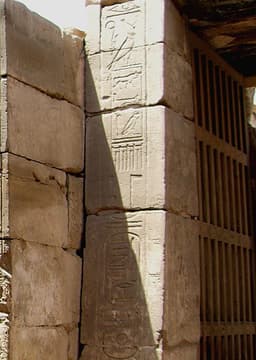
Takelot II
Emperor · Ancient
35.0Total
Basic Information
Born
-1178
-850
Died
-1133
-825
Era
Ancient
Ancient
Nationality
Assyria
Third Intermediate Egypt
Occupation
Emperor
Emperor
Civilization
Middle Eastern
Middle Eastern
Score Comparison
Military (10%)
20.0
25.9
Political (20%)
33.6
32.1
Influence (20%)
46.3
41.6
Legacy (20%)
37.5
34.2
Leadership (15%)
72.0
31.2
Strategy (15%)
45.0
39.6
TOTAL
43.3
35.0
Ashur-dan I — Complete Timeline
1178 BC
Long Reign and StabilityPolitical Action◆ Major
Ashur-dan I reigned for approximately 46 years, one of the longest in Assyrian history. His rule provided political stability and continuity during the Middle Assyrian period, allowing for administrative consolidation.
Long ReignStability
Impact: nationalconstructive
1160 BC
Construction Projects in AshurCultural
Ashur-dan I undertook significant building projects in the capital Ashur, including temple renovations and fortification repairs. These projects reinforced the city's religious and defensive importance.
Urban DevelopmentReligious Architecture
constructive
Takelot II — Complete Timeline
845 BC
Appointment of Osorkon as High Priest of AmunPolitical Action◆ Major
Takelot II appointed his son Osorkon (later Osorkon III) as High Priest of Amun at Thebes, hoping to assert control over the south. This move sparked resistance from local Theban factions, escalating into open conflict.
PriesthoodThebesAppointment
Impact: nationaldestructive
840 BC
Civil War between North and SouthWar
Takelot II's reign was marked by a prolonged civil war between his forces in the north (Tanis) and the Theban priesthood in the south. The conflict, recorded in the Chronicle of Prince Osorkon, resulted in widespread destruction and weakened the 22nd Dynasty.
Civil WarThebesTanis
Impact: nationaldestructive
Siege of ThebesWar◆ Major
During the civil war, Takelot II's forces besieged Thebes, attempting to crush the rebellion of the Theban priesthood. The siege lasted several months and resulted in the capture of the city, but the conflict continued for years.
SiegeThebesCivil War
Impact: regionaldestructive
This comparison has not been analyzed yet.
One-time AI generation (~1 minute). Scores and timeline are already available below.
Rankings
🥇
Ashur-dan ILeader
Mil: 20.0Pol: 33.6Inf: 46.3
43.3
🥈
Takelot II
Mil: 25.9Pol: 32.1Inf: 41.6
35.0
+8.3 behind
How This Comparison Works
Algorithm
Each figure is scored on 6 dimensions (0—100 scale) based on structured historical data: Military (10%), Political (20%), Influence (20%), Legacy (20%), Leadership (15%), Strategy (15%). The weighted total produces the final ranking.
Data Sources
Scores are computed from structured sub-indicators in the database. Scale factors adjust for era (Ancient ×0.85, Modern ×1.0) and civilization size (Eastern ×1.05, Other ×0.80) to account for differences in population and military scale.
Maximum 3 Figures
Comparisons are limited to 2—3 figures to ensure readability and statistical meaningfulness.
Error Margins
±5 points per dimension — Sub-scores are derived from historical records with inherent uncertainty. Two figures within 5 points on a dimension should be considered roughly equivalent in that area.
Total Score Accuracy
±3 points overall — The weighted combination of 6 dimensions produces a total score with approximately ±3 points of uncertainty. Differences of less than 3 points are not statistically significant— the figures are effectively tied.
Known Limitations
- Historical records are incomplete and uneven across civilizations
- Figures from oral-tradition societies may be underrepresented
- Occupation labels can misclassify multi-role figures
- Scores measure capability and impact, not moral character
- Quantitative scoring is a comparison tool, not absolute truth
Capability Radar
Military (10%) — Battles & Warfare
Battles
35
15
Win Rate
40
10
Expansion
40
5
Political (20%) — Governance & Reform
Reform
30
10
Diplomacy
25
10
Economy
30
10
Influence (20%) — Cultural & Global Reach
Cultural
20
10
Global
15
5
Legacy (20%) — Historical Impact
Historical
25
15
Longevity
20
10
Leadership (15%) — Power & Stability
Tenure
70
30
Stability
60
5
Strategy (15%) — Tactics & Innovation
Strategy
35
10
Tactics
30
10
Reform
25
5
Similar Comparisons
Comments & Discussion
No comments yet. Be the first to share your thoughts!