Loading...
Ashur-bel-nisheshu vs Julius Caesar
Julius Caesar leads by 47.2 pts · 2 figures compared
…
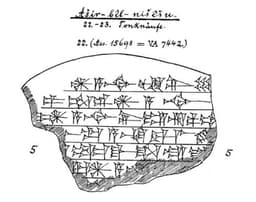
Ashur-bel-nisheshu
Emperor · Ancient
35.6Total

Julius Caesar
General · Ancient
82.8Total
Basic Information
Born
-1407
-100
Died
-1399
-44
Era
Ancient
Ancient
Nationality
Assyria
Roman Republic
Occupation
Emperor
General
Civilization
Middle Eastern
Western
Score Comparison
Military (10%)
25.9
88.0
Political (20%)
26.4
78.0
Influence (20%)
44.0
85.0
Legacy (20%)
35.0
82.0
Leadership (15%)
41.5
80.0
Strategy (15%)
30.3
85.0
TOTAL
35.6
82.8
Ashur-bel-nisheshu — Complete Timeline
1405 BC
Fortification of AshurCultural
Ashur-bel-nisheshu oversaw the reinforcement of Ashur's defensive walls, strengthening the city against potential attacks from Mitanni and other neighboring powers.
Urban DevelopmentDefense
constructive
1403 BC
Treaty with the KassitesPolitical Action◆ Major
Ashur-bel-nisheshu negotiated a boundary treaty with the Kassite king of Babylon, establishing a formal border between Assyria and Babylonia. This agreement brought a period of peace and defined territorial limits.
DiplomacyBorder Agreement
Impact: regionalconstructive
Julius Caesar — Complete Timeline
58 BC
Gallic WarsWar◆ Major
Caesar, as proconsul of Gaul, launched a series of campaigns that conquered all of Gaul (modern France, Belgium, and parts of Switzerland). He fought numerous battles, including against the Helvetii, the Belgae, and the Gallic chieftain Vercingetorix. The wars brought immense wealth and a loyal army to Caesar.
Gallic WarsConquestRoman Expansion
Impact: regional
49 BC
Crossing the RubiconPolitical Action◆ Major
Caesar led Legio XIII across the Rubicon River into Italy, defying the Roman Senate's order to disband his army. This act triggered a civil war against Pompey and the Optimates, ultimately leading to Caesar's dictatorship and the end of the Roman Republic.
Roman Civil WarEnd of RepublicPower Struggle
Impact: global
48 BC
Battle of PharsalusWar◆ Major
Caesar's outnumbered army defeated the larger forces of Pompey the Great at Pharsalus in Greece. Caesar's tactical use of a reserve line to counter Pompey's cavalry charge proved decisive. Pompey fled to Egypt, where he was assassinated, leaving Caesar as the undisputed master of the Roman world.
Roman Civil WarBattleDecisive Victory
Impact: regional
44 BC
Appointment as Dictator for LifePolitical Action◆ Major
The Roman Senate appointed Caesar dictator perpetuo (dictator for life), granting him unprecedented personal power. This move concentrated military, legislative, and judicial authority in one person, effectively ending the Roman Republic's traditional system of checks and balances and alarming many senators.
DictatorshipEnd of RepublicPower Consolidation
Impact: regionaldestructive
Assassination on the Ides of MarchPolitical Action◆ Major
A group of Roman senators, led by Marcus Junius Brutus and Gaius Cassius Longinus, stabbed Caesar to death at a meeting of the Senate in the Theatre of Pompey. The assassination was intended to restore the Republic, but instead triggered another civil war that led to the rise of the Roman Empire.
AssassinationRoman PoliticsEnd of Republic
Impact: globaldestructive
Expert Analysis
ashur-bel-nisheshu-vs-julius-caesar
# The General and the Builder: Two Paths to Immortality
On the Ides of March, 44 BCE, a man in a purple toga fell bleeding at the foot of a Pompeian statue, stabbed twenty-three times by senators he had once called friends. Julius Caesar’s death would echo through millennia, a cautionary tale of ambition and betrayal. Two thousand years earlier, another ruler stood atop the walls of Ashur, watching his masons set stone upon stone, fortifying a city that would survive for centuries. Ashur-bel-nisheshu did not die in a blaze of conspiracy; he faded into the quiet obscurity of a treaty and a wall. Why did one man’s life become a world-shaping drama, while the other’s became a footnote? The answer lies not in the scale of their deeds, but in the nature of their eras and the fire of their souls.
Origins
Caesar was born into the twilight of the Roman Republic, a world of crumbling traditions and ferocious competition. His patrician family, the Julii, claimed descent from the goddess Venus, but their fortunes had dwindled. Young Caesar grew up in the Subura, a noisy, crowded district of Rome, learning early that status meant little without wealth or connections. The Republic rewarded audacity: a man could rise through military glory, political alliances, and sheer force of will. Caesar’s Rome was a cauldron of ambition, where the old senatorial aristocracy struggled against populist reformers and ambitious generals.
Ashur-bel-nisheshu, by contrast, was born into the stability of the Middle Assyrian Empire, around 1407 BCE. Assyria was a kingdom built on the twin pillars of war and administration, but its power was still regional, hemmed in by the Kassite kingdom of Babylon to the south and the Mitanni to the west. His world was one of ritual and continuity: kings did not reinvent the state; they maintained it. He inherited a throne, a bureaucracy, and a set of obligations to the god Ashur. His task was not to conquer but to preserve.
Rise to Power
Caesar clawed his way upward through a series of calculated gambles. He fled Rome to avoid Sulla’s proscriptions, served as a military tribune in Asia, and was captured by pirates—whom he later crucified, but only after joking that they had undervalued his ransom. He climbed the political ladder through the *cursus honorum*: quaestor, aedile, pontifex maximus. But his true springboard was the governorship of Gaul, which he used to launch a decade-long war of conquest. By 49 BCE, he had a veteran army, immense wealth, and the loyalty of his soldiers. When the Senate ordered him to disband, he crossed the Rubicon River with a single legion, igniting a civil war that would end the Republic.
Ashur-bel-nisheshu’s rise was far simpler. He was a king by birth, probably the son or brother of his predecessor. We know little of his accession, but it likely followed the quiet rituals of Assyrian succession: offerings to the gods, a coronation in the temple of Ashur, and the acceptance of nobles. His power did not need to be seized; it was given.
Leadership & Governance
Caesar governed with a blend of genius and ruthlessness. As dictator, he reformed the calendar, granted citizenship to provincials, and launched public works projects that employed the Roman poor. His military campaigns were masterpieces of speed and logistics: the siege of Alesia, where he trapped Vercingetorix’s army while simultaneously defending against a Gallic relief force, remains a textbook example of defensive-offensive strategy. His score of 88 in Military and 88 in Strategy reflects this brilliance. But his political score of 78 reveals a man who understood power better than governance: he centralized authority, packed the Senate with his supporters, and accepted the title “dictator for life,” sowing the seeds of his own destruction.
Ashur-bel-nisheshu governed in a different key. His fortification of Ashur in 1405 BCE was not a personal project but a royal duty: a king protected his people and his god’s house. The treaty he negotiated with the Kassite king of Babylon in 1403 BCE was a masterpiece of diplomacy, establishing a formal border that reduced conflict. His scores—Military 60, Political 37.7, Strategy 30—reflect a modest but competent ruler. He was not a conqueror; he was a steward.
Triumph & Tragedy
Caesar’s greatest triumph was his conquest of Gaul, which added a vast, wealthy province to Rome and made him the most powerful man in the Republic. His greatest tragedy was his assassination: on the Ides of March, 44 BCE, he was stabbed to death by a conspiracy of senators, including his protégé Brutus. He died believing he was saving Rome, but his murder only accelerated the Republic’s collapse into empire.
Ashur-bel-nisheshu’s triumphs were quieter. The walls of Ashur stood for generations; the treaty with Babylon held for decades. His tragedy was anonymity: he left no dramatic death, no immortal words. He was simply forgotten, a name on a clay tablet.
Character & Destiny
Caesar was restless, brilliant, and arrogant. He believed in his own star, and his personality drove him to take risks that would have destroyed lesser men. He pardoned his enemies, only to be killed by them. His character was his fate: he could not stop pushing, could not accept limits.
Ashur-bel-nisheshu was a creature of his culture, which valued order over ambition. He did what was expected of him, and the historical record rewarded him with a single paragraph. His destiny was not to be remembered but to serve.
Legacy
Caesar’s legacy is overwhelming. His name became a title—Kaiser, Tsar—and his reforms shaped Western civilization. His writings, the *Commentaries on the Gallic War*, are still studied for their prose and military insight. His score of 82 in Legacy reflects this enduring impact.
Ashur-bel-nisheshu’s legacy is tiny but real. His wall protected Ashur; his treaty stabilized a border. For a few decades, Assyria was safer because of him. His score of 46.3 in Legacy is a reminder that most rulers are not Caesars.
Conclusion
One man changed the world; the other kept his world from changing. Both were necessary. Caesar’s fire consumed him but lit the path to empire. Ashur-bel-nisheshu’s quiet competence held the line against chaos. In the end, history remembers the brilliant and the broken, but it is built on the backs of the dutiful and the forgotten. The Ides of March and the walls of Ashur: two monuments to two kinds of greatness.
Rankings
🥇
Julius CaesarLeader
Mil: 88.0Pol: 78.0Inf: 85.0
82.8
🥈
Ashur-bel-nisheshu
Mil: 25.9Pol: 26.4Inf: 44.0
35.6
+47.2 behind
How This Comparison Works
Algorithm
Each figure is scored on 6 dimensions (0—100 scale) based on structured historical data: Military (10%), Political (20%), Influence (20%), Legacy (20%), Leadership (15%), Strategy (15%). The weighted total produces the final ranking.
Data Sources
Scores are computed from structured sub-indicators in the database. Scale factors adjust for era (Ancient ×0.85, Modern ×1.0) and civilization size (Eastern ×1.05, Other ×0.80) to account for differences in population and military scale.
Maximum 3 Figures
Comparisons are limited to 2—3 figures to ensure readability and statistical meaningfulness.
Error Margins
±5 points per dimension — Sub-scores are derived from historical records with inherent uncertainty. Two figures within 5 points on a dimension should be considered roughly equivalent in that area.
Total Score Accuracy
±3 points overall — The weighted combination of 6 dimensions produces a total score with approximately ±3 points of uncertainty. Differences of less than 3 points are not statistically significant— the figures are effectively tied.
Known Limitations
- Historical records are incomplete and uneven across civilizations
- Figures from oral-tradition societies may be underrepresented
- Occupation labels can misclassify multi-role figures
- Scores measure capability and impact, not moral character
- Quantitative scoring is a comparison tool, not absolute truth
Capability Radar
Military (10%) — Battles & Warfare
Battles
10
95
Win Rate
10
92
Expansion
10
97
Political (20%) — Governance & Reform
Reform
20
90
Diplomacy
30
85
Economy
10
82
Influence (20%) — Cultural & Global Reach
Cultural
10
88
Global
10
94
Legacy (20%) — Historical Impact
Historical
20
95
Longevity
10
96
Leadership (15%) — Power & Stability
Tenure
20
75
Stability
30
60
Strategy (15%) — Tactics & Innovation
Strategy
10
94
Tactics
10
96
Reform
20
88
Similar Comparisons
Comments & Discussion
TheShadowEmperor6/17/2026
Comparing these two is like contrasting a supernova with a stable star. Caesar’s assassination was a dramatic spectacle because his Rome was a powder keg of civil strife, but Ashur-bel-nisheshu’s wall-building reflects the Assyrian obsession with permanence. The *tuppi adê* treaty he signed with Kashtiliash III of Babylon shows a diplomat’s cunning, not a conqueror’s fire. One rewrote history in blood; the other etched his name in stone. Give me the pragmatist over the martyr any day.
破壁观察者6/17/2026
数据不会说谎:Caesar 的扩张让罗马从共和国滑向帝国,他在高卢屠杀了超过百万平民,这算是成就吗?Ashur-bel-nisheshu 修复阿舒尔城墙,只留下了少得可怜的王权记录,但至少没有种族灭绝的黑历史。历史吹捧 Caesar 是因为罗马的文献机器和文艺复兴的炒作,而亚述王的沉默恰恰证明他更关心治水而非砍头。别被高卢战记的煽情叙事骗了。
LegionHammer6/17/2026
You revisionists always undersell Caesar’s tactical genius. Ashur-bel-nisheshu’s treaty with Babylon was a minor diplomatic footnote compared to Caesar’s conquest of Gaul or his bridge over the Rhine. The Rubicon crossing alone—a deliberate act of treason that reshaped the ancient world—shows a man who understood history as a stage. The Assyrian king built walls; Caesar broke them down and built an empire. If you want a builder, hire an architect; if you want a legend, read the Commentaries.
古楔风骨6/17/2026
从近东视角看,Caesar 不过是个暴发户。Ashur-bel-nisheshu 活在公元前 15 世纪,当时亚述刚从米坦尼手中挣脱,他通过加固首都和签署和平条约,为后来尼努尔塔一世的中亚述帝国奠基。而 Caesar 的所谓改革——从历法到土地分配——都掺杂着独裁野心。亚述王的名字刻在泥板上,比任何拉丁铭文都承载了更多文明记忆。历史舞台很大,不只有罗马。
PangeaPragmatist6/17/2026
Let’s cut the romanticism: Caesar’s fame is 90% PR and 10% actual achievement. He borrowed money to stage games, exaggerated his victories, and got stabbed because he alienated everyone. Ashur-bel-nisheshu’s city wall and waterworks probably improved life for thousands of Assyrians without inflaming civil war. Your “Ides of March” poetry doesn’t change the fact that Caesar’s legacy is a series of civil wars and a dictatorship. Give me the quiet engineer who built for the long haul.