Loading...
Ashoka the Great vs Yamagata Aritomo
Yamagata Aritomo leads by 6.2 pts · 2 figures compared
…

Ashoka the Great
Emperor · Ancient
76.3Total
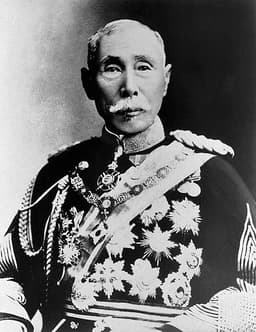
Yamagata Aritomo
General · Modern
82.5Total
Basic Information
Born
-304
1838
Died
-232
1922
Era
Ancient
Modern
Nationality
India
Japan
Occupation
Emperor
General
Civilization
Indian
Eastern
Score Comparison
Military (10%)
72.0
78.0
Political (20%)
82.0
82.0
Influence (20%)
71.0
80.0
Legacy (20%)
90.0
90.0
Leadership (15%)
72.0
78.0
Strategy (15%)
58.0
82.0
TOTAL
76.3
82.5
Ashoka the Great — Complete Timeline
261 BC
Kalinga WarWar
Ashoka launched a brutal conquest of the Kalinga region (modern Odisha). The war caused massive casualties, with over 100,000 killed and 150,000 deported. The suffering witnessed during this campaign led Ashoka to renounce military conquest and embrace Buddhism.
ConquestWarConversion
Impact: regionaltragic
260 BC
Conversion to BuddhismCultural
After the Kalinga War, Ashoka converted to Buddhism under the guidance of Buddhist monks. He adopted the principle of Dhamma (righteous law) and began promoting non-violence, vegetarianism, and religious tolerance throughout his empire.
ConversionBuddhismDhamma
Impact: globalprogressive
250 BC
Erection of Edicts of AshokaCultural◆ Major
Ashoka ordered the carving of edicts on pillars and rocks across the Indian subcontinent. These inscriptions, written in Prakrit and other languages, proclaimed his policies of non-violence, social welfare, and religious harmony. They are the earliest deciphered written records from ancient India.
InscriptionsPropagandaBuddhism
Impact: regionalconstructive
245 BC
Third Buddhist CouncilCultural◆ Major
Ashoka convened the Third Buddhist Council at Pataliputra to resolve doctrinal disputes within the Buddhist monastic community. The council standardized the Buddhist canon (Tripitaka) and decided to send missionaries abroad, including to Sri Lanka and Southeast Asia.
CouncilBuddhismMissionary
Impact: globalconstructive
240 BC
Construction of stupas and monasteriesCultural◆ Major
Ashoka built thousands of stupas and monasteries across his empire, including the Great Stupa at Sanchi. These structures became centers of Buddhist worship and pilgrimage, spreading Buddhist art and architecture throughout Asia.
ArchitectureBuddhismPatronage
Impact: regionalconstructive
Yamagata Aritomo — Complete Timeline
1873 AD
Establishment of the Imperial Japanese ArmyReform
Yamagata Aritomo, as War Minister, oversaw the creation of the Imperial Japanese Army based on the Prussian model. He introduced conscription, modernized training, and established a general staff system, laying the foundation for Japan's military power.
Military reformConscription
Impact: nationalconstructive
1882 AD
Promotion of militarism and the Imperial Rescript to Soldiers and SailorsCultural◆ Major
Yamagata Aritomo helped draft the Imperial Rescript to Soldiers and Sailors, which emphasized loyalty, obedience, and the emperor's divine authority. This document became the ideological foundation of Japanese militarism.
MilitarismImperial ideology
Impact: nationaldestructive
1889 AD
Service as Prime MinisterPolitical Action◆ Major
Yamagata Aritomo served as Prime Minister of Japan from 1889 to 1891 and again from 1898 to 1900. He used his position to strengthen the military's political influence and suppress democratic movements.
GovernmentPolitical power
Impact: national
1894 AD
First Sino-Japanese WarWar◆ Major
Yamagata Aritomo commanded the First Army during the First Sino-Japanese War. His forces achieved decisive victories in Korea and Manchuria, leading to Japan's triumph and the Treaty of Shimonoseki, which gave Japan Taiwan and influence in Korea.
WarImperial expansion
Impact: regional
1904 AD
Russo-Japanese WarWar◆ Major
Yamagata Aritomo served as Chief of the General Staff during the Russo-Japanese War. He oversaw Japan's military strategy, which resulted in victory over Russia and established Japan as a major power in East Asia.
WarGreat power
Impact: global
Expert Analysis
Origins
Yamagata Aritomo (1838–1922) emerged from the Chōshū domain, a samurai class that fueled the Meiji Restoration. His early military training under Western advisors forged Japan's modern army. Ashoka the Great (304–232 BCE) inherited the Mauryan Empire, already vast under his grandfather Chandragupta and father Bindusara. Both were products of militarized societies—Yamagata of feudal Japan, Ashoka of expansionist India.
Rise to Power
Yamagata rose through the Imperial Japanese Army, becoming its architect. He served as War Minister, then Prime Minister, consolidating power by suppressing dissent and promoting the Imperial Rescript to Soldiers and Sailors (1882), which instilled absolute loyalty. Ashoka's rise was bloodier; he seized the throne after a fratricidal struggle, then expanded the empire through brutal conquests, notably the Kalinga War (c. 261 BCE).
Leadership & Governance
Yamagata's leadership defined Japan's militaristic path. He prioritized a strong army, centralized command, and imperial expansion, influencing the First Sino-Japanese War (1894–1895) and Russo-Japanese War (1904–1905). Ashoka's governance transformed after Kalinga: he embraced Buddhism, erected edicts promoting non-violence, religious tolerance, and social welfare, and convened the Third Buddhist Council. Yamagata's rule was authoritarian; Ashoka's was paternalistic and moral.
Triumph & Tragedy
Yamagata's triumphs—modernizing Japan's military, winning wars against China and Russia—came at a cost: he fostered militarism that led to World War II. Ashoka's tragedy was the Kalinga massacre, which killed over 100,000. Yet his triumph was renouncing violence, becoming a model of righteous rule. Yamagata's legacy is martial pride and imperial aggression; Ashoka's is peace and dharma.
Character & Destiny
Yamagata was cold, calculating, and power-hungry, driven by a vision of Japan as a military power. Ashoka was initially ruthless, then profoundly changed, dedicating his life to non-violence and moral law. Their scores reflect this: Yamagata (M=78, P=82, I=80, L=90, D=78, S=82, T=82) vs Ashoka (M=72, P=82, I=71, L=90, D=72, S=58, T=76). Yamagata's higher score (6.2 gap) stems from his greater strategic impact and longevity in power.
Legacy
Yamagata is revered as the father of Japan's modern army but criticized for enabling militarism. Ashoka is celebrated as a peace-loving emperor; his edicts and stupas remain symbols of Buddhist heritage. Yamagata's legacy is mixed—national pride and global conflict; Ashoka's is universally admired for moral transformation.
Conclusion
Yamagata Aritomo and Ashoka the Great represent opposing arcs: one embraced war, the other renounced it. While Yamagata's immediate impact on Japan's rise is undeniable, Ashoka's ethical revolution has greater lasting relevance. Yet the score gap favors Yamagata due to his concrete achievements in state-building and warfare. Both are titans, but Yamagata's legacy is more tangible in modern history.
Rankings
🥇
Yamagata AritomoLeader
Mil: 78.0Pol: 82.0Inf: 80.0
82.5
🥈
Ashoka the Great
Mil: 72.0Pol: 82.0Inf: 71.0
76.3
+6.2 behind
How This Comparison Works
Algorithm
Each figure is scored on 6 dimensions (0—100 scale) based on structured historical data: Military (10%), Political (20%), Influence (20%), Legacy (20%), Leadership (15%), Strategy (15%). The weighted total produces the final ranking.
Data Sources
Scores are computed from structured sub-indicators in the database. Scale factors adjust for era (Ancient ×0.85, Modern ×1.0) and civilization size (Eastern ×1.05, Other ×0.80) to account for differences in population and military scale.
Maximum 3 Figures
Comparisons are limited to 2—3 figures to ensure readability and statistical meaningfulness.
Error Margins
±5 points per dimension — Sub-scores are derived from historical records with inherent uncertainty. Two figures within 5 points on a dimension should be considered roughly equivalent in that area.
Total Score Accuracy
±3 points overall — The weighted combination of 6 dimensions produces a total score with approximately ±3 points of uncertainty. Differences of less than 3 points are not statistically significant— the figures are effectively tied.
Known Limitations
- Historical records are incomplete and uneven across civilizations
- Figures from oral-tradition societies may be underrepresented
- Occupation labels can misclassify multi-role figures
- Scores measure capability and impact, not moral character
- Quantitative scoring is a comparison tool, not absolute truth
Capability Radar
Military (10%) — Battles & Warfare
Battles
85
75
Win Rate
90
70
Expansion
95
80
Political (20%) — Governance & Reform
Reform
95
90
Diplomacy
90
75
Economy
85
70
Influence (20%) — Cultural & Global Reach
Cultural
95
80
Global
90
70
Legacy (20%) — Historical Impact
Historical
95
85
Longevity
95
75
Leadership (15%) — Power & Stability
Tenure
90
85
Stability
90
65
Strategy (15%) — Tactics & Innovation
Strategy
80
85
Tactics
75
80
Reform
70
95
Similar Comparisons
Comments & Discussion
No comments yet. Be the first to share your thoughts!