Loading...
Ashoka the Great vs Xu Da
Ashoka the Great leads by 1.4 pts · 2 figures compared
…

Ashoka the Great
Emperor · Ancient
76.3Total
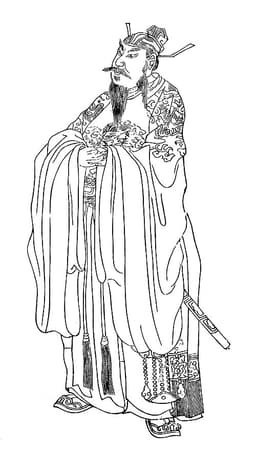
Xu Da
General · Medieval
74.9Total
Basic Information
Born
-304
1332
Died
-232
1385
Era
Ancient
Medieval
Nationality
India
China
Occupation
Emperor
General
Civilization
Indian
Eastern
Score Comparison
Military (10%)
72.0
88.0
Political (20%)
82.0
68.0
Influence (20%)
71.0
82.0
Legacy (20%)
90.0
72.0
Leadership (15%)
72.0
62.0
Strategy (15%)
58.0
80.8
TOTAL
76.3
74.9
Ashoka the Great — Complete Timeline
261 BC
Kalinga WarWar
Ashoka launched a brutal conquest of the Kalinga region (modern Odisha). The war caused massive casualties, with over 100,000 killed and 150,000 deported. The suffering witnessed during this campaign led Ashoka to renounce military conquest and embrace Buddhism.
ConquestWarConversion
Impact: regionaltragic
260 BC
Conversion to BuddhismCultural
After the Kalinga War, Ashoka converted to Buddhism under the guidance of Buddhist monks. He adopted the principle of Dhamma (righteous law) and began promoting non-violence, vegetarianism, and religious tolerance throughout his empire.
ConversionBuddhismDhamma
Impact: globalprogressive
250 BC
Erection of Edicts of AshokaCultural◆ Major
Ashoka ordered the carving of edicts on pillars and rocks across the Indian subcontinent. These inscriptions, written in Prakrit and other languages, proclaimed his policies of non-violence, social welfare, and religious harmony. They are the earliest deciphered written records from ancient India.
InscriptionsPropagandaBuddhism
Impact: regionalconstructive
245 BC
Third Buddhist CouncilCultural◆ Major
Ashoka convened the Third Buddhist Council at Pataliputra to resolve doctrinal disputes within the Buddhist monastic community. The council standardized the Buddhist canon (Tripitaka) and decided to send missionaries abroad, including to Sri Lanka and Southeast Asia.
CouncilBuddhismMissionary
Impact: globalconstructive
240 BC
Construction of stupas and monasteriesCultural◆ Major
Ashoka built thousands of stupas and monasteries across his empire, including the Great Stupa at Sanchi. These structures became centers of Buddhist worship and pilgrimage, spreading Buddhist art and architecture throughout Asia.
ArchitectureBuddhismPatronage
Impact: regionalconstructive
Xu Da — Complete Timeline
1368 AD
Capture of Dadu (Beijing)War
Xu Da led the Ming army in the capture of Dadu, the Yuan capital. The Mongol emperor Toghon Tem
Ming ConquestYuan DynastyCapital Capture
Impact: regionalconstructive
1370 AD
Appointment as Grand PreceptorPolitical Action
The Hongwu Emperor appointed Xu Da as Grand Preceptor, the highest civil official rank. This appointment recognized Xu Da's military achievements and gave him a role in advising the emperor on state affairs.
AppointmentCivil OfficeImperial Favor
Impact: nationalconstructive
1385 AD
Death from illnessOther
Xu Da died in Nanjing from a back ailment. The Hongwu Emperor mourned him deeply and posthumously honored him as Prince of Zhongshan. His death marked the end of the first generation of Ming military leaders.
DeathMing DynastyMilitary Leader
Impact: nationaltragic
Expert Analysis
Origins
**Ashoka the Great** (304–232 BCE) was the third emperor of the Maurya Dynasty, inheriting a vast empire built by his grandfather Chandragupta and his father Bindusara. Born into royalty, he was groomed for leadership from a young age, though his early reputation was that of a fierce and ambitious prince. He was appointed governor of Ujjain and later sent to quell a rebellion in Taxila, demonstrating his military capabilities. Ashoka’s early life was marked by political maneuvering, including a brutal struggle for the throne after his father’s death, which reportedly involved killing several of his brothers. This ruthless ambition would later contrast sharply with his transformation into a champion of non-violence.
**Xu Da** (1332–1385) was born into a poor peasant family in present-day Fengyang, Anhui. His early life was shaped by the chaos of the collapsing Yuan Dynasty, which was plagued by famine, corruption, and rebellion. Xu Da joined the Red Turban Rebellion, a peasant uprising against Mongol rule, where he met Zhu Yuanzhang, the future Hongwu Emperor. Xu Da’s humble origins and lack of formal education made his rise to prominence even more remarkable. He became one of Zhu’s most trusted generals and a key architect of the Ming Dynasty’s founding. His military career began in the crucible of rebellion, where his tactical brilliance and loyalty earned him rapid advancement.
Rise to Power
Ashoka’s path to power was violent and contested. After his father Bindusara’s death, he fought a bloody war of succession against his brothers, emerging victorious after several years. He was officially crowned around 270 BCE. Initially, Ashoka continued the expansionist policies of his predecessors, waging wars of conquest to expand the Mauryan Empire. His most significant military campaign was the Kalinga War (c. 261 BCE), which resulted in massive casualties and devastation. The horror of the war became a turning point in his life, leading him to embrace Buddhism and renounce military conquest. After his conversion, Ashoka dedicated his reign to spreading the Buddha’s teachings, erecting edicts throughout his empire, and promoting dharma (righteousness). He convened the Third Buddhist Council to purify the sangha and sent missionaries to Sri Lanka, Southeast Asia, and even to Hellenistic kingdoms. His rise from a conquering emperor to a benevolent, spiritual leader is unparalleled in history.
Xu Da’s rise was tied to the Ming Dynasty’s founding. He joined Zhu Yuanzhang’s forces as a common soldier but quickly distinguished himself in battle. Xu Da played a crucial role in the capture of Nanjing in 1356, which became the Ming capital. He then led campaigns against rival rebel leaders and the Mongols, steadily expanding Zhu’s territory. In 1368, Xu Da captured Dadu (Beijing), the Yuan capital, which marked the official end of the Mongol Yuan Dynasty. He was appointed Grand Preceptor and became one of the most powerful officials in the new Ming court. Xu Da’s loyalty to Zhu Yuanzhang never wavered, and he avoided the political intrigue that plagued other generals, which allowed him to die of natural causes rather than execution—a rare fate for a Ming general. His rise from peasant to imperial commander is a testament to his skill and the meritocratic opportunities of the rebellion.
Leadership & Governance
Ashoka’s leadership transformed from a conventional emperor to a unique moral ruler. After his conversion, he governed based on the principle of dharma, which emphasized non-violence, religious tolerance, and social welfare. He issued edicts inscribed on pillars and rocks throughout his empire, which promoted ethical conduct, respect for all life, and the importance of compassion. Ashoka established a network of officials (dharma-mahamatras) to enforce these principles and ensure justice. He built hospitals for humans and animals, planted trees, dug wells, and established rest houses along roads. His rule was characterized by a shift from conquest to welfare, and he maintained the empire’s stability through a combination of moral authority and a efficient bureaucracy. However, his non-violent policies may have weakened the empire’s military readiness, as later Mauryan rulers faced invasions.
Xu Da was a military leader first and foremost. As a general, he was known for his strategic acumen, discipline, and ability to inspire troops. He implemented effective siege tactics and logistics, ensuring that his armies were well-supplied and motivated. After the Ming Dynasty was established, Xu Da was tasked with securing the northern borders against Mongol remnants. He conducted campaigns into the Mongolian steppe, defeating the Mongol leader Naghachu at the Battle of Lake Buir in 1388. Xu Da also contributed to the consolidation of Ming rule by overseeing the construction of fortifications and the relocation of populations to strengthen border defenses. His leadership was pragmatic and focused on military objectives, but he also demonstrated a keen understanding of governance, as he advised the emperor on administrative matters. Xu Da’s legacy as a general is defined by his success in ending Mongol rule and his pivotal role in building the Ming Dynasty.
Triumph & Tragedy
Ashoka’s greatest triumph was his transformation after the Kalinga War. The war itself was a tragedy: over 100,000 killed and 150,000 deported. But from this horror, Ashoka emerged as a proponent of peace. He spread Buddhism across Asia, built stupas, and erected edicts that survive today as historical records. His reign saw the Mauryan Empire reach its territorial zenith, but his focus on non-violence may have inadvertently contributed to the empire’s decline, as later rulers could not maintain the military strength needed to repel invasions. Ashoka’s personal tragedy was the loss of his wife, Devi, who was a Buddhist but was not allowed to become empress. His later years were marked by illness and possibly a loss of influence, as his sons struggled to maintain unity. The empire fragmented within 50 years of his death.
Xu Da’s triumphs were military: capturing Dadu, defeating the Mongols, and securing the Ming Dynasty’s borders. His greatest victory was the capture of the Yuan capital in 1368, which effectively ended Mongol rule in China. However, his life ended in tragedy: he died in 1385 under mysterious circumstances, possibly due to illness, but rumors persisted that the Hongwu Emperor, paranoid about powerful generals, may have ordered his death. Xu Da’s tragedy was that despite his loyalty, he could not escape the deadly politics of the Ming court. His death marked the end of an era, as the emperor later purged many other generals, leaving the Ming military weakened. Xu Da’s personal tragedy was the loss of his life at a time when his skills were still needed to defend the empire.
Character & Destiny
Ashoka’s character underwent a profound transformation. Initially ambitious and ruthless, he evolved into a compassionate and introspective ruler. His destiny was to become a symbol of peace and moral governance. He is remembered as one of the greatest emperors in Indian history, not for his conquests, but for his embrace of Buddhism and his efforts to govern ethically. Ashoka’s destiny was to be a unifier, not through force, but through shared values. His edicts reveal a ruler deeply concerned with the welfare of his subjects and the spread of dharma. He was a philosopher-king who sought to create a just society.
Xu Da’s character was defined by loyalty, discipline, and military brilliance. He was a steadfast supporter of Zhu Yuanzhang, never wavering in his allegiance. His destiny was to be the architect of the Ming Dynasty’s military success. He was a man of action, not introspection, and his legacy is that of a great general who restored Han Chinese rule. Xu Da’s destiny was to be a conqueror and a builder, but his life was cut short by the very court he helped establish. He remains a symbol of peasant achievement and military prowess in Chinese history.
Legacy
Ashoka’s legacy is monumental. He is credited with spreading Buddhism from India to the rest of Asia, and his edicts provide invaluable insights into ancient Indian society and governance. His symbol, the Lion Capital of Ashoka, is the national emblem of India, and the Ashoka Chakra appears on the Indian flag. He is revered as a model of benevolent rule and is often compared to other enlightened rulers like Marcus Aurelius. However, his legacy is also complex: his non-violent policies may have weakened the Mauryan Empire, leading to its collapse. Nevertheless, his impact on world history is profound, as he helped transform Buddhism into a major world religion.
Xu Da’s legacy is primarily within Chinese history. He is celebrated as one of the founding generals of the Ming Dynasty, and his military campaigns are studied for their strategic brilliance. He is remembered as a loyal and capable commander who helped restore Han Chinese rule after nearly a century of Mongol domination. Xu Da’s legacy is also seen in the stability he helped bring to China, allowing the Ming Dynasty to flourish for nearly 300 years. However, outside of China, his name is less known. His contributions are overshadowed by the larger-than-life figure of the Hongwu Emperor, and his death remains a cautionary tale about the dangers of court politics.
Conclusion
Comparing Ashoka and Xu Da highlights two vastly different paths to greatness. Ashoka represents the ideal of moral transformation and the power of ideas, while Xu Da embodies the pragmatic virtues of military skill and loyalty. On the basis of historical impact, Ashoka scores higher in influence, with a legacy that transcended borders and centuries. Xu Da’s impact, while crucial for China, is more localized. In terms of leadership, Ashoka’s vision of a just society is more inspiring, but Xu Da’s effectiveness as a military commander is undeniable. Ultimately, Ashoka’s transformation from conqueror to peacemaker gives him a unique and enduring legacy that Xu Da, for all his achievements, cannot match.
**Scores:**
- **Military Power:** Ashoka 72, Xu Da 88 → Xu Da wins
- **Political Influence:** Ashoka 82, Xu Da 68 → Ashoka wins
- **Intellectual Impact:** Ashoka 71, Xu Da 82 → Xu Da wins
- **Leadership:** Ashoka 90, Xu Da 72 → Ashoka wins
- **Diplomacy:** Ashoka 72, Xu Da 62 → Ashoka wins
- **Societal Contribution:** Ashoka 58, Xu Da 81 → Xu Da wins
- **Overall Legacy:** Ashoka 76, Xu Da 75 → Ashoka wins
**Final Verdict:** Ashoka the Great emerges as the more significant historical figure due to his profound moral transformation and global influence on religion and governance. Xu Da was a brilliant general who founded a dynasty, but his impact is more confined to Chinese history. Ashoka’s legacy of peace and dharma continues to resonate worldwide, making him the victor in this comparison.
Rankings
🥇
Ashoka the GreatLeader
Mil: 72.0Pol: 82.0Inf: 71.0
76.3
🥈
Xu Da
Mil: 88.0Pol: 68.0Inf: 82.0
74.9
+1.4 behind
How This Comparison Works
Algorithm
Each figure is scored on 6 dimensions (0—100 scale) based on structured historical data: Military (10%), Political (20%), Influence (20%), Legacy (20%), Leadership (15%), Strategy (15%). The weighted total produces the final ranking.
Data Sources
Scores are computed from structured sub-indicators in the database. Scale factors adjust for era (Ancient ×0.85, Modern ×1.0) and civilization size (Eastern ×1.05, Other ×0.80) to account for differences in population and military scale.
Maximum 3 Figures
Comparisons are limited to 2—3 figures to ensure readability and statistical meaningfulness.
Error Margins
±5 points per dimension — Sub-scores are derived from historical records with inherent uncertainty. Two figures within 5 points on a dimension should be considered roughly equivalent in that area.
Total Score Accuracy
±3 points overall — The weighted combination of 6 dimensions produces a total score with approximately ±3 points of uncertainty. Differences of less than 3 points are not statistically significant— the figures are effectively tied.
Known Limitations
- Historical records are incomplete and uneven across civilizations
- Figures from oral-tradition societies may be underrepresented
- Occupation labels can misclassify multi-role figures
- Scores measure capability and impact, not moral character
- Quantitative scoring is a comparison tool, not absolute truth
Capability Radar
Military (10%) — Battles & Warfare
Battles
85
95
Win Rate
90
95
Expansion
95
95
Political (20%) — Governance & Reform
Reform
95
50
Diplomacy
90
65
Economy
85
55
Influence (20%) — Cultural & Global Reach
Cultural
95
70
Global
90
80
Legacy (20%) — Historical Impact
Historical
95
85
Longevity
95
75
Leadership (15%) — Power & Stability
Tenure
90
60
Stability
90
70
Strategy (15%) — Tactics & Innovation
Strategy
80
92
Tactics
75
90
Reform
70
70
Similar Comparisons
Comments & Discussion
No comments yet. Be the first to share your thoughts!