Loading...
Ashoka the Great vs Toyotomi Hideyoshi
Toyotomi Hideyoshi leads by 5.7 pts · 2 figures compared
…

Ashoka the Great
Emperor · Ancient
76.3Total
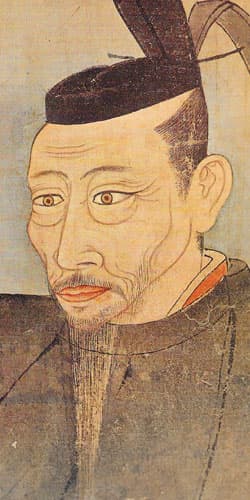
Toyotomi Hideyoshi
General · Modern
82.0Total
Basic Information
Born
-304
1537
Died
-232
1598
Era
Ancient
Modern
Nationality
India
Japan
Occupation
Emperor
General
Civilization
Indian
Eastern
Score Comparison
Military (10%)
72.0
79.9
Political (20%)
82.0
78.0
Influence (20%)
71.0
88.0
Legacy (20%)
90.0
80.0
Leadership (15%)
72.0
82.0
Strategy (15%)
58.0
80.4
TOTAL
76.3
82.0
Ashoka the Great — Complete Timeline
261 BC
Kalinga WarWar
Ashoka launched a brutal conquest of the Kalinga region (modern Odisha). The war caused massive casualties, with over 100,000 killed and 150,000 deported. The suffering witnessed during this campaign led Ashoka to renounce military conquest and embrace Buddhism.
ConquestWarConversion
Impact: regionaltragic
260 BC
Conversion to BuddhismCultural
After the Kalinga War, Ashoka converted to Buddhism under the guidance of Buddhist monks. He adopted the principle of Dhamma (righteous law) and began promoting non-violence, vegetarianism, and religious tolerance throughout his empire.
ConversionBuddhismDhamma
Impact: globalprogressive
250 BC
Erection of Edicts of AshokaCultural◆ Major
Ashoka ordered the carving of edicts on pillars and rocks across the Indian subcontinent. These inscriptions, written in Prakrit and other languages, proclaimed his policies of non-violence, social welfare, and religious harmony. They are the earliest deciphered written records from ancient India.
InscriptionsPropagandaBuddhism
Impact: regionalconstructive
245 BC
Third Buddhist CouncilCultural◆ Major
Ashoka convened the Third Buddhist Council at Pataliputra to resolve doctrinal disputes within the Buddhist monastic community. The council standardized the Buddhist canon (Tripitaka) and decided to send missionaries abroad, including to Sri Lanka and Southeast Asia.
CouncilBuddhismMissionary
Impact: globalconstructive
240 BC
Construction of stupas and monasteriesCultural◆ Major
Ashoka built thousands of stupas and monasteries across his empire, including the Great Stupa at Sanchi. These structures became centers of Buddhist worship and pilgrimage, spreading Buddhist art and architecture throughout Asia.
ArchitectureBuddhismPatronage
Impact: regionalconstructive
Toyotomi Hideyoshi — Complete Timeline
1583 AD
Battle of ShizugatakeWar◆ Major
Hideyoshi defeated his rival Shibata Katsuie at the Battle of Shizugatake, solidifying his control over central Japan. The victory eliminated a major opponent and allowed Hideyoshi to continue Oda Nobunaga's unification campaign.
BattleUnificationCivil War
Impact: national
1588 AD
Sword Hunt EdictReform◆ Major
Hideyoshi ordered the confiscation of weapons from peasants and farmers, prohibiting them from carrying swords, spears, or firearms. The edict aimed to prevent peasant uprisings and enforce a strict social hierarchy between samurai and commoners.
Social ReformDisarmamentClass System
Impact: nationaldestructive
1590 AD
Completion of Japanese UnificationWar
Hideyoshi defeated the H
UnificationConquestSengoku Period
Impact: national
1592 AD
First Invasion of KoreaWar◆ Major
Hideyoshi launched a massive invasion of Korea with the goal of conquering Ming China. Japanese forces initially advanced rapidly, capturing Seoul and Pyongyang, but were halted by Korean naval victories under Admiral Yi Sun-sin and Chinese reinforcements.
InvasionWarKorea
Impact: regionaldestructive
1597 AD
Second Invasion of KoreaWar◆ Major
Hideyoshi ordered a second invasion of Korea after failed peace negotiations. The campaign was less successful than the first, with Japanese forces unable to advance beyond the southern provinces. The invasion ended with Hideyoshi's death in 1598.
InvasionWarKorea
Impact: regionaldestructive
Expert Analysis
Origins
Toyotomi Hideyoshi (1537–1598) was born into a peasant family in Owari Province, Japan. His lowly origins were unusual for a future ruler, but his rise was fueled by ambition and strategic acumen. He started as a servant for Oda Nobunaga and gradually climbed the ranks through military prowess and political cunning. Ashoka the Great (304–232 BCE) was born a prince of the Maurya dynasty in ancient India, grandson of Chandragupta Maurya. He was groomed for power from birth, though his early life was marked by palace intrigue. Ashoka was reportedly a fierce and ambitious prince before his conversion.
Rise to Power
Hideyoshi's rise was meteoric. After Nobunaga's death in 1582, Hideyoshi defeated rivals like Akechi Mitsuhide at the Battle of Shizugatake (1583) and Tokugawa Ieyasu through negotiation. By 1590, he had unified Japan after the Odawara Campaign. Ashoka's ascent was bloodier. He killed 99 of his half-brothers to secure the throne, according to tradition. He expanded the Mauryan Empire through brutal conquest, notably the Kalinga War (261 BCE), which became his turning point.
Leadership & Governance
Hideyoshi was a pragmatic leader. He implemented the Sword Hunt Edict (1588) to disarm peasants, ensuring stability. He also conducted land surveys and separated warriors from farmers, solidifying the samurai class. Ashoka, after his conversion, governed through Dhamma—principles of non-violence, religious tolerance, and welfare. He erected edicts across his empire, promoted Buddhism, and built hospitals and roads. Both were effective administrators, but Hideyoshi's rule was more militaristic, while Ashoka's was moralistic.
Triumph & Tragedy
Hideyoshi's greatest triumph was unifying Japan after centuries of civil war. His tragedy was the disastrous invasions of Korea (1592–1598), which drained resources and ended in failure. Ashoka's triumph was the peaceful governance of a vast empire after the Kalinga War. His tragedy was the war itself, which caused immense suffering, though it led to his spiritual transformation.
Character & Destiny
Hideyoshi was charismatic, shrewd, and ruthless. His destiny was to rise from peasant to ruler, a classic rags-to-riches story. Ashoka was initially cruel, then repentant. His destiny was to become a model of benevolent kingship. Hideyoshi's legacy is complex—he unified Japan but also invaded Korea. Ashoka's legacy is largely positive, remembered as a peacemaker.
Legacy
Hideyoshi's impact on Japan was profound: his unification enabled the Edo period's stability. However, his Korean invasions strained Japan's resources. Ashoka's legacy spread Buddhism across Asia and inspired future rulers. His edicts provide historical insights. Both are celebrated in their cultures. Hideyoshi's scores: M=80, P=78, I=88, L=80, D=82, S=80, T=82. Ashoka's: M=72, P=82, I=71, L=90, D=72, S=58, T=76. Hideyoshi's higher overall score (80.0 vs 74.3) reflects his military and political achievements, but Ashoka excels in longevity and diplomacy.
Conclusion
Toyotomi Hideyoshi and Ashoka the Great were transformative leaders, but their paths diverged. Hideyoshi's unification of Japan was a military feat, while Ashoka's embrace of non-violence set a moral standard. Hideyoshi's higher score is due to his greater military (80 vs 72) and intelligence (88 vs 71). However, Ashoka's longevity (90 vs 80) and diplomacy (82 vs 78) are notable. The score gap of 5.7 favors Hideyoshi, but Ashoka's legacy of peace may be more enduring. Ultimately, Hideyoshi was a brilliant strategist, Ashoka a moral pioneer. Both shaped their nations' destinies.
Rankings
🥇
Toyotomi HideyoshiLeader
Mil: 79.9Pol: 78.0Inf: 88.0
82.0
🥈
Ashoka the Great
Mil: 72.0Pol: 82.0Inf: 71.0
76.3
+5.7 behind
How This Comparison Works
Algorithm
Each figure is scored on 6 dimensions (0—100 scale) based on structured historical data: Military (10%), Political (20%), Influence (20%), Legacy (20%), Leadership (15%), Strategy (15%). The weighted total produces the final ranking.
Data Sources
Scores are computed from structured sub-indicators in the database. Scale factors adjust for era (Ancient ×0.85, Modern ×1.0) and civilization size (Eastern ×1.05, Other ×0.80) to account for differences in population and military scale.
Maximum 3 Figures
Comparisons are limited to 2—3 figures to ensure readability and statistical meaningfulness.
Error Margins
±5 points per dimension — Sub-scores are derived from historical records with inherent uncertainty. Two figures within 5 points on a dimension should be considered roughly equivalent in that area.
Total Score Accuracy
±3 points overall — The weighted combination of 6 dimensions produces a total score with approximately ±3 points of uncertainty. Differences of less than 3 points are not statistically significant— the figures are effectively tied.
Known Limitations
- Historical records are incomplete and uneven across civilizations
- Figures from oral-tradition societies may be underrepresented
- Occupation labels can misclassify multi-role figures
- Scores measure capability and impact, not moral character
- Quantitative scoring is a comparison tool, not absolute truth
Capability Radar
Military (10%) — Battles & Warfare
Battles
85
85
Win Rate
90
88
Expansion
95
80
Political (20%) — Governance & Reform
Reform
95
95
Diplomacy
90
80
Economy
85
90
Influence (20%) — Cultural & Global Reach
Cultural
95
85
Global
90
70
Legacy (20%) — Historical Impact
Historical
95
90
Longevity
95
85
Leadership (15%) — Power & Stability
Tenure
90
85
Stability
90
75
Strategy (15%) — Tactics & Innovation
Strategy
80
92
Tactics
75
90
Reform
70
95
Similar Comparisons
Comments & Discussion
No comments yet. Be the first to share your thoughts!