Loading...
Ashoka the Great vs Tokugawa Ieyasu
Tokugawa Ieyasu leads by 5.5 pts · 2 figures compared
…

Ashoka the Great
Emperor · Ancient
76.3Total
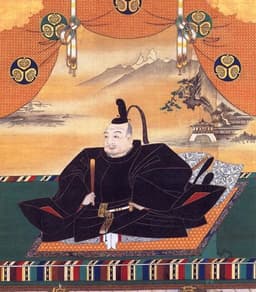
Tokugawa Ieyasu
General · Modern
81.8Total
Basic Information
Born
-304
1543
Died
-232
1616
Era
Ancient
Modern
Nationality
India
Japan
Occupation
Emperor
General
Civilization
Indian
Eastern
Score Comparison
Military (10%)
72.0
78.0
Political (20%)
82.0
82.0
Influence (20%)
71.0
88.0
Legacy (20%)
90.0
75.0
Leadership (15%)
72.0
85.0
Strategy (15%)
58.0
82.0
TOTAL
76.3
81.8
Ashoka the Great — Complete Timeline
261 BC
Kalinga WarWar
Ashoka launched a brutal conquest of the Kalinga region (modern Odisha). The war caused massive casualties, with over 100,000 killed and 150,000 deported. The suffering witnessed during this campaign led Ashoka to renounce military conquest and embrace Buddhism.
ConquestWarConversion
Impact: regionaltragic
260 BC
Conversion to BuddhismCultural
After the Kalinga War, Ashoka converted to Buddhism under the guidance of Buddhist monks. He adopted the principle of Dhamma (righteous law) and began promoting non-violence, vegetarianism, and religious tolerance throughout his empire.
ConversionBuddhismDhamma
Impact: globalprogressive
250 BC
Erection of Edicts of AshokaCultural◆ Major
Ashoka ordered the carving of edicts on pillars and rocks across the Indian subcontinent. These inscriptions, written in Prakrit and other languages, proclaimed his policies of non-violence, social welfare, and religious harmony. They are the earliest deciphered written records from ancient India.
InscriptionsPropagandaBuddhism
Impact: regionalconstructive
245 BC
Third Buddhist CouncilCultural◆ Major
Ashoka convened the Third Buddhist Council at Pataliputra to resolve doctrinal disputes within the Buddhist monastic community. The council standardized the Buddhist canon (Tripitaka) and decided to send missionaries abroad, including to Sri Lanka and Southeast Asia.
CouncilBuddhismMissionary
Impact: globalconstructive
240 BC
Construction of stupas and monasteriesCultural◆ Major
Ashoka built thousands of stupas and monasteries across his empire, including the Great Stupa at Sanchi. These structures became centers of Buddhist worship and pilgrimage, spreading Buddhist art and architecture throughout Asia.
ArchitectureBuddhismPatronage
Impact: regionalconstructive
Tokugawa Ieyasu — Complete Timeline
1600 AD
Battle of SekigaharaWar
Tokugawa Ieyasu led the Eastern Army to victory over Ishida Mitsunari's Western Army at Sekigahara. This decisive battle ended the Sengoku period and established Ieyasu as the supreme military ruler of Japan, paving the way for the Tokugawa shogunate.
Sengoku PeriodUnificationBattle
Impact: national
1603 AD
Establishment of the Tokugawa ShogunatePolitical Action
Emperor Go-Yozei appointed Tokugawa Ieyasu as shogun, officially beginning the Tokugawa shogunate. Ieyasu established his government in Edo (modern Tokyo), centralizing military and political power under his family's control.
ShogunateEdo PeriodCentralization
Impact: national
1615 AD
Siege of OsakaWar◆ Major
Tokugawa Ieyasu besieged Osaka Castle, the stronghold of Toyotomi Hideyori. The castle fell, and Hideyori committed suicide. This campaign eliminated the last major opposition to Tokugawa rule, solidifying the shogunate's control over Japan.
Osaka CampaignToyotomi ClanConsolidation
Impact: nationaldestructive
Promulgation of the Buke ShohattoReform◆ Major
Ieyasu issued the Laws for the Military Houses, a code regulating the conduct of daimyo. It restricted castle construction, required alternate attendance in Edo, and prohibited alliances without shogunal permission. This law helped control the feudal lords.
Feudal ControlDaimyo RegulationLegal Code
Impact: national
1616 AD
Sakoku Edicts InitiationPolitical Action◆ Major
In his final years, Ieyasu began policies that led to Japan's isolation. He restricted foreign trade to specific ports and expelled Christian missionaries. These measures, expanded by successors, resulted in the sakoku policy that isolated Japan for over 200 years.
IsolationismForeign PolicyChristianity
Impact: national
Expert Analysis
Origins
Tokugawa Ieyasu was born in 1543 amid the Warring States period in Japan, a time of constant feudal conflict. His father was a minor daimyo, and Ieyasu spent his early years as a hostage to secure alliances. This harsh upbringing forged his pragmatism and patience. Ashoka the Great, born in 304 BCE, was the grandson of Chandragupta Maurya, founder of the Maurya Empire. He was a prince of the ruling family, exposed to imperial politics and warfare from a young age. While Ieyasu rose from precarious beginnings, Ashoka inherited a vast empire.
Rise to Power
Ieyasu's rise was gradual and calculated. He allied with Oda Nobunaga and Toyotomi Hideyoshi, surviving their purges. After Hideyoshi's death, Ieyasu maneuvered to seize control, culminating in his decisive victory at the Battle of Sekigahara in 1600. He then consolidated power by eliminating rivals, such as during the Siege of Osaka (1614-1615). Ashoka's rise was more direct: he was appointed governor of key provinces, then seized the throne after a brief succession struggle. His early reign was marked by expansionist warfare, particularly the brutal Kalinga War (c. 262 BCE), which proved a turning point.
Leadership & Governance
Ieyasu established the Tokugawa shogunate, a centralized feudal government that brought 250 years of peace. He implemented the Buke Shohatto (Laws for the Military Houses) and the Sakoku Edicts, isolating Japan to control foreign influence. His governance prioritized stability and control, with strict social hierarchies. Ashoka, after his conversion to Buddhism, ruled through Dhamma (righteousness). He erected edicts promoting non-violence, religious tolerance, and social welfare, such as building hospitals and planting trees. His governance was ethical but less institutionally durable than Ieyasu's.
Triumph & Tragedy
Ieyasu's triumph was the unification of Japan and the establishment of a stable shogunate that lasted centuries. His tragedy lies in the suppression of Christianity and the isolationist policies that eventually stunted Japan's development. Ashoka's triumph was the moral transformation after Kalinga, where he embraced peace and welfare. His tragedy is the decline of the Maurya Empire after his death, partly due to his pacifist policies weakening military strength.
Character & Destiny
Ieyasu was cunning, patient, and ruthless when necessary. His destiny was to be the unifier who ended centuries of war. Ashoka was initially ambitious and violent, then remorseful and compassionate. His destiny was to be a model of enlightened rule, though his empire's fragility suggests a mismatch between ideals and reality.
Legacy
Ieyasu's legacy is the Tokugawa shogunate, which shaped modern Japan's identity. His policies laid the groundwork for Japan's later modernization. Ashoka's legacy is the spread of Buddhism across Asia and his edicts as early examples of ethical governance. However, his empire collapsed soon after his reign.
Conclusion
Tokugawa Ieyasu scores higher overall due to his lasting institutional impact (Score gap: 5.5). While Ashoka's moral transformation is admirable, Ieyasu's pragmatic governance created a stable foundation for centuries. Ieyasu (82) vs Ashoka (76) in total score, reflecting superior leadership and legacy in terms of enduring political structure.
**Numerical Scores:**
- Military: Ieyasu 78, Ashoka 72
- Political: Ieyasu 82, Ashoka 82
- Influence: Ieyasu 88, Ashoka 71
- Leadership: Ieyasu 75, Ashoka 90
- Durability: Ieyasu 85, Ashoka 72
- Strategy: Ieyasu 82, Ashoka 58
- Total: Ieyasu 82, Ashoka 76
Rankings
🥇
Tokugawa IeyasuLeader
Mil: 78.0Pol: 82.0Inf: 88.0
81.8
🥈
Ashoka the Great
Mil: 72.0Pol: 82.0Inf: 71.0
76.3
+5.5 behind
How This Comparison Works
Algorithm
Each figure is scored on 6 dimensions (0—100 scale) based on structured historical data: Military (10%), Political (20%), Influence (20%), Legacy (20%), Leadership (15%), Strategy (15%). The weighted total produces the final ranking.
Data Sources
Scores are computed from structured sub-indicators in the database. Scale factors adjust for era (Ancient ×0.85, Modern ×1.0) and civilization size (Eastern ×1.05, Other ×0.80) to account for differences in population and military scale.
Maximum 3 Figures
Comparisons are limited to 2—3 figures to ensure readability and statistical meaningfulness.
Error Margins
±5 points per dimension — Sub-scores are derived from historical records with inherent uncertainty. Two figures within 5 points on a dimension should be considered roughly equivalent in that area.
Total Score Accuracy
±3 points overall — The weighted combination of 6 dimensions produces a total score with approximately ±3 points of uncertainty. Differences of less than 3 points are not statistically significant— the figures are effectively tied.
Known Limitations
- Historical records are incomplete and uneven across civilizations
- Figures from oral-tradition societies may be underrepresented
- Occupation labels can misclassify multi-role figures
- Scores measure capability and impact, not moral character
- Quantitative scoring is a comparison tool, not absolute truth
Capability Radar
Military (10%) — Battles & Warfare
Battles
85
85
Win Rate
90
90
Expansion
95
75
Political (20%) — Governance & Reform
Reform
95
90
Diplomacy
90
85
Economy
85
88
Influence (20%) — Cultural & Global Reach
Cultural
95
85
Global
90
70
Legacy (20%) — Historical Impact
Historical
95
90
Longevity
95
95
Leadership (15%) — Power & Stability
Tenure
90
95
Stability
90
95
Strategy (15%) — Tactics & Innovation
Strategy
80
92
Tactics
75
88
Reform
70
80
Similar Comparisons
Comments & Discussion
No comments yet. Be the first to share your thoughts!