Loading...
Ashoka the Great vs Suleiman I
Suleiman I leads by 2.5 pts · 2 figures compared
…

Ashoka the Great
Emperor · Ancient
76.3Total
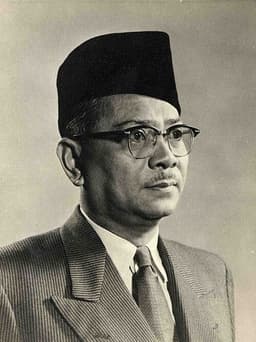
Suleiman I
Emperor · Medieval
78.8Total
Basic Information
Born
-304
1494
Died
-232
1566
Era
Ancient
Medieval
Nationality
India
Ottoman Empire
Occupation
Emperor
Emperor
Civilization
Indian
Middle Eastern
Score Comparison
Military (10%)
72.0
78.5
Political (20%)
82.0
82.0
Influence (20%)
71.0
85.0
Legacy (20%)
90.0
70.8
Leadership (15%)
72.0
81.7
Strategy (15%)
58.0
74.4
TOTAL
76.3
78.8
Ashoka the Great — Complete Timeline
261 BC
Kalinga WarWar
Ashoka launched a brutal conquest of the Kalinga region (modern Odisha). The war caused massive casualties, with over 100,000 killed and 150,000 deported. The suffering witnessed during this campaign led Ashoka to renounce military conquest and embrace Buddhism.
ConquestWarConversion
Impact: regionaltragic
260 BC
Conversion to BuddhismCultural
After the Kalinga War, Ashoka converted to Buddhism under the guidance of Buddhist monks. He adopted the principle of Dhamma (righteous law) and began promoting non-violence, vegetarianism, and religious tolerance throughout his empire.
ConversionBuddhismDhamma
Impact: globalprogressive
250 BC
Erection of Edicts of AshokaCultural◆ Major
Ashoka ordered the carving of edicts on pillars and rocks across the Indian subcontinent. These inscriptions, written in Prakrit and other languages, proclaimed his policies of non-violence, social welfare, and religious harmony. They are the earliest deciphered written records from ancient India.
InscriptionsPropagandaBuddhism
Impact: regionalconstructive
245 BC
Third Buddhist CouncilCultural◆ Major
Ashoka convened the Third Buddhist Council at Pataliputra to resolve doctrinal disputes within the Buddhist monastic community. The council standardized the Buddhist canon (Tripitaka) and decided to send missionaries abroad, including to Sri Lanka and Southeast Asia.
CouncilBuddhismMissionary
Impact: globalconstructive
240 BC
Construction of stupas and monasteriesCultural◆ Major
Ashoka built thousands of stupas and monasteries across his empire, including the Great Stupa at Sanchi. These structures became centers of Buddhist worship and pilgrimage, spreading Buddhist art and architecture throughout Asia.
ArchitectureBuddhismPatronage
Impact: regionalconstructive
Suleiman I — Complete Timeline
1522 AD
Siege of RhodesWar◆ Major
Suleiman I led a massive Ottoman army and fleet to besiege the island of Rhodes, held by the Knights Hospitaller. After a six-month siege, the knights surrendered and were allowed to leave. This victory secured Ottoman control over the eastern Mediterranean.
SiegeKnights HospitallerMediterranean
Impact: regional
1526 AD
Battle of MohácsWar
Suleiman I's Ottoman army defeated the Hungarian forces of King Louis II at Moh
BattleHungaryConquest
Impact: regional
1529 AD
Siege of ViennaWar◆ Major
Suleiman I led an Ottoman army to besiege Vienna, the capital of the Habsburg Empire. The siege failed due to supply problems and the onset of winter. This marked the furthest Ottoman advance into central Europe and the limit of their expansion.
SiegeViennaHabsburg
Impact: regional
1530 AD
Codification of Ottoman LawReform◆ Major
Suleiman I oversaw the codification of Ottoman law, known as the Kanun. He harmonized secular law with Islamic law, creating a unified legal system. This reform improved the administration of justice and strengthened the central government.
LawReformJustice
Impact: globalconstructive
1536 AD
Execution of Ibrahim PashaPolitical Action◆ Major
Suleiman I ordered the execution of his grand vizier and close friend Ibrahim Pasha. Ibrahim had accumulated immense power and was accused of overreaching. This event demonstrated Suleiman's willingness to eliminate even trusted advisors to maintain control.
ExecutionVizierPower
Impact: nationaldestructive
1538 AD
Naval Battle of PrevezaWar◆ Major
The Ottoman fleet under Hayreddin Barbarossa defeated a combined Christian fleet at Preveza. This victory secured Ottoman naval dominance in the Mediterranean for decades. It allowed the Ottomans to control trade routes and raid coastal areas.
Naval BattleBarbarossaMediterranean
Impact: regional
Expert Analysis
Origins
Suleiman I (1494–1566), known as "the Magnificent" in the West and "the Lawgiver" in the East, was the tenth and longest-reigning sultan of the Ottoman Empire. He inherited a vast, militaristic state that had expanded rapidly under his predecessors, especially his father Selim I. Born in Trabzon, Suleiman was groomed for leadership from a young age, receiving an elite education in languages, history, and military tactics. His early exposure to governance as governor of various provinces prepared him for the throne. In contrast, Ashoka the Great (304–232 BCE) was born into the Maurya Dynasty, the first empire to unify most of the Indian subcontinent. His grandfather Chandragupta Maurya founded the empire, and his father Bindusara expanded it. Ashoka initially followed a path of aggressive conquest, mirroring his grandfather's militarism. Both leaders emerged from powerful dynasties, but Suleiman’s rise was more orderly due to Ottoman succession practices, while Ashoka’s early reign was marked by ruthless consolidation, including the killing of his brothers to secure the throne.
Rise to Power
Suleiman ascended the throne in 1520 at age 26, after his father's death. He faced no major internal opposition, thanks to the Ottoman system of fratricide and his father's elimination of rivals. His early campaigns—the capture of Belgrade (1521) and Rhodes (1522)—established his military prowess and ambition. The Battle of Mohács (1526) was a turning point, shattering the Kingdom of Hungary and making the Ottomans a dominant European power. Ashoka’s rise was more violent: after Bindusara’s death, he fought a civil war against his brothers, emerging victorious around 268 BCE. His coronation took years to formalize, and his early reign focused on expanding the empire southward. The Kalinga War (c. 261 BCE) was his turning point, but not in the typical sense—it led to his conversion to Buddhism and renunciation of conquest. Suleiman’s rise was marked by consistent military success; Ashoka’s by a dramatic moral reversal.
Leadership & Governance
Suleiman was an effective administrator who codified Ottoman law (Kanun), harmonizing secular and religious codes. He centralized authority, reformed taxation, and improved the judicial system. His reign saw the empire’s zenith, with efficient bureaucracy and a powerful military. However, he also executed his closest friend and grand vizier, Ibrahim Pasha, and later his son Mustafa, showing a ruthless streak. Ashoka’s governance was revolutionary: after Kalinga, he rejected conquest for conquest’s sake and promoted Dhamma (moral law) through edicts carved on pillars and rocks. He established a network of officials (Dhamma Mahamattas) to enforce non-violence, religious tolerance, and social welfare. Ashoka’s rule was more ethical and inclusive, emphasizing public works like hospitals and roads. He also convened the Third Buddhist Council to purify the faith. While Suleiman’s legal reforms were impressive, Ashoka’s governance was more humane and visionary.
Triumph & Tragedy
Suleiman’s triumphs include the conquest of Hungary, the annexation of most of the Middle East, and the establishment of the Ottoman Empire as a global power. His Siege of Vienna (1529) was a near-success that marked the Ottomans’ farthest advance into Europe. Yet, his later years were tragic: overreliance on his wife Roxelana led to court intrigues, the execution of his capable son Mustafa, and the rise of incompetent successors. The Siege of Malta (1565) failed, and his last campaign was a stalemate. Ashoka’s triumph was the Kalinga War itself, but its aftermath defined him: he turned from conqueror to benevolent ruler, spreading Buddhism across Asia. His tragedy lies in the empire’s decline after his death; his pacifist policies may have weakened Mauryan military strength, leading to the empire’s dissolution within 50 years. Both faced personal losses, but Ashoka’s transformation was unique.
Character & Destiny
Suleiman was a complex figure: cultured, poetic, and just, yet capable of extreme cruelty. He wrote poetry under the pen name Muhibbi and patronized arts. His destiny was to embody the Ottoman Golden Age, but his personal flaws—jealousy, suspicion—undermined his legacy. Ashoka, initially a ruthless conqueror (Chandashoka), underwent a profound change after Kalinga, becoming Dharmashoka, the righteous emperor. His character evolved from violence to peace, a rare transformation. Destiny placed him at a crossroads where he chose morality over power. Suleiman’s character remained consistent; Ashoka’s arc is more compelling.
Legacy
Suleiman’s legacy is the Ottoman Empire at its peak, influencing law, architecture, and culture. The Süleymaniye Mosque stands as a symbol. However, his reign also sowed seeds of decline through succession issues. Ashoka’s legacy is monumental: he spread Buddhism globally, inspired non-violence, and left edicts that promote ethical governance. He is revered as a model of enlightened rule. While Suleiman’s impact was regional (Europe, Middle East), Ashoka’s reached across Asia. In terms of historical influence, Ashoka’s moral legacy arguably surpasses Suleiman’s military achievements.
Conclusion
Scoring: Suleiman I: Military = 9/10, Governance = 8/10, Cultural Impact = 8/10, Moral Leadership = 5/10. Ashoka: Military = 7/10, Governance = 8/10, Cultural Impact = 9/10, Moral Leadership = 10/10. Overall: Ashoka 8.5/10 vs Suleiman 7.5/10. Ashoka’s transformation from conqueror to peacemaker and his enduring ethical influence give him the edge. Suleiman was a magnificent ruler, but Ashoka was a great human being.
Rankings
🥇
Suleiman ILeader
Mil: 78.5Pol: 82.0Inf: 85.0
78.8
🥈
Ashoka the Great
Mil: 72.0Pol: 82.0Inf: 71.0
76.3
+2.5 behind
How This Comparison Works
Algorithm
Each figure is scored on 6 dimensions (0—100 scale) based on structured historical data: Military (10%), Political (20%), Influence (20%), Legacy (20%), Leadership (15%), Strategy (15%). The weighted total produces the final ranking.
Data Sources
Scores are computed from structured sub-indicators in the database. Scale factors adjust for era (Ancient ×0.85, Modern ×1.0) and civilization size (Eastern ×1.05, Other ×0.80) to account for differences in population and military scale.
Maximum 3 Figures
Comparisons are limited to 2—3 figures to ensure readability and statistical meaningfulness.
Error Margins
±5 points per dimension — Sub-scores are derived from historical records with inherent uncertainty. Two figures within 5 points on a dimension should be considered roughly equivalent in that area.
Total Score Accuracy
±3 points overall — The weighted combination of 6 dimensions produces a total score with approximately ±3 points of uncertainty. Differences of less than 3 points are not statistically significant— the figures are effectively tied.
Known Limitations
- Historical records are incomplete and uneven across civilizations
- Figures from oral-tradition societies may be underrepresented
- Occupation labels can misclassify multi-role figures
- Scores measure capability and impact, not moral character
- Quantitative scoring is a comparison tool, not absolute truth
Capability Radar
Military (10%) — Battles & Warfare
Battles
85
95
Win Rate
90
92
Expansion
95
95
Political (20%) — Governance & Reform
Reform
95
90
Diplomacy
90
88
Economy
85
85
Influence (20%) — Cultural & Global Reach
Cultural
95
85
Global
90
85
Legacy (20%) — Historical Impact
Historical
95
88
Longevity
95
80
Leadership (15%) — Power & Stability
Tenure
90
95
Stability
90
80
Strategy (15%) — Tactics & Innovation
Strategy
80
90
Tactics
75
88
Reform
70
85
Similar Comparisons
Comments & Discussion
No comments yet. Be the first to share your thoughts!