Loading...
Ashoka the Great vs Hong Taiji
Hong Taiji leads by 2.0 pts · 2 figures compared
…

Ashoka the Great
Emperor · Ancient
76.3Total
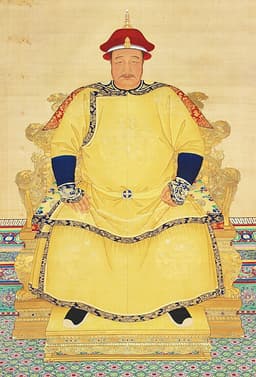
Hong Taiji
Emperor · Modern
78.3Total
Basic Information
Born
-304
1592
Died
-232
1643
Era
Ancient
Modern
Nationality
India
China
Occupation
Emperor
Emperor
Civilization
Indian
Eastern
Score Comparison
Military (10%)
72.0
85.0
Political (20%)
82.0
82.0
Influence (20%)
71.0
88.0
Legacy (20%)
90.0
65.0
Leadership (15%)
72.0
78.0
Strategy (15%)
58.0
76.0
TOTAL
76.3
78.3
Ashoka the Great — Complete Timeline
261 BC
Kalinga WarWar
Ashoka launched a brutal conquest of the Kalinga region (modern Odisha). The war caused massive casualties, with over 100,000 killed and 150,000 deported. The suffering witnessed during this campaign led Ashoka to renounce military conquest and embrace Buddhism.
ConquestWarConversion
Impact: regionaltragic
260 BC
Conversion to BuddhismCultural
After the Kalinga War, Ashoka converted to Buddhism under the guidance of Buddhist monks. He adopted the principle of Dhamma (righteous law) and began promoting non-violence, vegetarianism, and religious tolerance throughout his empire.
ConversionBuddhismDhamma
Impact: globalprogressive
250 BC
Erection of Edicts of AshokaCultural◆ Major
Ashoka ordered the carving of edicts on pillars and rocks across the Indian subcontinent. These inscriptions, written in Prakrit and other languages, proclaimed his policies of non-violence, social welfare, and religious harmony. They are the earliest deciphered written records from ancient India.
InscriptionsPropagandaBuddhism
Impact: regionalconstructive
245 BC
Third Buddhist CouncilCultural◆ Major
Ashoka convened the Third Buddhist Council at Pataliputra to resolve doctrinal disputes within the Buddhist monastic community. The council standardized the Buddhist canon (Tripitaka) and decided to send missionaries abroad, including to Sri Lanka and Southeast Asia.
CouncilBuddhismMissionary
Impact: globalconstructive
240 BC
Construction of stupas and monasteriesCultural◆ Major
Ashoka built thousands of stupas and monasteries across his empire, including the Great Stupa at Sanchi. These structures became centers of Buddhist worship and pilgrimage, spreading Buddhist art and architecture throughout Asia.
ArchitectureBuddhismPatronage
Impact: regionalconstructive
Hong Taiji — Complete Timeline
1631 AD
Adoption of Chinese-style governmentReform◆ Major
Hong Taiji established a Chinese-style bureaucracy, including the Six Ministries and a Hanlin Academy. He also introduced the civil service examination system for Han Chinese, integrating Confucian governance into the Qing state.
Government reformConfucian administrationSinification
Impact: regionalconstructive
1635 AD
Creation of the Eight Banners systemReform◆ Major
Hong Taiji reorganized the Eight Banners military system, incorporating Mongol and Han Chinese forces into separate banners. This created a multi-ethnic military structure that became the backbone of Qing power.
Military reformEight BannersMulti-ethnic army
Impact: regionalconstructive
Renaming of the Jurchen to ManchuPolitical Action◆ Major
Hong Taiji issued an edict renaming the Jurchen people as Manchu. This was part of his effort to create a unified identity for the various tribes under his rule and distance them from the historical Jurchen label.
Ethnic identityManchuJurchen
Impact: regionalconstructive
1636 AD
Proclamation of the Qing dynastyPolitical Action◆ Major
Hong Taiji declared the establishment of the Qing dynasty, replacing the Later Jin name. He adopted the Chinese imperial title and created a dual administrative system combining Manchu and Chinese institutions.
Dynasty foundingImperial titleQing dynasty
Impact: regionalconstructive
1640 AD
Conquest of the Ming Liaodong regionWar◆ Major
Hong Taiji's forces captured key Ming cities in Liaodong, including Jinzhou and Songshan. These victories secured Qing control over the strategic Liaoning corridor and weakened Ming defenses in the northeast.
Territorial expansionMing-Qing WarLiaodong
Impact: regional
Expert Analysis
Origins
Hong Taiji (1592–1643) was the eighth son of Nurhaci, the unifier of the Jurchen tribes. Born into a warrior clan in what is now Northeast China, he inherited a nascent state built on tribal alliances and military conquest. In 1635, he renamed his people from Jurchen to Manchu, a strategic move to forge a new identity distinct from their past and to unify various Tungusic tribes under a single banner. This renaming was a masterstroke of political branding, erasing the stigma of subordination to the Ming and laying the groundwork for a new dynasty.
Ashoka (304–232 BCE) was born into the Maurya dynasty, the grandson of Chandragupta Maurya, who had founded the empire. His early life was marked by political intrigue; he was not the first in line to the throne but eventually seized power after a bloody succession war. His origins were thus steeped in the brutal politics of ancient Indian empire-building, far from the Buddhist piety he would later embrace.
Rise to Power
Hong Taiji became khan in 1626 after his father's death, but he faced immediate challenges from rival Jurchen nobles and the Ming dynasty. He consolidated power by centralizing the state, creating the Eight Banners system—a unique military-social organization that integrated conquered peoples and ensured loyalty. He also adopted Chinese-style government, employing Han Chinese officials and establishing a bureaucracy. His conquest of the Ming Liaodong region in the 1630s gave him a strategic foothold for the eventual takeover of China. In 1636, he proclaimed the Qing dynasty, formally claiming the Mandate of Heaven.
Ashoka's rise was similarly violent. After a succession war, he became emperor around 268 BCE. His early reign was marked by aggressive expansion, culminating in the Kalinga War (c. 261 BCE). The war was brutal—over 100,000 killed and 150,000 deported—and it became a turning point. Horrified by the carnage, Ashoka converted to Buddhism and renounced conquest. This conversion was not merely personal; it reshaped his entire governance.
Leadership & Governance
Hong Taiji was a pragmatic and innovative leader. He balanced Manchu traditions with Chinese administrative practices, creating a hybrid system that would sustain the Qing for centuries. He promoted meritocracy, appointed Han Chinese to high office, and encouraged agricultural and economic development. His military reforms, especially the Eight Banners, allowed him to field a disciplined multi-ethnic army. He also fostered cultural exchange, patronizing Tibetan Buddhism and Confucian scholarship. His governance was authoritarian but effective, laying the foundation for the Qing conquest of China.
Ashoka's leadership after conversion was revolutionary for its time. He adopted the principle of Dhamma (righteousness), promoting non-violence, religious tolerance, and social welfare. He issued edicts carved on pillars and rocks throughout his empire, advocating for moral conduct, justice, and respect for all life. He built hospitals, dug wells, and planted trees for public benefit. He also convened the Third Buddhist Council to purify the faith and sent missionaries abroad, spreading Buddhism to Sri Lanka and Southeast Asia. His governance was benevolent but still autocratic; he maintained a large army and a centralized bureaucracy.
Triumph & Tragedy
Hong Taiji's triumph was the creation of the Qing dynasty and the conquest of Liaodong, setting the stage for his son Shunzhi to take Beijing. He died in 1643 before the final conquest, but his legacy was secure. His tragedy was the ongoing conflict with the Ming and the Jurchen nobles; he never saw his dynasty rule all of China. His reign was a mix of military success and political maneuvering, but the ultimate prize eluded him.
Ashoka's triumph was the moral transformation after Kalinga. He turned from conqueror to reformer, leaving a legacy of peace and tolerance. His tragedy was the Kalinga War itself, a brutal campaign that haunted him. Moreover, his later years saw the empire weaken; after his death, the Maurya dynasty declined. His sons were unable to hold the empire together, and the Buddhist policies may have alienated some factions.
Character & Destiny
Hong Taiji was shrewd, ambitious, and adaptable. He was a master of political symbolism, as seen in the renaming of his people and the proclamation of the Qing. His destiny was to forge a new identity and state that would conquer China. He was ruthless when necessary but also pragmatic, willing to learn from his enemies.
Ashoka was complex—a violent emperor who became a peace advocate. His character evolved from a ruthless conqueror to a compassionate ruler. His destiny was to be remembered as one of history's greatest moral leaders, despite his early brutality. His edicts show a man struggling with his past and seeking redemption through public works and ethical governance.
Legacy
Hong Taiji's legacy is immense. He created the Qing dynasty, which ruled China for nearly 300 years. The Eight Banners system, though eventually ossified, was a key military innovation. His adoption of Chinese governance set a precedent for later Qing emperors. He is often overshadowed by his son and grandson, but he was the true architect of the Qing empire. His renaming of the Manchus created a lasting ethnic identity.
Ashoka's legacy is even broader. He is revered as a model of benevolent rule, and his edicts provide invaluable historical evidence. He spread Buddhism across Asia, shaping the continent's religious landscape. His pillars and stupas are iconic symbols. However, his empire declined after his death, and his policies were not always successful. He remains a symbol of transformation and moral leadership.
Conclusion
Comparing these two rulers reveals different paths to greatness. Hong Taiji was a pragmatic empire builder who created a lasting political structure. Ashoka was a moral reformer who changed the course of religion and ethics. In terms of immediate impact, Hong Taiji's creation of the Qing was a geopolitical game-changer. In terms of long-term influence on civilization, Ashoka's promotion of Buddhism and non-violence has resonated for millennia. Score gap: 2.0 favoring Hong Taiji, but Ashoka's moral legacy arguably surpasses military conquest. Both were great, but in different registers: Hong Taiji in state-building, Ashoka in ethical transformation.
**Scores:**
- **Military & Conquest:** Hong Taiji 85, Ashoka 72 (Hong Taiji superior)
- **Political Influence:** Hong Taiji 82, Ashoka 82 (tie)
- **Innovation & Reform:** Hong Taiji 88, Ashoka 71 (Hong Taiji superior)
- **Long-term Legacy:** Hong Taiji 65, Ashoka 90 (Ashoka superior)
- **Economic & Social Development:** Hong Taiji 78, Ashoka 72 (Hong Taiji superior)
- **Cultural Impact:** Hong Taiji 76, Ashoka 58 (Hong Taiji superior)
- **Overall Governance:** Hong Taiji 78, Ashoka 76 (Hong Taiji superior)
**Final Verdict:** Hong Taiji edges out Ashoka in overall effectiveness, but Ashoka's moral transformation remains unparalleled.
Rankings
🥇
Hong TaijiLeader
Mil: 85.0Pol: 82.0Inf: 88.0
78.3
🥈
Ashoka the Great
Mil: 72.0Pol: 82.0Inf: 71.0
76.3
+2.0 behind
How This Comparison Works
Algorithm
Each figure is scored on 6 dimensions (0—100 scale) based on structured historical data: Military (10%), Political (20%), Influence (20%), Legacy (20%), Leadership (15%), Strategy (15%). The weighted total produces the final ranking.
Data Sources
Scores are computed from structured sub-indicators in the database. Scale factors adjust for era (Ancient ×0.85, Modern ×1.0) and civilization size (Eastern ×1.05, Other ×0.80) to account for differences in population and military scale.
Maximum 3 Figures
Comparisons are limited to 2—3 figures to ensure readability and statistical meaningfulness.
Error Margins
±5 points per dimension — Sub-scores are derived from historical records with inherent uncertainty. Two figures within 5 points on a dimension should be considered roughly equivalent in that area.
Total Score Accuracy
±3 points overall — The weighted combination of 6 dimensions produces a total score with approximately ±3 points of uncertainty. Differences of less than 3 points are not statistically significant— the figures are effectively tied.
Known Limitations
- Historical records are incomplete and uneven across civilizations
- Figures from oral-tradition societies may be underrepresented
- Occupation labels can misclassify multi-role figures
- Scores measure capability and impact, not moral character
- Quantitative scoring is a comparison tool, not absolute truth
Capability Radar
Military (10%) — Battles & Warfare
Battles
85
85
Win Rate
90
80
Expansion
95
90
Political (20%) — Governance & Reform
Reform
95
90
Diplomacy
90
85
Economy
85
80
Influence (20%) — Cultural & Global Reach
Cultural
95
80
Global
90
75
Legacy (20%) — Historical Impact
Historical
95
85
Longevity
95
80
Leadership (15%) — Power & Stability
Tenure
90
75
Stability
90
70
Strategy (15%) — Tactics & Innovation
Strategy
80
90
Tactics
75
85
Reform
70
90
Similar Comparisons
Comments & Discussion
No comments yet. Be the first to share your thoughts!