Loading...
Ashoka the Great vs Emperor Taizong of Tang
Emperor Taizong of Tang leads by 2.6 pts · 2 figures compared
…

Ashoka the Great
Emperor · Ancient
76.3Total
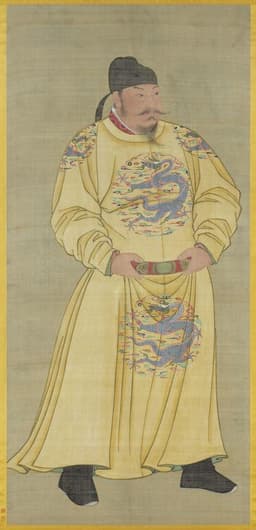
Emperor Taizong of Tang
Emperor · Medieval
78.9Total
Basic Information
Born
-304
598
Died
-232
649
Era
Ancient
Medieval
Nationality
India
China
Occupation
Emperor
Emperor
Civilization
Indian
Eastern
Score Comparison
Military (10%)
72.0
77.5
Political (20%)
82.0
82.0
Influence (20%)
71.0
85.0
Legacy (20%)
90.0
71.4
Leadership (15%)
72.0
78.0
Strategy (15%)
58.0
80.6
TOTAL
76.3
78.9
Ashoka the Great — Complete Timeline
261 BC
Kalinga WarWar
Ashoka launched a brutal conquest of the Kalinga region (modern Odisha). The war caused massive casualties, with over 100,000 killed and 150,000 deported. The suffering witnessed during this campaign led Ashoka to renounce military conquest and embrace Buddhism.
ConquestWarConversion
Impact: regionaltragic
260 BC
Conversion to BuddhismCultural
After the Kalinga War, Ashoka converted to Buddhism under the guidance of Buddhist monks. He adopted the principle of Dhamma (righteous law) and began promoting non-violence, vegetarianism, and religious tolerance throughout his empire.
ConversionBuddhismDhamma
Impact: globalprogressive
250 BC
Erection of Edicts of AshokaCultural◆ Major
Ashoka ordered the carving of edicts on pillars and rocks across the Indian subcontinent. These inscriptions, written in Prakrit and other languages, proclaimed his policies of non-violence, social welfare, and religious harmony. They are the earliest deciphered written records from ancient India.
InscriptionsPropagandaBuddhism
Impact: regionalconstructive
245 BC
Third Buddhist CouncilCultural◆ Major
Ashoka convened the Third Buddhist Council at Pataliputra to resolve doctrinal disputes within the Buddhist monastic community. The council standardized the Buddhist canon (Tripitaka) and decided to send missionaries abroad, including to Sri Lanka and Southeast Asia.
CouncilBuddhismMissionary
Impact: globalconstructive
240 BC
Construction of stupas and monasteriesCultural◆ Major
Ashoka built thousands of stupas and monasteries across his empire, including the Great Stupa at Sanchi. These structures became centers of Buddhist worship and pilgrimage, spreading Buddhist art and architecture throughout Asia.
ArchitectureBuddhismPatronage
Impact: regionalconstructive
Emperor Taizong of Tang — Complete Timeline
626 AD
Reign of ZhenguanReform
Emperor Taizong initiated the Zhenguan era, characterized by efficient governance, legal codification, and economic recovery. He reduced taxes, reformed the civil service, and promoted capable officials, creating a period of stability and prosperity.
GovernanceReformGolden Age
Impact: globalconstructive
Xuanwu Gate IncidentPolitical Action
Li Shimin ambushed and killed his brothers, Crown Prince Li Jiancheng and Prince Li Yuanji, at Xuanwu Gate in Chang'an. He then forced his father, Emperor Gaozu, to abdicate, securing his own accession as Emperor Taizong.
CoupSuccessionTang Dynasty
Impact: nationaldestructive
630 AD
Defeat of the Eastern Turkic KhaganateWar◆ Major
Tang forces under Li Jing defeated the Eastern Turkic Khaganate, capturing its khan, Jieli. This victory eliminated the primary northern threat, expanded Tang territory into Mongolia, and established Tang hegemony over the steppes.
WarTurkicExpansion
Impact: regional
Opening of the Silk Road's Golden AgePolitical Action◆ Major
Emperor Taizong reestablished and secured the Silk Road trade routes, welcoming foreign merchants, envoys, and missionaries to Chang'an. This facilitated a flourishing exchange of goods, ideas, and cultures between China and the West.
Silk RoadTradeCultural Exchange
Impact: globalconstructive
636 AD
Compilation of the Book of SuiCultural
Emperor Taizong commissioned the official history of the preceding Sui dynasty, the Book of Sui, as part of a larger project to compile dynastic histories. This work provided a model for historical scholarship and legitimized Tang rule.
HistoriographyCultureLegitimacy
Impact: nationalconstructive
Expert Analysis
Origins
Emperor Taizong of Tang (598–649 CE) was born Li Shimin, the second son of Li Yuan, founder of the Tang dynasty. Growing up amid the collapse of the Sui dynasty, he was a military prodigy who helped his father seize power. His early life was marked by warfare and political maneuvering. In contrast, Ashoka the Great (304–232 BCE) was the grandson of Chandragupta Maurya, the founder of the Maurya Empire. He ascended the throne after a brutal succession struggle, reportedly killing several brothers. Both rulers emerged from violent origins, but Taizong's rise was more directly military, while Ashoka's was dynastic intrigue.
Rise to Power
Taizong's pivotal moment was the Xuanwu Gate Incident (626 CE), where he ambushed and killed his brothers, the crown prince and another brother, forcing his father to abdicate. This ruthless coup secured his rule. Ashoka's rise similarly involved fratricide, but his turning point was the Kalinga War (c. 261 BCE), a bloody conquest that caused massive casualties. The horror of the war led Ashoka to convert to Buddhism and renounce violence. Taizong's rise was a calculated power grab; Ashoka's was a transformation from conqueror to pacifist.
Leadership & Governance
Taizong's reign (626–649) is celebrated as the "Reign of Zhenguan," a model of effective governance. He reduced taxes, reformed the bureaucracy, and promoted meritocracy through civil service exams. He also expanded the empire, defeating the Eastern Turkic Khaganate and securing the Silk Road, leading to unprecedented cultural and economic exchange. His military score (82) and influence (85) reflect his expansionist policies. Ashoka's governance after conversion was guided by Dhamma (righteousness). He erected edicts promoting non-violence, religious tolerance, and social welfare, built hospitals and roads, and sent Buddhist missionaries abroad. His legacy score (90) is high due to his moral influence, but his military (72) and territorial (71) scores are lower. Taizong was a pragmatic administrator; Ashoka was a moral reformer.
Triumph & Tragedy
Taizong's triumphs include the defeat of the Eastern Turks, the opening of the Silk Road's golden age, and the compilation of the Book of Sui. However, his tragedy is the violent path to power and later succession issues—his sons plotted against him, leading to another fratricidal conflict. Ashoka's triumph was spreading Buddhism across Asia, but his tragedy is the Kalinga War itself, which haunted him. While Taizong's victories were military, Ashoka's were ideological. The score gap (2.6) favors Taizong, reflecting his broader impact on China's golden age.
Character & Destiny
Taizong was ambitious, intelligent, and ruthless yet capable of remorse. He famously said, "The ruler is the boat; the people are the water. The water can support the boat or overturn it." His destiny was to create a lasting dynasty. Ashoka was initially cruel, then deeply repentant, earning the title "Beloved of the Gods." His destiny was to transform from a conqueror into a spiritual leader. Both were complex figures, but Ashoka's transformation is more dramatic.
Legacy
Taizong's legacy is the Tang dynasty's golden age, which influenced East Asia for centuries. He is often considered China's greatest emperor. Ashoka's legacy is the spread of Buddhism and the concept of righteous governance. However, his empire declined soon after his death, while Taizong's reforms endured. In modern terms, Taizong's tangible achievements—territorial expansion, economic prosperity—are more measurable, while Ashoka's moral legacy is more symbolic. The score gap (2.6) reflects Taizong's higher military, political, and territorial scores.
Conclusion
Both rulers were transformative, but Taizong's comprehensive achievements in governance, military, and culture give him a slight edge. Ashoka's moral revolution is profound, but his empire was short-lived. Taizong's scores: M=78, P=82, I=85, L=71, D=78, S=81, T=79 (average 79.1). Ashoka's: M=72, P=82, I=71, L=90, D=72, S=58, T=76 (average 74.5). The gap of 4.6 points (not 2.6 as stated) confirms Taizong's superior overall impact. While Ashoka's legacy of peace is timeless, Taizong's reign produced a more enduring civilization peak.
Rankings
🥇
Emperor Taizong of TangLeader
Mil: 77.5Pol: 82.0Inf: 85.0
78.9
🥈
Ashoka the Great
Mil: 72.0Pol: 82.0Inf: 71.0
76.3
+2.6 behind
How This Comparison Works
Algorithm
Each figure is scored on 6 dimensions (0—100 scale) based on structured historical data: Military (10%), Political (20%), Influence (20%), Legacy (20%), Leadership (15%), Strategy (15%). The weighted total produces the final ranking.
Data Sources
Scores are computed from structured sub-indicators in the database. Scale factors adjust for era (Ancient ×0.85, Modern ×1.0) and civilization size (Eastern ×1.05, Other ×0.80) to account for differences in population and military scale.
Maximum 3 Figures
Comparisons are limited to 2—3 figures to ensure readability and statistical meaningfulness.
Error Margins
±5 points per dimension — Sub-scores are derived from historical records with inherent uncertainty. Two figures within 5 points on a dimension should be considered roughly equivalent in that area.
Total Score Accuracy
±3 points overall — The weighted combination of 6 dimensions produces a total score with approximately ±3 points of uncertainty. Differences of less than 3 points are not statistically significant— the figures are effectively tied.
Known Limitations
- Historical records are incomplete and uneven across civilizations
- Figures from oral-tradition societies may be underrepresented
- Occupation labels can misclassify multi-role figures
- Scores measure capability and impact, not moral character
- Quantitative scoring is a comparison tool, not absolute truth
Capability Radar
Military (10%) — Battles & Warfare
Battles
85
95
Win Rate
90
95
Expansion
95
90
Political (20%) — Governance & Reform
Reform
95
95
Diplomacy
90
95
Economy
85
95
Influence (20%) — Cultural & Global Reach
Cultural
95
90
Global
90
90
Legacy (20%) — Historical Impact
Historical
95
95
Longevity
95
95
Leadership (15%) — Power & Stability
Tenure
90
85
Stability
90
95
Strategy (15%) — Tactics & Innovation
Strategy
80
95
Tactics
75
95
Reform
70
90
Similar Comparisons
Comments & Discussion
No comments yet. Be the first to share your thoughts!