Loading...
Ashikaga Yoshimitsu vs Jan Zizka
Ashikaga Yoshimitsu leads by 0.4 pts · 2 figures compared
…

Ashikaga Yoshimitsu
General · Medieval
56.1Total
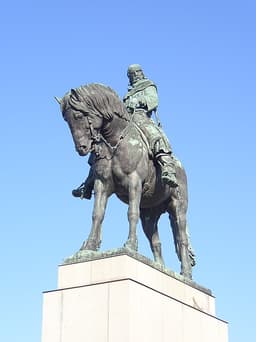
Jan Zizka
General · Medieval
55.7Total
Basic Information
Born
1358
1360
Died
1408
1424
Era
Medieval
Medieval
Nationality
Japan
Bohemia
Occupation
General
General
Civilization
Eastern
Western
Score Comparison
Military (10%)
25.0
65.0
Political (20%)
68.0
40.8
Influence (20%)
57.2
57.2
Legacy (20%)
49.2
50.0
Leadership (15%)
72.0
54.2
Strategy (15%)
60.0
81.6
TOTAL
56.1
55.7
Ashikaga Yoshimitsu — Complete Timeline
1392 AD
Unification of the Northern and Southern CourtsPolitical Action
Ashikaga Yoshimitsu negotiated the end of the Nanboku-cho period by persuading the Southern Court's Emperor Go-Kameyama to abdicate in favor of the Northern Court's Emperor Go-Komatsu. This reunified the imperial line under a single throne, ending decades of civil war and stabilizing Japan.
UnificationNanboku-cho PeriodImperial Court
Impact: nationalconstructive
1394 AD
Retirement and Assumption of Power as Cloistered ShogunPolitical Action◆ Major
Ashikaga Yoshimitsu formally retired as shogun but continued to wield effective power from his retirement villa, a practice known as cloistered rule. He controlled the shogunate's affairs and the imperial court, demonstrating a concentration of power unprecedented for a retired shogun.
GovernancePower ConsolidationMuromachi Period
Impact: national
1397 AD
Construction of Kinkaku-ji (Golden Pavilion)Cultural◆ Major
Ashikaga Yoshimitsu built the Kinkaku-ji, a Zen Buddhist temple in Kyoto covered in gold leaf, as his retirement villa. This structure became a symbol of the Kitayama culture and the Muromachi period's artistic flourishing. It remains a UNESCO World Heritage Site and a major cultural icon.
ArchitectureZen BuddhismCultural Heritage
Impact: globalconstructive
1401 AD
Establishment of Trade with Ming ChinaPolitical Action◆ Major
Ashikaga Yoshimitsu sent an embassy to the Ming court of Emperor Jianwen, formally establishing tributary trade relations. This opened lucrative trade routes for Japanese goods, especially swords and copper, in exchange for Chinese silk and coins. It also enhanced Yoshimitsu's prestige.
TradeDiplomacyMing Dynasty
Impact: regionalconstructive
Jan Zizka — Complete Timeline
1420 AD
Battle of SudoměřWar◆ Major
Jan Žižka led a Hussite force to victory against a larger Catholic army at Sudoměř. Using a wagon fort formation, he repelled the attack and established the tactical superiority of the Hussite war wagons, a key innovation in medieval warfare.
Hussite WarsWagon FortSudoměř
Impact: regional
Battle of Vítkov HillWar◆ Major
Žižka defended Prague against a crusader army at Vítkov Hill. His small force of Hussites defeated the attacking Imperial troops, securing the city and preventing the fall of the Hussite movement. The victory made Žižka a national hero.
PragueVítkovCrusade
Impact: regional
Development of Wagon Fort TacticsInvention◆ Major
Žižka perfected the use of the wagon fort (Wagenburg) as a mobile defensive structure. He armed wagons with cannons and crossbows, creating a fortified position that could move on the battlefield. This innovation revolutionized medieval warfare.
Wagon FortTacticsInnovation
Impact: globalconstructive
1422 AD
Battle of Německý BrodWar◆ Major
Žižka defeated a second crusader army at Německý Brod. He used a feigned retreat to lure the enemy into a trap, then destroyed them with his wagon fort. The victory ended the second crusade against the Hussites.
CrusadeNěmecký BrodFeigned Retreat
Impact: regional
1424 AD
Battle of MalešovWar◆ Major
Žižka won his final battle at Malešov against a coalition of Catholic and Utraquist forces. Despite being blind in one eye, he commanded his army to a decisive victory, demonstrating his tactical genius and the effectiveness of the wagon fort.
MalešovUtraquistsFinal Battle
Impact: regional
Expert Analysis
Origins
Ashikaga Yoshimitsu was born in 1358 into the Ashikaga shogunal family, which had ruled Japan since 1338. His father, Ashikaga Yoshiakira, was the second shogun, but died when Yoshimitsu was only nine years old. Yoshimitsu was raised under the regency of his mother and the shogunal deputy, Hosokawa Yoriyuki, who provided him with a thorough education in martial arts, literature, and governance. He became shogun at age ten in 1368, though real power initially rested with his advisors.
Jan Zizka was born around 1360 in Trocnov, Bohemia (now Czech Republic), into a minor noble family. Little is known of his early life, but he likely received basic military training and served as a page in royal courts. He fought as a mercenary in various European conflicts, including the Battle of Grunwald in 1410, where he fought on the Polish-Lithuanian side against the Teutonic Knights. This experience exposed him to large-scale warfare and combined arms tactics.
Rise to Power
Yoshimitsu gradually consolidated power by outmaneuvering his regents. By 1379, he had dismissed Hosokawa Yoriyuki and taken direct control of the shogunate. His major turning point came in 1392 when he negotiated the end of the Nanboku-cho period, unifying the Northern and Southern Courts. He persuaded Emperor Go-Kameyama of the Southern Court to abdicate in favor of the Northern Court's Emperor Go-Komatsu, ending decades of civil war. This political triumph solidified his authority and earned him the loyalty of both court factions.
Zizka rose to prominence during the Hussite Wars, which began after the execution of reformer Jan Hus in 1415. In 1419, a Hussite uprising in Prague led to the First Defenestration of Prague, and Zizka emerged as a military leader of the Taborite faction. His first major victory came at the Battle of Sudoměř in 1420, where he used a wagon fort to defeat a larger Catholic army. This established him as the foremost Hussite commander, and he successfully defended Prague at the Battle of Vítkov Hill later that year.
Leadership & Governance
Yoshimitsu's leadership was characterized by political pragmatism and cultural patronage. He ruled as shogun until 1394, then formally retired but continued to wield power as a cloistered shogun from his retirement villa, the Golden Pavilion (Kinkaku-ji). He established tributary trade relations with Ming China in 1401, opening lucrative trade routes that enriched the shogunate. Domestically, he strengthened the shogunate's control over feudal lords by balancing power between the imperial court and the warrior class. His governance score of 72.0 reflects his effective but indirect rule.
Zizka's leadership was defined by tactical innovation and iron discipline. He organized the Hussite army into a force of infantry, cavalry, and wagon forts, with strict codes of conduct and religious fervor. He never lost a battle, despite often being outnumbered. His strategy score of 81.6 is among the highest, reflecting his mastery of mobile defense. However, his political score of 40.8 indicates he was less adept at governance; he was a military commander, not an administrator, and his leadership was primarily on the battlefield.
Triumph & Tragedy
Yoshimitsu's greatest triumph was the unification of the Northern and Southern Courts, ending a 56-year schism. He also built the Golden Pavilion, a Zen Buddhist temple that became a symbol of Kitayama culture. His establishment of trade with Ming China brought wealth and cultural exchange. However, his retirement and cloistered rule created a precedent that weakened the shogunate after his death, as later shoguns struggled with the power of retired rulers. He died in 1408 at age 50, possibly from illness, leaving a mixed legacy of strong rule and institutional flaws.
Zizka's triumphs are numerous: he won every battle he commanded, including Sudoměř (1420), Vítkov Hill (1420), Německý Brod (1422), and Malešov (1424). His wagon fort tactics revolutionized warfare and were copied across Europe. However, his tragedy was his blindness: he lost his remaining eye in 1421, yet continued to lead effectively. He died in 1424 of plague, before the Hussite Wars ended. His death left the Hussites without their best commander, leading to eventual internal divisions and defeat.
Character & Destiny
Yoshimitsu was a shrewd politician who valued stability and cultural refinement. He was willing to compromise, as seen in his negotiation with the Southern Court, and he used retirement to maintain influence without direct responsibility. His character shaped his fate: he achieved peace and prosperity but also created a power structure that later failed. Historical assessments note his patronage of the arts but criticize his indirect rule for weakening the shogunate's long-term authority.
Zizka was a determined, ruthless commander with a single-minded focus on victory. He was known for his strict discipline and religious zeal, often executing deserters and enemies without mercy. His blindness did not diminish his tactical acumen; he was able to visualize battlefields and direct his troops verbally. His character led him to become a national hero in Czech history, but his harsh methods alienated some Hussite moderates. He scored 54.2 in leadership, reflecting his ability to inspire loyalty through success rather than charisma.
Legacy
Yoshimitsu's legacy is mixed. He is remembered for the Golden Pavilion, a UNESCO World Heritage site, and for ending the Nanboku-cho period. His trade with China influenced Japanese culture and economy. However, his cloistered rule model was not sustainable, and the Ashikaga shogunate declined after his death, leading to the Sengoku period. His influence score of 57.2 and legacy score of 49.2 reflect his cultural impact but limited long-term political stability.
Zizka's legacy is primarily military. He is considered one of history's greatest tacticians, and his wagon fort tactics influenced European warfare for centuries. He is a national hero in the Czech Republic, with monuments and his name used for streets and institutions. His military score of 65.0 and strategy score of 81.6 highlight his battlefield prowess. However, his political legacy is weaker; the Hussite movement eventually fragmented, and his innovations were not sustained after his death.
Conclusion
While Ashikaga Yoshimitsu scores higher overall (56.1 vs 55.7), the gap is narrow. Yoshimitsu's political achievements—unifying the courts and establishing trade—had a broader impact on Japanese history and culture. Zizka's military innovations were revolutionary, but they did not produce lasting political change. Taking a clear position: Yoshimitsu had greater impact because his actions shaped Japan's political structure and cultural identity for generations, whereas Zizka's influence was more confined to the battlefield and the Hussite Wars. Yoshimitsu's legacy of peace and cultural patronage outweighs Zizka's tactical brilliance.
Rankings
🥇
Ashikaga YoshimitsuLeader
Mil: 25.0Pol: 68.0Inf: 57.2
56.1
🥈
Jan Zizka
Mil: 65.0Pol: 40.8Inf: 57.2
55.7
+0.4 behind
How This Comparison Works
Algorithm
Each figure is scored on 6 dimensions (0—100 scale) based on structured historical data: Military (10%), Political (20%), Influence (20%), Legacy (20%), Leadership (15%), Strategy (15%). The weighted total produces the final ranking.
Data Sources
Scores are computed from structured sub-indicators in the database. Scale factors adjust for era (Ancient ×0.85, Modern ×1.0) and civilization size (Eastern ×1.05, Other ×0.80) to account for differences in population and military scale.
Maximum 3 Figures
Comparisons are limited to 2—3 figures to ensure readability and statistical meaningfulness.
Error Margins
±5 points per dimension — Sub-scores are derived from historical records with inherent uncertainty. Two figures within 5 points on a dimension should be considered roughly equivalent in that area.
Total Score Accuracy
±3 points overall — The weighted combination of 6 dimensions produces a total score with approximately ±3 points of uncertainty. Differences of less than 3 points are not statistically significant— the figures are effectively tied.
Known Limitations
- Historical records are incomplete and uneven across civilizations
- Figures from oral-tradition societies may be underrepresented
- Occupation labels can misclassify multi-role figures
- Scores measure capability and impact, not moral character
- Quantitative scoring is a comparison tool, not absolute truth
Capability Radar
Military (10%) — Battles & Warfare
Battles
25
85
Win Rate
30
95
Expansion
30
60
Political (20%) — Governance & Reform
Reform
60
50
Diplomacy
70
45
Economy
65
30
Influence (20%) — Cultural & Global Reach
Cultural
70
60
Global
45
55
Legacy (20%) — Historical Impact
Historical
65
70
Longevity
60
65
Leadership (15%) — Power & Stability
Tenure
65
40
Stability
55
35
Strategy (15%) — Tactics & Innovation
Strategy
40
80
Tactics
35
95
Reform
20
90
Similar Comparisons
Comments & Discussion
No comments yet. Be the first to share your thoughts!