Loading...
This comparison has not been analyzed yet.
One-time AI generation (~1 minute). Scores and timeline are already available below.
Ashikaga Tadayoshi vs Cheng Yaojin
Ashikaga Tadayoshi leads by 2.6 pts · 2 figures compared
…

Ashikaga Tadayoshi
General · Medieval
53.4Total
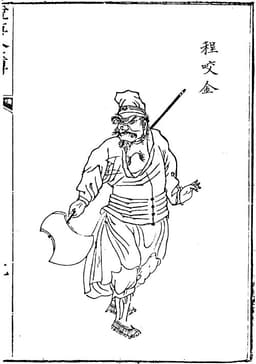
Cheng Yaojin
General · Medieval
50.8Total
Basic Information
Born
1306
589
Died
1352
665
Era
Medieval
Medieval
Nationality
Japan
China
Occupation
General
General
Civilization
Eastern
Eastern
Score Comparison
Military (10%)
72.5
65.0
Political (20%)
54.7
26.4
Influence (20%)
50.2
55.7
Legacy (20%)
42.5
49.2
Leadership (15%)
62.0
54.2
Strategy (15%)
55.0
60.0
TOTAL
53.4
50.8
Ashikaga Tadayoshi — Complete Timeline
1333 AD
Appointed to the Kamakura Shogunate GovernmentPolitical Action◆ Major
Ashikaga Tadayoshi was appointed by his brother Takauji to a senior position in the newly established Ashikaga shogunate. He was tasked with overseeing civil administration and judicial matters, while Takauji focused on military affairs.
Ashikaga ShogunateGovernmentCivil Administration
Impact: national
1336 AD
Governed Kyoto During the Kemmu RestorationPolitical Action◆ Major
Tadayoshi governed Kyoto and managed the shogunate's civil affairs while Takauji campaigned against Emperor Go-Daigo's forces. He implemented policies to stabilize the capital and win support from the court nobility.
Kemmu RestorationKyotoGovernance
Impact: nationalconstructive
1349 AD
Conflict with Takauji's Military Commander Ko no MoronaoPolitical Action◆ Major
Tadayoshi's rivalry with Ko no Moronao, Takauji's favored general, escalated into open conflict. Tadayoshi accused Moronao of corruption and plotting against him, leading to a split within the Ashikaga leadership.
RivalryAshikaga ClanKo no Moronao
Impact: nationaldestructive
1350 AD
Rebelled Against Ashikaga TakaujiWar
Tadayoshi raised an army and rebelled against his brother Takauji, allying with the Southern Court. The Kanno Disturbance (Kanno no Ran) erupted, a civil war within the Ashikaga shogunate that devastated Kyoto and weakened central authority.
Kanno DisturbanceCivil WarAshikaga Clan
Impact: nationaldestructive
1351 AD
Defeated and Forced to SurrenderWar◆ Major
Tadayoshi's forces were defeated by Takauji's army at the Battle of Uchino. He surrendered and was initially pardoned, but later died under suspicious circumstances, possibly poisoned on Takauji's orders.
BattleDefeatDeath
Impact: nationaltragic
Cheng Yaojin — Complete Timeline
630 AD
Participated in the campaign against the Eastern TurksWar◆ Major
Cheng Yaojin served as a general under Li Jing in the campaign that defeated the Eastern Turkic Khaganate. His contributions helped secure the Tang victory and the capture of the Turkic khagan.
Tang-Turkic warsMilitary campaignSteppe
Impact: regional
635 AD
Defeated the Tuyuhun kingdomWar
Cheng Yaojin participated in the Tang campaign against the Tuyuhun kingdom. The Tuyuhun were defeated and became a Tang vassal, securing the Tang's western frontier.
Tang expansionTuyuhunMilitary campaign
Impact: regional
This comparison has not been analyzed yet.
One-time AI generation (~1 minute). Scores and timeline are already available below.
Rankings
🥇
Ashikaga TadayoshiLeader
Mil: 72.5Pol: 54.7Inf: 50.2
53.4
🥈
Cheng Yaojin
Mil: 65.0Pol: 26.4Inf: 55.7
50.8
+2.6 behind
How This Comparison Works
Algorithm
Each figure is scored on 6 dimensions (0—100 scale) based on structured historical data: Military (10%), Political (20%), Influence (20%), Legacy (20%), Leadership (15%), Strategy (15%). The weighted total produces the final ranking.
Data Sources
Scores are computed from structured sub-indicators in the database. Scale factors adjust for era (Ancient ×0.85, Modern ×1.0) and civilization size (Eastern ×1.05, Other ×0.80) to account for differences in population and military scale.
Maximum 3 Figures
Comparisons are limited to 2—3 figures to ensure readability and statistical meaningfulness.
Error Margins
±5 points per dimension — Sub-scores are derived from historical records with inherent uncertainty. Two figures within 5 points on a dimension should be considered roughly equivalent in that area.
Total Score Accuracy
±3 points overall — The weighted combination of 6 dimensions produces a total score with approximately ±3 points of uncertainty. Differences of less than 3 points are not statistically significant— the figures are effectively tied.
Known Limitations
- Historical records are incomplete and uneven across civilizations
- Figures from oral-tradition societies may be underrepresented
- Occupation labels can misclassify multi-role figures
- Scores measure capability and impact, not moral character
- Quantitative scoring is a comparison tool, not absolute truth
Capability Radar
Military (10%) — Battles & Warfare
Battles
55
55
Win Rate
50
60
Expansion
45
50
Political (20%) — Governance & Reform
Reform
55
15
Diplomacy
50
30
Economy
50
20
Influence (20%) — Cultural & Global Reach
Cultural
40
65
Global
30
40
Legacy (20%) — Historical Impact
Historical
45
55
Longevity
40
60
Leadership (15%) — Power & Stability
Tenure
60
40
Stability
45
35
Strategy (15%) — Tactics & Innovation
Strategy
55
45
Tactics
60
40
Reform
40
20
Similar Comparisons
Comments & Discussion
No comments yet. Be the first to share your thoughts!