Loading...
Arthur Balfour vs Menachem Begin
Menachem Begin leads by 5.6 pts · 2 figures compared
…

Arthur Balfour
Politician · Modern
55.9Total
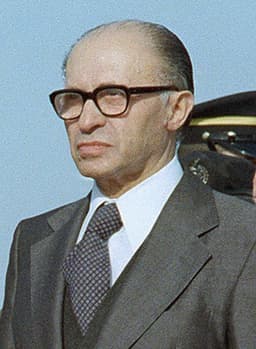
Menachem Begin
Politician · Modern
61.5Total
Basic Information
Born
1848
1913
Died
1930
1992
Era
Modern
Modern
Nationality
United Kingdom
Israel
Occupation
Politician
Politician
Civilization
Western
Middle Eastern
Score Comparison
Military (10%)
50.0
21.2
Political (20%)
72.0
70.0
Influence (20%)
60.0
82.0
Legacy (20%)
40.0
55.0
Leadership (15%)
72.0
72.0
Strategy (15%)
43.3
38.6
TOTAL
55.9
61.5
Arthur Balfour — Complete Timeline
1902 AD
Passed the Education Act 1902Reform◆ Major
Balfour's government passed the Education Act, which established local education authorities and created a system of secondary education. The act was controversial, particularly among Nonconformists who opposed funding for Church schools.
Education ActReformSchools
Impact: nationalconstructive
Became Prime Minister of the United KingdomPolitical Action◆ Major
Arthur Balfour became Prime Minister after the resignation of his uncle, Lord Salisbury. His premiership focused on education reform, tariff reform, and military reorganization. He led the Conservative Party until 1905.
Prime MinisterConservative PartyGovernment
Impact: national
1905 AD
Resigned as Prime MinisterPolitical Action◆ Major
Balfour resigned as Prime Minister after internal party divisions over tariff reform and a series of by-election defeats. He was succeeded by Henry Campbell-Bannerman, leading to a Liberal landslide in the 1906 general election.
ResignationConservative PartyTariff reform
Impact: nationaltragic
1916 AD
Served as Foreign Secretary during World War IPolitical Action◆ Major
Balfour served as Foreign Secretary in David Lloyd George's coalition government. He oversaw British foreign policy during the latter part of World War I, including the Balfour Declaration and the Sykes-Picot Agreement.
Foreign SecretaryWorld War IDiplomacy
Impact: global
1917 AD
Issued the Balfour DeclarationPolitical Action
As Foreign Secretary, Arthur Balfour issued the Balfour Declaration, a letter to Lord Rothschild stating British support for a 'national home for the Jewish people' in Palestine. The declaration had lasting impact on the Middle East.
Balfour DeclarationZionismPalestine
Impact: globalconstructive
Menachem Begin — Complete Timeline
1946 AD
Irgun Command of the King David Hotel BombingPolitical Action◆ Major
As commander of the Irgun, Begin ordered the bombing of the King David Hotel in Jerusalem, which housed British Mandate offices. The attack killed 91 people and was condemned internationally, but it intensified pressure on Britain to end the Mandate.
IrgunBritish MandateTerrorism
Impact: regionaldestructive
1978 AD
Signing of the Camp David AccordsPolitical Action
As prime minister, Begin signed the Camp David Accords with Egyptian President Anwar Sadat at the White House, brokered by US President Jimmy Carter. The framework led to the 1979 Egypt-Israel Peace Treaty, the first between Israel and an Arab state.
Peace TreatyEgyptCamp David
Impact: globalconstructive
1981 AD
Operation Opera (Iraqi Nuclear Reactor Strike)War◆ Major
Begin authorized the Israeli Air Force to bomb the Osirak nuclear reactor near Baghdad, Iraq. The strike destroyed the reactor, preventing Iraq from developing nuclear weapons, but was widely condemned internationally as a violation of sovereignty.
Nuclear ProliferationIraqPreemptive Strike
Impact: regional
Expert Analysis
Origins
Arthur James Balfour was born on July 25, 1848, into the British aristocracy at Whittingehame House, East Lothian, Scotland. His father was a wealthy landowner and member of Parliament; his mother was the daughter of the 8th Duke of Argyll. Balfour was educated at Eton and Trinity College, Cambridge, where he studied moral sciences. His family connections and intellectual upbringing primed him for a political career, though his early interests were philosophical rather than administrative.
Menachem Begin was born on August 16, 1913, in Brest-Litovsk, then part of the Russian Empire (now Belarus). His father was a timber merchant and a committed Zionist; his mother ran the household. Begin studied law at the University of Warsaw, where he became active in the Betar youth movement, a Revisionist Zionist group. His formative years were shaped by rising anti-Semitism and the Holocaust, which he survived after being arrested by the Soviets in 1940 and later released to join the Polish Anders Army.
Rise to Power
Balfour entered Parliament in 1874 as a Conservative MP for Hertford. He rose quickly due to his family ties and intellectual reputation. He served as Chief Secretary for Ireland (1887–1891), where he earned the nickname "Bloody Balfour" for his harsh suppression of agrarian unrest. In 1891, he became First Lord of the Treasury and Leader of the House of Commons. His pivotal moment came in 1902 when he succeeded his uncle, Lord Salisbury, as Prime Minister. His premiership (1902–1905) focused on education reform (the 1902 Education Act) and tariff reform, but internal party divisions led to his resignation in 1905. He later served as Foreign Secretary in Lloyd George's coalition government (1916–1919), where he issued the Balfour Declaration in 1917.
Begin's rise was rooted in militant Zionism. He became commander of the Irgun, a paramilitary group, in 1943. The Irgun's 1946 King David Hotel bombing killed 91 people, escalating the conflict with British Mandate authorities. After Israel's independence, Begin transformed the Irgun into the Herut political party. He spent decades in opposition, as the dominant Labor Party marginalized his revisionist ideology. His breakthrough came in the 1977 election when his Likud party won a plurality, and he became Prime Minister on June 20, 1977, at age 63.
Leadership & Governance
Balfour's leadership style was intellectual and detached. He was known for his philosophical approach, often appearing aloof. As Prime Minister, he prioritized education, passing the 1902 Education Act, which created a centralized system of secondary schools. However, his tariff reform policy split the Conservative Party and led to his downfall. As Foreign Secretary, he was more effective, managing wartime diplomacy and crafting the Balfour Declaration with careful ambiguity: it promised a "national home for the Jewish people" in Palestine while protecting "the civil and religious rights of existing non-Jewish communities."
Begin's governance was ideological and decisive. He pursued a policy of settlement expansion in the occupied territories, authorized the 1981 bombing of Iraq's Osirak nuclear reactor (Operation Opera), and launched the 1982 Lebanon War aimed at destroying PLO bases. His most significant achievement was the 1978 Camp David Accords with Egypt, which led to the 1979 Egypt–Israel peace treaty. Begin's leadership style was combative yet capable of compromise when necessary, as demonstrated at Camp David. He scored 72.0 in Leadership, matching Balfour, but his Political score of 70.0 was slightly below Balfour's 72.0.
Triumph & Tragedy
Balfour's greatest triumph was the Balfour Declaration, which laid the diplomatic foundation for the creation of Israel. His Education Act also modernized British schooling. However, his failure to unite his party over tariff reform ended his premiership prematurely. His legacy is also marred by the Declaration's ambiguous wording, which contributed to the Israeli-Palestinian conflict.
Begin's triumph was the Camp David Accords, which secured peace with Egypt, Israel's most powerful adversary, and won him the 1978 Nobel Peace Prize. His authorization of the Osirak strike was a strategic success, preventing Iraq from developing nuclear weapons. His tragedies include the 1982 Sabra and Shatila massacre, where Christian Phalangists killed Palestinian civilians under Israeli control, leading to widespread condemnation and his resignation in 1983. Begin scored 82.0 in Influence, far higher than Balfour's 60.0, reflecting his direct role in shaping Israel's security and diplomacy.
Character & Destiny
Balfour was a patrician intellectual, skeptical of democracy's excesses but committed to imperial stability. His character—cool, rational, and ironic—allowed him to navigate high office but also made him seem out of touch. His destiny was to be a transitional figure, remembered more for a single document than his premiership.
Begin was a fiery orator and ideologue, shaped by the Holocaust and the struggle for Jewish statehood. His character—determined, confrontational, yet capable of pragmatism—drove him to achieve peace while also pursuing war. His destiny was to be a transformative leader who expanded Israel's borders and secured its first peace treaty. His Legacy score of 55.0 exceeded Balfour's 40.0, indicating a more tangible, enduring impact.
Legacy
Balfour's legacy rests on the Balfour Declaration, which directly led to the British Mandate for Palestine and the eventual creation of Israel. However, his domestic reforms were overshadowed by later developments. He is remembered as a competent but not great Prime Minister, with a total score of 55.9.
Begin's legacy includes the Camp David Accords, which ended decades of war with Egypt and established a framework for Israeli-Arab peace. He also expanded Israeli settlements and launched the Lebanon War, actions that remain controversial. His total score of 61.5 reflects a higher overall impact, particularly in influence and legacy.
Conclusion
Menachem Begin had a greater impact than Arthur Balfour. While Balfour's Declaration was a necessary precursor, Begin directly shaped the modern Middle East through both peace and conflict. Begin's Influence score of 82.0 versus Balfour's 60.0, and his Legacy score of 55.0 versus 40.0, demonstrate a more profound and durable mark on history. Balfour provided the spark; Begin built the fire.
Rankings
🥇
Menachem BeginLeader
Mil: 21.2Pol: 70.0Inf: 82.0
61.5
🥈
Arthur Balfour
Mil: 50.0Pol: 72.0Inf: 60.0
55.9
+5.6 behind
How This Comparison Works
Algorithm
Each figure is scored on 6 dimensions (0—100 scale) based on structured historical data: Military (10%), Political (20%), Influence (20%), Legacy (20%), Leadership (15%), Strategy (15%). The weighted total produces the final ranking.
Data Sources
Scores are computed from structured sub-indicators in the database. Scale factors adjust for era (Ancient ×0.85, Modern ×1.0) and civilization size (Eastern ×1.05, Other ×0.80) to account for differences in population and military scale.
Maximum 3 Figures
Comparisons are limited to 2—3 figures to ensure readability and statistical meaningfulness.
Error Margins
±5 points per dimension — Sub-scores are derived from historical records with inherent uncertainty. Two figures within 5 points on a dimension should be considered roughly equivalent in that area.
Total Score Accuracy
±3 points overall — The weighted combination of 6 dimensions produces a total score with approximately ±3 points of uncertainty. Differences of less than 3 points are not statistically significant— the figures are effectively tied.
Known Limitations
- Historical records are incomplete and uneven across civilizations
- Figures from oral-tradition societies may be underrepresented
- Occupation labels can misclassify multi-role figures
- Scores measure capability and impact, not moral character
- Quantitative scoring is a comparison tool, not absolute truth
Capability Radar
Military (10%) — Battles & Warfare
Battles
27
20
Win Rate
33
25
Expansion
32
15
Political (20%) — Governance & Reform
Reform
60
65
Diplomacy
75
85
Economy
55
55
Influence (20%) — Cultural & Global Reach
Cultural
30
60
Global
70
70
Legacy (20%) — Historical Impact
Historical
80
75
Longevity
75
65
Leadership (15%) — Power & Stability
Tenure
65
70
Stability
60
50
Strategy (15%) — Tactics & Innovation
Strategy
39
35
Tactics
42
30
Reform
44
40
Similar Comparisons
Comments & Discussion
No comments yet. Be the first to share your thoughts!