Loading...
Arnuwanda II vs Napoleon Bonaparte
Napoleon Bonaparte leads by 25.7 pts · 2 figures compared
…
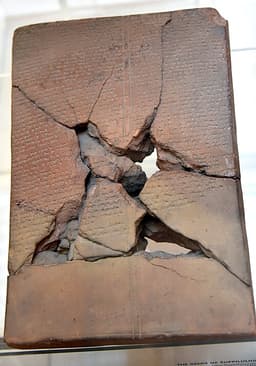
Arnuwanda II
Emperor · Ancient
45.2Total

Napoleon Bonaparte
General · Modern
70.9Total
Basic Information
Born
-1322
1769
Died
-1321
1821
Era
Ancient
Modern
Nationality
Hittite Empire
France
Occupation
Emperor
General
Civilization
Middle Eastern
Western
Score Comparison
Military (10%)
34.2
94.0
Political (20%)
39.4
72.0
Influence (20%)
56.4
40.0
Legacy (20%)
39.2
80.0
Leadership (15%)
45.0
78.0
Strategy (15%)
52.2
90.0
TOTAL
45.2
70.9
Arnuwanda II — Complete Timeline
1321 BC
Death from PlagueOther◆ Major
Arnuwanda II died of a plague that swept through the Hittite Empire after only one year of rule. His death left the throne to his younger brother Mursili II, who faced a crisis of succession and military threats.
Hittite EmpirePlagueDeath
Impact: regionaltragic
Napoleon Bonaparte — Complete Timeline
1799 AD
Coup of 18 BrumaireOther◆ Major
Napoleon Bonaparte, with support from his brother Lucien and key political figures, overthrew the Directory in a bloodless coup. He established the Consulate with himself as First Consul, effectively becoming the ruler of France. This event ended the French Revolution's most unstable period.
French RevolutionCoupRise to Power
Impact: regional
1804 AD
Promulgation of the Napoleonic CodeOther◆ Major
Napoleon enacted the Civil Code of the French, known as the Napoleonic Code, a comprehensive set of laws that replaced the fragmented feudal legal systems. The code established legal equality, protected property rights, and secularized law. It became the basis for legal systems in many European and world countries.
Legal ReformNapoleonic CodeCivil Law
Impact: globalconstructive
1805 AD
Battle of AusterlitzWar◆ Major
Napoleon's Grande Arm
Napoleonic WarsBattleDecisive Victory
Impact: global
1812 AD
Invasion of RussiaWar◆ Major
Napoleon led the Grande Arm
Napoleonic WarsInvasionDisaster
Impact: globaldestructive
1815 AD
Battle of WaterlooWar◆ Major
Napoleon's French army was defeated by the combined forces of the Duke of Wellington's Anglo-Allied army and Gebhard Leberecht von Bl
Napoleonic WarsBattleFinal Defeat
Impact: globaldestructive
Expert Analysis
arnuwanda-ii-vs-napoleon-bonaparte
# The Emperor and the Shadow
In the summer of 1815, Napoleon Bonaparte stood on the deck of the *Bellerophon*, watching the coast of France recede into the gray Atlantic. He was a man who had reshaped the map of Europe, codified laws that would outlive him, and commanded armies that had marched from Madrid to Moscow. Just four years earlier, he had been master of a continent. Now he was a prisoner bound for St. Helena, a speck of volcanic rock in the South Atlantic where he would die six years later, at the age of fifty-one.
Nearly three thousand years earlier, in the shadow of the Anatolian mountains, another ruler faced a more obscure but equally absolute end. Arnuwanda II, son of the great Hittite king Suppiluliuma, reigned for barely a year before a plague—the same pestilence that had already claimed his father—swept through the Hittite Empire and took him as well. He left behind no code, no grand battlefield, no legend. He left almost nothing at all.
What separates a titan from a footnote? The answer lies not merely in talent or ambition, but in the cruel lottery of time, geography, and disease.
Origins
Napoleon was born in 1769 on the island of Corsica, a year after it passed from Genoese to French control. His family was minor nobility, poor enough to be hungry but proud enough to resent the French who now ruled them. He spoke Italian before he learned French, and carried a Corsican accent into adulthood. The French Revolution, erupting when he was twenty, shattered the old hierarchies of birth and opened a path for a young artillery officer with no connections but a ferocious will.
Arnuwanda II, born around 1322 BCE, came from the opposite world. He was the son of Suppiluliuma I, perhaps the greatest king of the Hittite Empire, a warrior who had shattered the rival kingdom of Mitanni and extended Hittite power from the Aegean to the Euphrates. Arnuwanda was born into certainty—a royal prince in a hierarchical Bronze Age court, where destiny was determined by blood, not ambition. The Hittite world was old, stable, and brittle. It had no revolution to offer him.
Rise to Power
Napoleon’s ascent was a masterpiece of timing and audacity. In 1793, at the age of twenty-four, he recaptured the port of Toulon from British and royalist forces, earning promotion to brigadier general. In 1795, he saved the revolutionary government from a royalist uprising with a "whiff of grapeshot"—a brutal cannonade that cleared the streets of Paris. By 1796, he commanded the French army in Italy, where he turned a starving, unpaid rabble into a victorious force through speed, deception, and the ruthless exploitation of local resources. Each victory was a stepping stone. By 1799, he was First Consul. By 1804, Emperor.
Arnuwanda II’s rise was simpler. He was the designated heir. When his father Suppiluliuma died—probably of the plague brought back by Hittite soldiers from Syrian campaigns—Arnuwanda ascended without opposition. There was no coup, no civil war, no dramatic siege. The Hittite bureaucracy simply continued. But the plague did not pause for succession. The same disease that had killed the father was now killing the son.
Leadership & Governance
Napoleon governed through energy and system. He centralized the French state, created the Bank of France, established lycées for education, and—most enduringly—commissioned the Napoleonic Code, a civil law framework that abolished feudal privileges, protected property rights, and established secular legal principles. It spread across Europe and beyond, influencing legal systems from Louisiana to Lebanon. Militarily, he was a genius of maneuver, winning battles like Austerlitz in 1805, where he crushed an Austro-Russian army through a feigned retreat that lured the enemy into a trap. He understood that war was not just about killing but about timing, morale, and the psychological destruction of the enemy commander.
Arnuwanda II governed for less than a year, and almost nothing is known of his policies. Hittite tablets record his name, his parentage, and his death. There is no code, no reform, no battle plan. The plague left him no time. He was a placeholder in an empire that was collapsing not from invasion but from contagion. The Hittite state survived—his brother Mursili II would eventually take the throne and lead a recovery—but Arnuwanda himself was merely a symptom of the disaster.
Triumph & Tragedy
Napoleon’s greatest triumph was Austerlitz, where he destroyed a coalition army on the first anniversary of his coronation. It was a battle so perfect that it became a textbook example of Napoleonic warfare. His greatest tragedy was the invasion of Russia in 1812. He marched with over 600,000 men; fewer than 100,000 returned. The Russian winter, the scorched-earth tactics, and his own overreach destroyed the Grande Armée and shattered his aura of invincibility. He was exiled to Elba in 1814, returned for a hundred days in 1815, and was finally defeated at Waterloo—a battle he might have won if the Prussian army had arrived later, or if his own generals had executed his orders more faithfully.
Arnuwanda II’s tragedy was not a battle but a fever. He died in 1321 BCE, probably in his twenties or early thirties, leaving no heir of age to succeed him. The plague that killed him had already destabilized the empire, and his death forced his younger brother Mursili II to take the throne in a time of crisis. Mursili would prove a capable king, but Arnuwanda himself vanished into the silence of history—a ruler remembered only because a few clay tablets survived the millennia.
Character & Destiny
Napoleon was driven by an insatiable hunger for glory. "I live only for posterity," he once said, and he meant it. He was ruthless, brilliant, and supremely confident, but also impulsive and unable to stop. His personality—the restless ambition of a Corsican outsider who had conquered a continent—drove him to overreach. He could not consolidate; he could only advance. That was his genius and his doom.
Arnuwanda II is a blank. We do not know if he was brave or cautious, kind or cruel. He was simply unlucky. He was born into a world where disease could end a dynasty faster than any army, where a king was as vulnerable as a slave. His destiny was not shaped by his character because he was never given the chance to reveal it.
Legacy
Napoleon’s legacy is immense. The Napoleonic Code shaped modern civil law. His military innovations influenced warfare into the twentieth century. He redrew the map of Europe, ended the Holy Roman Empire, and spread nationalism as a force that would later consume his own conquests. He is remembered as both a tyrant and a reformer, a genius and a cautionary tale.
Arnuwanda II’s legacy is a footnote in a footnote. He is known only to specialists in Hittite history, and even they struggle to say anything meaningful about his reign. He left no monuments, no laws, no victories. He was a king who reigned for a year and died of plague.
Conclusion
Standing on the deck of the *Bellerophon*, Napoleon Bonaparte must have felt the weight of his own story—the rise, the glory, the fall. He was a man who had bent history to his will, yet ended up a prisoner on a rock in the ocean. Arnuwanda II never had that chance. He was not defeated by an enemy or betrayed by an ally. He was simply erased by a microbe.
The difference between them is not just talent or ambition. It is luck. Napoleon lived in an age when a man of ability could rise from nowhere to dominate the world. Arnuwanda lived in an age when a king could die in his palace, forgotten before his body was cold. History remembers the conquerors, but it is often chance that decides who gets to conquer at all.
Rankings
🥇
Napoleon BonaparteLeader
Mil: 94.0Pol: 72.0Inf: 40.0
70.9
🥈
Arnuwanda II
Mil: 34.2Pol: 39.4Inf: 56.4
45.2
+25.7 behind
How This Comparison Works
Algorithm
Each figure is scored on 6 dimensions (0—100 scale) based on structured historical data: Military (10%), Political (20%), Influence (20%), Legacy (20%), Leadership (15%), Strategy (15%). The weighted total produces the final ranking.
Data Sources
Scores are computed from structured sub-indicators in the database. Scale factors adjust for era (Ancient ×0.85, Modern ×1.0) and civilization size (Eastern ×1.05, Other ×0.80) to account for differences in population and military scale.
Maximum 3 Figures
Comparisons are limited to 2—3 figures to ensure readability and statistical meaningfulness.
Error Margins
±5 points per dimension — Sub-scores are derived from historical records with inherent uncertainty. Two figures within 5 points on a dimension should be considered roughly equivalent in that area.
Total Score Accuracy
±3 points overall — The weighted combination of 6 dimensions produces a total score with approximately ±3 points of uncertainty. Differences of less than 3 points are not statistically significant— the figures are effectively tied.
Known Limitations
- Historical records are incomplete and uneven across civilizations
- Figures from oral-tradition societies may be underrepresented
- Occupation labels can misclassify multi-role figures
- Scores measure capability and impact, not moral character
- Quantitative scoring is a comparison tool, not absolute truth
Capability Radar
Military (10%) — Battles & Warfare
Battles
39
95
Win Rate
39
90
Expansion
45
95
Political (20%) — Governance & Reform
Reform
0
95
Diplomacy
5
80
Economy
0
85
Influence (20%) — Cultural & Global Reach
Cultural
0
85
Global
0
90
Legacy (20%) — Historical Impact
Historical
5
95
Longevity
0
90
Leadership (15%) — Power & Stability
Tenure
5
85
Stability
0
70
Strategy (15%) — Tactics & Innovation
Strategy
49
95
Tactics
52
98
Reform
54
92
Similar Comparisons
Comments & Discussion
FALLEN-CONQUEROR6/17/2026
Napoleon reshaped Europe with cannons and codes; Arnuwanda II got a plague and a footnote. Context matters. What did Arnuwanda actually achieve? A year of ruling a plague-ridden empire, then dying. That's not a legacy, it's a weather report. Napoleon's ambition burned bright enough to light three continents. The Hittite king? Just a viral statistic. History remembers impact, not existence. Sorry.
沉默的数据6/17/2026
别拿拿破仑压阿努旺达二世。拿破仑的“伟业”靠的是后人的史书吹捧,赫梯国王只是没赶上印刷术。疫情干掉了他?拿破仑在滑铁卢不也被联军围殴?运气面前,谁比谁高贵?数据不会说谎:阿努旺达在位时长确实短,但他撑住了帝国崩塌前的最后一道裂缝。拿破仑?他的帝国两年就散了。时间长短能衡量一切?笑话。
THE-BRONZE-AGE-SKEPTIC6/17/2026
Stop romanticizing Napoleon's "genius." He inherited the most powerful military machine in Europe and still managed to lose it all. Arnuwanda II faced a pandemic that wiped out entire kingdoms—and held his empire together for a year. That's resilience, not a footnote. Napoleon had twenty years to build his legend; the Hittite king had months. Guess who had the harder job? The real tragedy is we don't even know Arnuwanda's face, yet we know Napoleon's pout.
经典学杠精6/17/2026
两位都是“大帝”,但一个靠枪炮立法,一个靠病毒改写历史。拿破仑的《法典》确实牛,可阿努旺达二世没必要写书——赫梯楔形文字泥板比纸质法律更耐久。拿破仑死在孤岛,阿努旺达死在瘟疫,两种悲剧形式不同,本质一样:都是统治欲与自然力的对冲。别拿“影响力”当唯一标尺,历史的残酷在于,它既捧天才也埋灰尘。
REVISIONIST-WRECKER6/17/2026
Give me a break. Napoleon's "genius" is just propaganda from a guy who lost his entire army in Russia and still gets called a military mastermind. Arnuwanda? He inherited a disaster—literally a plague from his dad—and kept the Hittite state alive for a full year. That's not "nothing." Napoleon had everything: time, resources, a nation at his back. Arnuwanda had dirt roads, a pandemic, and dying scribes. Quality over quantity.
边缘史观察员6/17/2026
比较这两位,本质是比“谁更惨更短命”。拿破仑的地中海出身和阿努旺达的安纳托利亚背景,其实都指向一个真相:帝国是家庭作坊的升级版。拿破仑的叔叔是神职人员,阿