Loading...
Arnuwanda II vs Julius Caesar
Julius Caesar leads by 37.6 pts · 2 figures compared
…
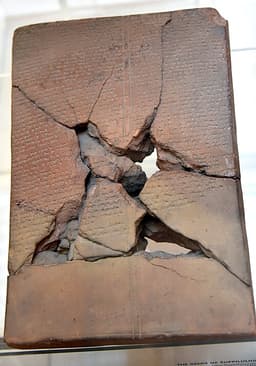
Arnuwanda II
Emperor · Ancient
45.2Total

Julius Caesar
General · Ancient
82.8Total
Basic Information
Born
-1322
-100
Died
-1321
-44
Era
Ancient
Ancient
Nationality
Hittite Empire
Roman Republic
Occupation
Emperor
General
Civilization
Middle Eastern
Western
Score Comparison
Military (10%)
34.2
88.0
Political (20%)
39.4
78.0
Influence (20%)
56.4
85.0
Legacy (20%)
39.2
82.0
Leadership (15%)
45.0
80.0
Strategy (15%)
52.2
85.0
TOTAL
45.2
82.8
Arnuwanda II — Complete Timeline
1321 BC
Death from PlagueOther◆ Major
Arnuwanda II died of a plague that swept through the Hittite Empire after only one year of rule. His death left the throne to his younger brother Mursili II, who faced a crisis of succession and military threats.
Hittite EmpirePlagueDeath
Impact: regionaltragic
Julius Caesar — Complete Timeline
58 BC
Gallic WarsWar◆ Major
Caesar, as proconsul of Gaul, launched a series of campaigns that conquered all of Gaul (modern France, Belgium, and parts of Switzerland). He fought numerous battles, including against the Helvetii, the Belgae, and the Gallic chieftain Vercingetorix. The wars brought immense wealth and a loyal army to Caesar.
Gallic WarsConquestRoman Expansion
Impact: regional
49 BC
Crossing the RubiconPolitical Action◆ Major
Caesar led Legio XIII across the Rubicon River into Italy, defying the Roman Senate's order to disband his army. This act triggered a civil war against Pompey and the Optimates, ultimately leading to Caesar's dictatorship and the end of the Roman Republic.
Roman Civil WarEnd of RepublicPower Struggle
Impact: global
48 BC
Battle of PharsalusWar◆ Major
Caesar's outnumbered army defeated the larger forces of Pompey the Great at Pharsalus in Greece. Caesar's tactical use of a reserve line to counter Pompey's cavalry charge proved decisive. Pompey fled to Egypt, where he was assassinated, leaving Caesar as the undisputed master of the Roman world.
Roman Civil WarBattleDecisive Victory
Impact: regional
44 BC
Appointment as Dictator for LifePolitical Action◆ Major
The Roman Senate appointed Caesar dictator perpetuo (dictator for life), granting him unprecedented personal power. This move concentrated military, legislative, and judicial authority in one person, effectively ending the Roman Republic's traditional system of checks and balances and alarming many senators.
DictatorshipEnd of RepublicPower Consolidation
Impact: regionaldestructive
Assassination on the Ides of MarchPolitical Action◆ Major
A group of Roman senators, led by Marcus Junius Brutus and Gaius Cassius Longinus, stabbed Caesar to death at a meeting of the Senate in the Theatre of Pompey. The assassination was intended to restore the Republic, but instead triggered another civil war that led to the rise of the Roman Empire.
AssassinationRoman PoliticsEnd of Republic
Impact: globaldestructive
Expert Analysis
arnuwanda-ii-vs-julius-caesar
# The Shadow and the Storm
On the Ides of March, 44 BCE, a dictator fell to twenty-three dagger wounds in the heart of Rome. His name would echo through millennia. A thousand years earlier, in the fading light of the Hittite Empire, another ruler gasped his last breath—not from steel, but from plague, after a reign so brief it barely registered in the annals of history. Julius Caesar and Arnuwanda II: one a colossus who remade the world, the other a flicker extinguished before it could burn. What separates a legend from a footnote? The answer lies not in fate alone, but in the raw materials of character, circumstance, and the relentless engine of ambition.
Origins
Caesar was born into the patrician Julian clan in 100 BCE, a family claiming descent from the goddess Venus, yet politically modest by the standards of Rome’s ruling elite. His childhood unfolded against the backdrop of the Social War and the rise of Sulla’s dictatorship—a world where power was seized, not inherited. Young Caesar learned early that survival required cunning. When Sulla ordered him to divorce his wife, the daughter of a political enemy, Caesar refused and fled, living as a fugitive. This crucible forged a man who understood that loyalty was a currency, and risk, a tool.
Arnuwanda II, by contrast, was born into the zenith of Hittite power around 1322 BCE. His father, Suppiluliuma I, was one of the great conquerors of the Bronze Age, a king who shattered the Mitanni Empire and humbled Egypt. Arnuwanda grew up in the shadow of a titan, groomed for succession in a court where the machinery of empire hummed with efficiency. He inherited a realm that stretched from Anatolia to Syria—vast, rich, and stable. But stability can be a trap. Without the fire of struggle, it breeds complacency. Where Caesar learned to bend circumstances to his will, Arnuwanda learned only to inherit them.
Rise to Power
Caesar’s path was a masterclass in strategic patience. He climbed the Roman political ladder—quaestor, aedile, praetor—using borrowed money and theatrical flair. His military breakthrough came in 58 BCE when he secured command of Gaul, a province teeming with fractious tribes and endless opportunity. Over eight years, he conquered the entire region, writing his own propaganda in the *Commentaries*—a text that made him a legend while he still lived. His crossing of the Rubicon in 49 BCE was the ultimate gamble: a general marching on his own city, defying the Senate, daring civil war. He won, and in winning, became dictator.
Arnuwanda II ascended the throne in 1322 BCE with none of this drama. His father had died naturally, leaving a stable succession. The Hittite Empire was at peace; its armies were loyal; its treasury full. Arnuwanda needed only to rule. But history does not reward the merely competent. His rise was not a climb but an inheritance, a handoff of power that required no genius, no sacrifice, no moment of decision that would define a soul.
Leadership & Governance
Caesar governed with the audacity of a man who believed he was destiny’s favorite. He reformed the calendar, introduced land reforms for veterans, extended citizenship to Gauls, and centralized authority in his own hands. His military genius was tactical brilliance married to psychological warfare—he won battles by outthinking enemies, but also by forgiving them afterward, turning foes into allies. Yet his rule grew increasingly autocratic. He accepted the title “dictator for life,” minted coins with his own image, and surrounded himself with sycophants. The Senate, once his instrument, became his tomb.
Arnuwanda II’s governance, as far as the fragmentary records show, was conventional. He maintained the administrative systems his father had built, kept the peace, and likely oversaw the continued construction of temples and fortifications. But he faced a crisis he could not master: a plague that swept through the Hittite heartland, killing thousands, including, ultimately, himself. His leadership score of 35.1 reflects not incompetence but irrelevance—he was a placeholder, not a protagonist.
Triumph & Tragedy
Caesar’s greatest triumph was Gaul—a conquest that added a vast, wealthy province to Rome and made him the richest man in the republic. His tragedy was his assassination, a betrayal by friends like Brutus, whom he had pardoned. “Et tu, Brute?”—whether he spoke the words or not—captures the ultimate irony: a man who mastered every enemy could not master the loyalty of those closest to him.
Arnuwanda’s triumph was simply becoming king. His tragedy was that he had no time for anything else. In 1321 BCE, after one year on the throne, he died of the same plague that ravaged his people. His military score of 46.7 and strategy score of 35.3 are not judgments of failure but of absence—he never fought a major battle, never commanded an army in crisis. He was a king who reigned only in name.
Character & Destiny
Caesar was restless, brilliant, and ruthless. He gambled constantly—on Gaul, on the Rubicon, on clemency for his enemies—because he believed his luck would hold. It did, until it didn’t. His character drove him to reshape the world, but also to ignore the warning signs of conspiracy. He dismissed the soothsayer’s warning about the Ides of March, and walked into the Senate unarmed.
Arnuwanda II, by contrast, seems to have been cautious and dutiful—a son who followed the script. But the script did not prepare him for plague, and his character lacked the improvisational genius that might have saved him. He died not because he was bad, but because he was ordinary, and ordinary men do not survive extraordinary times.
Legacy
Caesar’s legacy is the Roman Empire itself. His reforms, his calendar, his name (which became “Kaiser” and “Tsar”) shaped Western civilization for two millennia. He is remembered as a military genius, a political visionary, and a cautionary tale about ambition.
Arnuwanda II is remembered, if at all, as a footnote in Hittite king lists—a name between his father and his brother Mursili II, who would eventually lead the empire through the plague’s aftermath. His legacy score of 52.0 reflects the faintest echo: a king who died before he could live.
Conclusion
We remember Caesar because he acted. He seized a republic and bent it into an empire. Arnuwanda II we forget because he merely existed. The difference between a legend and a footnote is not fate—it is the willingness to risk everything, to cross the Rubicon, to defy the gods and the Senate. Caesar understood that history belongs to those who write it, with ink or with blood. Arnuwanda, for all his inheritance, never learned to write at all.
Rankings
🥇
Julius CaesarLeader
Mil: 88.0Pol: 78.0Inf: 85.0
82.8
🥈
Arnuwanda II
Mil: 34.2Pol: 39.4Inf: 56.4
45.2
+37.6 behind
How This Comparison Works
Algorithm
Each figure is scored on 6 dimensions (0—100 scale) based on structured historical data: Military (10%), Political (20%), Influence (20%), Legacy (20%), Leadership (15%), Strategy (15%). The weighted total produces the final ranking.
Data Sources
Scores are computed from structured sub-indicators in the database. Scale factors adjust for era (Ancient ×0.85, Modern ×1.0) and civilization size (Eastern ×1.05, Other ×0.80) to account for differences in population and military scale.
Maximum 3 Figures
Comparisons are limited to 2—3 figures to ensure readability and statistical meaningfulness.
Error Margins
±5 points per dimension — Sub-scores are derived from historical records with inherent uncertainty. Two figures within 5 points on a dimension should be considered roughly equivalent in that area.
Total Score Accuracy
±3 points overall — The weighted combination of 6 dimensions produces a total score with approximately ±3 points of uncertainty. Differences of less than 3 points are not statistically significant— the figures are effectively tied.
Known Limitations
- Historical records are incomplete and uneven across civilizations
- Figures from oral-tradition societies may be underrepresented
- Occupation labels can misclassify multi-role figures
- Scores measure capability and impact, not moral character
- Quantitative scoring is a comparison tool, not absolute truth
Capability Radar
Military (10%) — Battles & Warfare
Battles
39
95
Win Rate
39
92
Expansion
45
97
Political (20%) — Governance & Reform
Reform
0
90
Diplomacy
5
85
Economy
0
82
Influence (20%) — Cultural & Global Reach
Cultural
0
88
Global
0
94
Legacy (20%) — Historical Impact
Historical
5
95
Longevity
0
96
Leadership (15%) — Power & Stability
Tenure
5
75
Stability
0
60
Strategy (15%) — Tactics & Innovation
Strategy
49
94
Tactics
52
96
Reform
54
88
Similar Comparisons
Comments & Discussion
瘟疫判官6/17/2026
别拿瘟疫当借口。阿努万达二世要是真有本事,一年也能干点事。看看凯撒:流亡、反叛、征服高卢,全在逆境里拼出来的。赫梯的档案说他“治理无方”,连瘟疫都是抄来的借口。历史不是随机刷新的,是行动者的战场。这家伙就是个青铜时代的占位符。
安纳托利亚遗民6/17/2026
你们西方学者就知道捧罗马。阿努万达二世不是失败者——他是赫梯崩溃时的守夜人。父亲留下的帝国被瘟疫和亚述蚕食,他要能活十年,也许能稳住阵脚。但历史不给机会?凯撒也没给高卢人机会啊。这不是能力问题,是气候、疾病、地理的绞杀。把凯撒扔到公元前1300年的安纳托利亚,他连一个城邦都搞不定。
QuillAndQuarter6/17/2026
"The Bronze Age Nobody" — Let’s cut the crap: Arnuwanda II is only famous because of survivorship bias in ancient records. A few palace tablets survived and historians invented a reign. Caesar’s Conspiracy of 44 BCE is documented by Plutarch, Suetonius, and Appian—multiple independent sources. The Hittite king’s entire legacy rests on maybe four fragmentary texts. If we found a matching set for a random Assyrian official, we’d call him a visionary too. Control for evidence, people.
RevisionistCritic6/17/2026
"Hittite Hype vs Roman Reality" — The comparison is laughable. Caesar remade the Roman constitution, doubled the empire, and invented modern dictatorship. Arnuwanda II? He’s literally a footnote in a plague text from Bogazkoy. His reign was so forgettable that scholars argue whether he even had a coronation. One man’s death launched a civil war that birthed an empire; the other’s death just meant a new seal impression on a treaty. 23 daggers beat a sneeze any day.
RenaissanceReader6/17/2026
"The Plague That Erased a King" — Let’s be real: Arnuwanda II didn’t stand a chance. Caesar’s assassination was a political earthquake; Arnuwanda died of plague after maybe a year on the throne. The Hittite archives show he had zero time to consolidate power—his father Suppiluliuma I left him a crumbling empire, not a legacy. The real tragedy? He’s known only because of a few clay tablets. Caesar got Shakespeare. That’s the difference between bronze and marble.