Loading...
This comparison has not been analyzed yet.
One-time AI generation (~1 minute). Scores and timeline are already available below.
Ariarathes IX of Cappadocia vs Numerian
Numerian leads by 7.6 pts · 2 figures compared
…
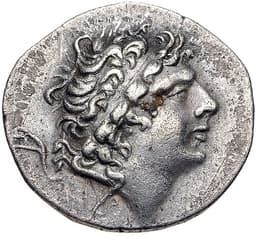
Ariarathes IX of Cappadocia
Emperor · Ancient
40.3Total
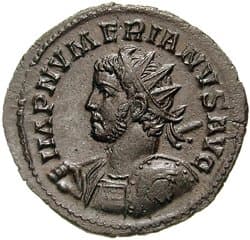
Numerian
Emperor · Ancient
47.9Total
Basic Information
Born
-109
253
Died
-85
284
Era
Ancient
Ancient
Nationality
Cappadocia
Roman Empire
Occupation
Emperor
Emperor
Civilization
Western
Western
Score Comparison
Military (10%)
10.2
20.8
Political (20%)
39.4
68.0
Influence (20%)
56.4
56.4
Legacy (20%)
31.7
39.2
Leadership (15%)
49.9
49.9
Strategy (15%)
38.6
42.1
TOTAL
40.3
47.9
Ariarathes IX of Cappadocia — Complete Timeline
100 BC
Installation as Puppet King by Mithridates VIPolitical Action◆ Major
Ariarathes IX was installed as king of Cappadocia by his father, Mithridates VI of Pontus, after the murder of the previous king. He served as a puppet ruler, with real power exercised by Pontic officials.
Pontic DominationPuppet KingMithridates VI
Impact: regionaldestructive
95 BC
Expulsion by Cappadocian NobilityPolitical Action
Ariarathes IX was expelled from Cappadocia by a rebellion of the local nobility, who opposed Pontic control. The rebels appealed to Rome for a new king, leading to the appointment of Ariobarzanes I.
RebellionExpulsionRoman Intervention
Impact: national
93 BC
Restoration by Mithridates VIWar
Mithridates VI restored Ariarathes IX to the Cappadocian throne after expelling the Roman-appointed king Ariobarzanes I. This act was part of Mithridates' broader campaign to challenge Roman influence in Anatolia.
Pontic RestorationMithridatic WarsCappadocia
Impact: regional
85 BC
Final Expulsion and DeathWar◆ Major
Ariarathes IX was finally expelled from Cappadocia after the First Mithridatic War ended in Roman victory. He was killed shortly after, ending the Pontic puppet regime in Cappadocia.
Mithridatic WarsDeathEnd of Puppet Rule
Impact: regionaltragic
Numerian — Complete Timeline
283 AD
Proclamation as EmperorPolitical Action◆ Major
Numerian was proclaimed emperor by the Roman army in the East following the death of his father Carus during a campaign against the Sasanians. He was co-emperor with his brother Carinus, who ruled the West. Numerian's reign was brief and marked by his mysterious illness.
Imperial SuccessionCo-EmperorCrisis of the Third Century
Impact: regional
284 AD
Death in the LitterOther◆ Major
Numerian died under mysterious circumstances while traveling eastward from Persia. His death was concealed by the praetorian prefect Aper, who claimed Numerian was ill and kept him in a closed litter. The body's decomposition eventually revealed the death, leading to Aper's execution by Diocletian.
DeathMysteryImperial Succession
Impact: regionaltragic
Discovery by DiocletianPolitical Action
After Numerian's death was discovered, the army proclaimed Diocletian as emperor at Nicomedia. Diocletian personally executed Aper for the suspected murder of Numerian. This event marked the end of the Crisis of the Third Century and the beginning of the Tetrarchy.
Imperial SuccessionTetrarchyCrisis of the Third Century
Impact: regional
This comparison has not been analyzed yet.
One-time AI generation (~1 minute). Scores and timeline are already available below.
Rankings
🥇
NumerianLeader
Mil: 20.8Pol: 68.0Inf: 56.4
47.9
🥈
Ariarathes IX of Cappadocia
Mil: 10.2Pol: 39.4Inf: 56.4
40.3
+7.6 behind
How This Comparison Works
Algorithm
Each figure is scored on 6 dimensions (0—100 scale) based on structured historical data: Military (10%), Political (20%), Influence (20%), Legacy (20%), Leadership (15%), Strategy (15%). The weighted total produces the final ranking.
Data Sources
Scores are computed from structured sub-indicators in the database. Scale factors adjust for era (Ancient ×0.85, Modern ×1.0) and civilization size (Eastern ×1.05, Other ×0.80) to account for differences in population and military scale.
Maximum 3 Figures
Comparisons are limited to 2—3 figures to ensure readability and statistical meaningfulness.
Error Margins
±5 points per dimension — Sub-scores are derived from historical records with inherent uncertainty. Two figures within 5 points on a dimension should be considered roughly equivalent in that area.
Total Score Accuracy
±3 points overall — The weighted combination of 6 dimensions produces a total score with approximately ±3 points of uncertainty. Differences of less than 3 points are not statistically significant— the figures are effectively tied.
Known Limitations
- Historical records are incomplete and uneven across civilizations
- Figures from oral-tradition societies may be underrepresented
- Occupation labels can misclassify multi-role figures
- Scores measure capability and impact, not moral character
- Quantitative scoring is a comparison tool, not absolute truth
Capability Radar
Military (10%) — Battles & Warfare
Battles
5
4
Win Rate
5
7
Expansion
5
9
Political (20%) — Governance & Reform
Reform
0
0
Diplomacy
5
0
Economy
0
0
Influence (20%) — Cultural & Global Reach
Cultural
0
0
Global
0
0
Legacy (20%) — Historical Impact
Historical
5
5
Longevity
5
0
Leadership (15%) — Power & Stability
Tenure
10
10
Stability
5
5
Strategy (15%) — Tactics & Innovation
Strategy
5
17
Tactics
5
18
Reform
0
22
Similar Comparisons
Comments & Discussion
No comments yet. Be the first to share your thoughts!