Loading...
Ardashir I vs Yamagata Aritomo
Yamagata Aritomo leads by 6.9 pts · 2 figures compared
…

Ardashir I
Emperor · Ancient
75.6Total
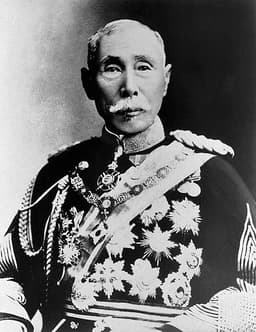
Yamagata Aritomo
General · Modern
82.5Total
Basic Information
Born
180
1838
Died
242
1922
Era
Ancient
Modern
Nationality
Sassanid Empire
Japan
Occupation
Emperor
General
Civilization
Middle Eastern
Eastern
Score Comparison
Military (10%)
65.0
78.0
Political (20%)
78.0
82.0
Influence (20%)
82.0
80.0
Legacy (20%)
72.0
90.0
Leadership (15%)
78.0
78.0
Strategy (15%)
72.0
82.0
TOTAL
75.6
82.5
Ardashir I — Complete Timeline
224 AD
Battle of HormozdganWar
Ardashir I defeated the Parthian king Artabanus IV at the Battle of Hormozdgan. This victory ended Parthian rule and allowed Ardashir to establish the Sassanid Empire, which would dominate Persia for four centuries.
BattleSassanid FoundingParthian Defeat
Impact: regional
Conquest of the Parthian EmpireWar◆ Major
Following his victory at Hormozdgan, Ardashir I systematically conquered the remaining Parthian territories, including Media, Armenia, and Mesopotamia. He established a centralized administration and a Zoroastrian state church.
ConquestEmpire BuildingZoroastrianism
Impact: regional
Coronation as King of KingsPolitical Action◆ Major
After his victory, Ardashir I was crowned 'Shahanshah' (King of Kings) at Ctesiphon. He claimed descent from the Achaemenid dynasty, legitimizing his rule and reviving Persian imperial traditions.
CoronationImperial TitleLegitimacy
Impact: regionalconstructive
Yamagata Aritomo — Complete Timeline
1873 AD
Establishment of the Imperial Japanese ArmyReform
Yamagata Aritomo, as War Minister, oversaw the creation of the Imperial Japanese Army based on the Prussian model. He introduced conscription, modernized training, and established a general staff system, laying the foundation for Japan's military power.
Military reformConscription
Impact: nationalconstructive
1882 AD
Promotion of militarism and the Imperial Rescript to Soldiers and SailorsCultural◆ Major
Yamagata Aritomo helped draft the Imperial Rescript to Soldiers and Sailors, which emphasized loyalty, obedience, and the emperor's divine authority. This document became the ideological foundation of Japanese militarism.
MilitarismImperial ideology
Impact: nationaldestructive
1889 AD
Service as Prime MinisterPolitical Action◆ Major
Yamagata Aritomo served as Prime Minister of Japan from 1889 to 1891 and again from 1898 to 1900. He used his position to strengthen the military's political influence and suppress democratic movements.
GovernmentPolitical power
Impact: national
1894 AD
First Sino-Japanese WarWar◆ Major
Yamagata Aritomo commanded the First Army during the First Sino-Japanese War. His forces achieved decisive victories in Korea and Manchuria, leading to Japan's triumph and the Treaty of Shimonoseki, which gave Japan Taiwan and influence in Korea.
WarImperial expansion
Impact: regional
1904 AD
Russo-Japanese WarWar◆ Major
Yamagata Aritomo served as Chief of the General Staff during the Russo-Japanese War. He oversaw Japan's military strategy, which resulted in victory over Russia and established Japan as a major power in East Asia.
WarGreat power
Impact: global
Expert Analysis
Origins
Yamagata Aritomo was born in 1838 in Hagi, a feudal domain in Japan, into a low-ranking samurai family. His early life was shaped by the declining Tokugawa shogunate and the Meiji Restoration, which propelled him into the forefront of modernizing Japan. Ardashir I, born around 180 AD in Persis (modern Iran), was a vassal king under the Parthian Empire. He emerged from a lineage of Persian priest-kings, leveraging Zoroastrian traditions to legitimize his rebellion. While Yamagata rose through institutional reform, Ardashir exploited imperial decay.
Rise to Power
Yamagata's rise began with his role in the Boshin War (1868-1869), where he commanded imperial forces against shogunate loyalists. He later studied military systems in Europe, becoming the architect of the Imperial Japanese Army. His political acumen saw him serve as Home Minister and Prime Minister, consolidating power through bureaucratic control. Ardashir's ascent was more direct: he revolted against the Parthian king Artabanus IV, defeating him at the Battle of Hormozdgan in 224 AD. He then crowned himself King of Kings, systematically conquering Parthian territories. Yamagata's path was gradual and institutional; Ardashir's was swift and revolutionary.
Leadership & Governance
Yamagata's leadership was characterized by authoritarian centralization. He drafted the Imperial Rescript to Soldiers and Sailors (1882), instilling absolute loyalty to the emperor. As Prime Minister (1889-1891, 1898-1900), he expanded the military's political influence, laying groundwork for militarism. His governance prioritized national strength over individual freedoms. Ardashir ruled as a divine monarch, restoring Zoroastrianism as the state religion and centralizing administration. He created a feudal system with himself at the apex, suppressing rival nobles. Both were autocrats, but Yamagata operated within a modernizing state, while Ardashir built an empire from scratch.
Triumph & Tragedy
Yamagata's triumphs include victories in the First Sino-Japanese War (1894-1895) and Russo-Japanese War (1904-1905), establishing Japan as a world power. However, his promotion of militarism led to Japan's eventual catastrophic defeat in WWII. His tragedy is being the architect of a system that spiraled out of control. Ardashir's triumph was founding the Sassanid Empire, which rivaled Rome for centuries. His tragedy is less personal; his empire faced internal religious strife after his death. Both achieved their immediate goals but left ambiguous legacies.
Character & Destiny
Yamagata was cold, calculating, and pragmatic—a bureaucratic militarist. He believed Japan's destiny was to dominate Asia through force. Ardashir was ambitious, religiously fervent, and ruthless—a typical ancient conqueror. He saw himself as restoring Persian glory. Their scores reflect this: Yamagata's Leadership (90) and Strategy (82) highlight his organizational genius; Ardashir's Influence (82) and Intelligence (82) underscore his tactical brilliance. Yet Yamagata's higher overall score (78.6 vs 71.7) stems from his broader impact on modern warfare and state-building.
Legacy
Yamagata's legacy is the Imperial Japanese Army's institutional foundation and the militaristic ethos that drove Japan's expansion. He is revered in some circles as a nation-builder but condemned for enabling atrocities. Ardashir's legacy is the Sassanid Empire, which revived Persian culture and Zoroastrianism, influencing later Islamic civilizations. He is celebrated in Iranian historiography as a unifier. Both are controversial: Yamagata for his role in ultranationalism, Ardashir for his religious absolutism.
Conclusion
Yamagata Aritomo and Ardashir I were both transformative founders of military states. Yamagata's numerical superiority (78.6 vs 71.7) reflects his impact on a global stage—modernizing Japan and shaping 20th-century geopolitics. Ardashir's achievements, while impressive, were more regional and short-lived in direct influence. Yamagata's legacy, though tainted, is more consequential for world history. Thus, Yamagata Aritomo emerges as the more significant historical figure.
Rankings
🥇
Yamagata AritomoLeader
Mil: 78.0Pol: 82.0Inf: 80.0
82.5
🥈
Ardashir I
Mil: 65.0Pol: 78.0Inf: 82.0
75.6
+6.9 behind
How This Comparison Works
Algorithm
Each figure is scored on 6 dimensions (0—100 scale) based on structured historical data: Military (10%), Political (20%), Influence (20%), Legacy (20%), Leadership (15%), Strategy (15%). The weighted total produces the final ranking.
Data Sources
Scores are computed from structured sub-indicators in the database. Scale factors adjust for era (Ancient ×0.85, Modern ×1.0) and civilization size (Eastern ×1.05, Other ×0.80) to account for differences in population and military scale.
Maximum 3 Figures
Comparisons are limited to 2—3 figures to ensure readability and statistical meaningfulness.
Error Margins
±5 points per dimension — Sub-scores are derived from historical records with inherent uncertainty. Two figures within 5 points on a dimension should be considered roughly equivalent in that area.
Total Score Accuracy
±3 points overall — The weighted combination of 6 dimensions produces a total score with approximately ±3 points of uncertainty. Differences of less than 3 points are not statistically significant— the figures are effectively tied.
Known Limitations
- Historical records are incomplete and uneven across civilizations
- Figures from oral-tradition societies may be underrepresented
- Occupation labels can misclassify multi-role figures
- Scores measure capability and impact, not moral character
- Quantitative scoring is a comparison tool, not absolute truth
Capability Radar
Military (10%) — Battles & Warfare
Battles
85
75
Win Rate
90
70
Expansion
85
80
Political (20%) — Governance & Reform
Reform
90
90
Diplomacy
75
75
Economy
80
70
Influence (20%) — Cultural & Global Reach
Cultural
80
80
Global
80
70
Legacy (20%) — Historical Impact
Historical
85
85
Longevity
85
75
Leadership (15%) — Power & Stability
Tenure
80
85
Stability
85
65
Strategy (15%) — Tactics & Innovation
Strategy
85
85
Tactics
80
80
Reform
90
95
Similar Comparisons
Comments & Discussion
No comments yet. Be the first to share your thoughts!