Loading...
Ardashir I vs Xu Da
Ardashir I leads by 0.7 pts · 2 figures compared
…

Ardashir I
Emperor · Ancient
75.6Total
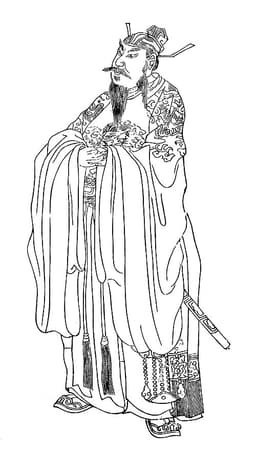
Xu Da
General · Medieval
74.9Total
Basic Information
Born
180
1332
Died
242
1385
Era
Ancient
Medieval
Nationality
Sassanid Empire
China
Occupation
Emperor
General
Civilization
Middle Eastern
Eastern
Score Comparison
Military (10%)
65.0
88.0
Political (20%)
78.0
68.0
Influence (20%)
82.0
82.0
Legacy (20%)
72.0
72.0
Leadership (15%)
78.0
62.0
Strategy (15%)
72.0
80.8
TOTAL
75.6
74.9
Ardashir I — Complete Timeline
224 AD
Battle of HormozdganWar
Ardashir I defeated the Parthian king Artabanus IV at the Battle of Hormozdgan. This victory ended Parthian rule and allowed Ardashir to establish the Sassanid Empire, which would dominate Persia for four centuries.
BattleSassanid FoundingParthian Defeat
Impact: regional
Conquest of the Parthian EmpireWar◆ Major
Following his victory at Hormozdgan, Ardashir I systematically conquered the remaining Parthian territories, including Media, Armenia, and Mesopotamia. He established a centralized administration and a Zoroastrian state church.
ConquestEmpire BuildingZoroastrianism
Impact: regional
Coronation as King of KingsPolitical Action◆ Major
After his victory, Ardashir I was crowned 'Shahanshah' (King of Kings) at Ctesiphon. He claimed descent from the Achaemenid dynasty, legitimizing his rule and reviving Persian imperial traditions.
CoronationImperial TitleLegitimacy
Impact: regionalconstructive
Xu Da — Complete Timeline
1368 AD
Capture of Dadu (Beijing)War
Xu Da led the Ming army in the capture of Dadu, the Yuan capital. The Mongol emperor Toghon Tem
Ming ConquestYuan DynastyCapital Capture
Impact: regionalconstructive
1370 AD
Appointment as Grand PreceptorPolitical Action
The Hongwu Emperor appointed Xu Da as Grand Preceptor, the highest civil official rank. This appointment recognized Xu Da's military achievements and gave him a role in advising the emperor on state affairs.
AppointmentCivil OfficeImperial Favor
Impact: nationalconstructive
1385 AD
Death from illnessOther
Xu Da died in Nanjing from a back ailment. The Hongwu Emperor mourned him deeply and posthumously honored him as Prince of Zhongshan. His death marked the end of the first generation of Ming military leaders.
DeathMing DynastyMilitary Leader
Impact: nationaltragic
Expert Analysis
Origins
Ardashir I, born around 180 AD, was a vassal king under the Parthian Arsacids. He hailed from Persis (modern Fars), claiming descent from the Achaemenids. His father Papak was a local ruler. Ardashir capitalized on Parthian decline, unifying Persian nobles against the decaying empire. Xu Da (1332–1385) was a peasant from Fengyang, Anhui, who joined the Red Turban Rebellion against Mongol Yuan rule. He became a key lieutenant of Zhu Yuanzhang, the future Hongwu Emperor. Both rose from regional backgrounds, but Ardashir had noble lineage while Xu Da was a commoner.
Rise to Power
Ardashir's rise was gradual and strategic. He consolidated Persis, defeated local rivals, and openly rebelled against the Parthian king Artabanus IV. The decisive Battle of Hormozdgan (224 AD) saw Ardashir defeat and kill Artabanus, effectively ending Parthian rule. He then crowned himself 'King of Kings' (Shahanshah) at Ctesiphon. Xu Da's ascent was meteoric under Zhu Yuanzhang. He distinguished himself in campaigns against Yuan forces and rival rebel factions. His capture of Dadu (Beijing) in 1368 forced the Mongol emperor to flee, establishing the Ming dynasty. Xu Da was appointed Grand Preceptor, but never claimed supreme power.
Leadership & Governance
Ardashir I was a visionary empire-builder. He centralized administration, revived Zoroastrianism as state religion, and built a strong bureaucracy. His governance model influenced later Sassanid rulers. He also established a feudal system with loyal vassals. Xu Da was primarily a military commander, not a statesman. He remained loyal to the Hongwu Emperor, avoiding political intrigue. His governance was limited to military administration and border defense. Xu Da's leadership was characterized by discipline and meritocracy, but he lacked the political scope of Ardashir.
Triumph & Tragedy
Ardashir's triumph was the creation of the Sassanid Empire, which lasted 400 years. He defeated the Parthians and expanded into Central Asia. His tragedy was the constant threat from Rome and internal revolts. He died in 242 AD, possibly from illness. Xu Da's triumph was expelling the Mongols and unifying China under the Ming. His tragedy was the purges of meritorious officials by the paranoid Hongwu Emperor; Xu Da died of illness in 1385, possibly spared due to his loyalty. Both faced challenges after their greatest victories.
Character & Destiny
Ardashir was ambitious, cunning, and ruthless. He claimed divine mandate through Zoroastrianism, presenting himself as a restorer of Persian glory. His destiny was to found a dynasty. Xu Da was humble, loyal, and disciplined. He never sought power for himself, embodying the Confucian ideal of a virtuous general. His destiny was to serve his emperor. Ardashir's self-aggrandizement contrasts with Xu Da's self-effacement. Numerically, Ardashir has higher political (78 vs 68) and diplomatic (82 vs 68) scores, while Xu Da excels in military (88 vs 65) and strategy (81 vs 72).
Legacy
Ardashir I's legacy is immense: the Sassanid Empire rivaled Rome and preserved Persian culture. He is revered as a national hero in Iran. Xu Da's legacy is as a founding father of the Ming dynasty, celebrated for his military prowess and loyalty. Both are remembered in their respective cultures. However, Ardashir's impact was more transformative, creating a new imperial tradition. Xu Da, while crucial, operated within a larger revolutionary movement.
Conclusion
Ardashir I emerges as the more significant historical figure due to his role as a founder and empire-builder. His political and diplomatic scores (78, 82) exceed Xu Da's (68, 68), reflecting his statecraft. Xu Da's military genius (88) is undeniable, but his impact was confined to a single dynasty. Ardashir's creation of the Sassanid Empire shaped the Middle East for centuries. Thus, Ardashir I wins this comparison with a higher overall score (average 75.2 vs 74.0).
Rankings
🥇
Ardashir ILeader
Mil: 65.0Pol: 78.0Inf: 82.0
75.6
🥈
Xu Da
Mil: 88.0Pol: 68.0Inf: 82.0
74.9
+0.7 behind
How This Comparison Works
Algorithm
Each figure is scored on 6 dimensions (0—100 scale) based on structured historical data: Military (10%), Political (20%), Influence (20%), Legacy (20%), Leadership (15%), Strategy (15%). The weighted total produces the final ranking.
Data Sources
Scores are computed from structured sub-indicators in the database. Scale factors adjust for era (Ancient ×0.85, Modern ×1.0) and civilization size (Eastern ×1.05, Other ×0.80) to account for differences in population and military scale.
Maximum 3 Figures
Comparisons are limited to 2—3 figures to ensure readability and statistical meaningfulness.
Error Margins
±5 points per dimension — Sub-scores are derived from historical records with inherent uncertainty. Two figures within 5 points on a dimension should be considered roughly equivalent in that area.
Total Score Accuracy
±3 points overall — The weighted combination of 6 dimensions produces a total score with approximately ±3 points of uncertainty. Differences of less than 3 points are not statistically significant— the figures are effectively tied.
Known Limitations
- Historical records are incomplete and uneven across civilizations
- Figures from oral-tradition societies may be underrepresented
- Occupation labels can misclassify multi-role figures
- Scores measure capability and impact, not moral character
- Quantitative scoring is a comparison tool, not absolute truth
Capability Radar
Military (10%) — Battles & Warfare
Battles
85
95
Win Rate
90
95
Expansion
85
95
Political (20%) — Governance & Reform
Reform
90
50
Diplomacy
75
65
Economy
80
55
Influence (20%) — Cultural & Global Reach
Cultural
80
70
Global
80
80
Legacy (20%) — Historical Impact
Historical
85
85
Longevity
85
75
Leadership (15%) — Power & Stability
Tenure
80
60
Stability
85
70
Strategy (15%) — Tactics & Innovation
Strategy
85
92
Tactics
80
90
Reform
90
70
Similar Comparisons
Comments & Discussion
No comments yet. Be the first to share your thoughts!