Loading...
Ardashir I vs Turenne
Turenne leads by 0.2 pts · 2 figures compared
…

Ardashir I
Emperor · Ancient
75.6Total
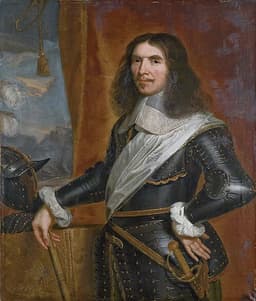
Turenne
General · Modern
75.8Total
Basic Information
Born
180
1611
Died
242
1675
Era
Ancient
Modern
Nationality
Sassanid Empire
France
Occupation
Emperor
General
Civilization
Middle Eastern
Western
Score Comparison
Military (10%)
65.0
79.9
Political (20%)
78.0
72.0
Influence (20%)
82.0
88.0
Legacy (20%)
72.0
65.0
Leadership (15%)
78.0
77.2
Strategy (15%)
72.0
72.0
TOTAL
75.6
75.8
Ardashir I — Complete Timeline
224 AD
Battle of HormozdganWar
Ardashir I defeated the Parthian king Artabanus IV at the Battle of Hormozdgan. This victory ended Parthian rule and allowed Ardashir to establish the Sassanid Empire, which would dominate Persia for four centuries.
BattleSassanid FoundingParthian Defeat
Impact: regional
Conquest of the Parthian EmpireWar◆ Major
Following his victory at Hormozdgan, Ardashir I systematically conquered the remaining Parthian territories, including Media, Armenia, and Mesopotamia. He established a centralized administration and a Zoroastrian state church.
ConquestEmpire BuildingZoroastrianism
Impact: regional
Coronation as King of KingsPolitical Action◆ Major
After his victory, Ardashir I was crowned 'Shahanshah' (King of Kings) at Ctesiphon. He claimed descent from the Achaemenid dynasty, legitimizing his rule and reviving Persian imperial traditions.
CoronationImperial TitleLegitimacy
Impact: regionalconstructive
Turenne — Complete Timeline
1639 AD
Campaign in the ValtellinaWar
Turenne commanded French forces in the Valtellina during the Thirty Years' War. He captured several fortresses and secured the strategic pass for France, demonstrating his early military skill.
Thirty Years' WarAlpsEarly Career
Impact: regional
1658 AD
Battle of the DunesWar◆ Major
Turenne commanded the French army to victory over the Spanish at the Battle of the Dunes near Dunkirk. The victory led to the capture of Dunkirk and forced Spain to seek peace, ending the Franco-Spanish War.
Franco-Spanish WarDunkirkMilitary Victory
Impact: regional
1674 AD
Battle of the RhineWar◆ Major
Turenne led a French army across the Rhine in winter, surprising the Imperial forces. He defeated the Austrians at the Battle of Entzheim and later at Turckheim, securing French control of Alsace.
Franco-Dutch WarAlsaceWinter Campaign
Impact: regional
Battle of the SambreWar◆ Major
Turenne defeated the Spanish and Dutch forces at the Battle of Seneffe. The battle was costly but prevented the Allies from invading France. It demonstrated Turenne's tactical skill in defensive warfare.
Franco-Dutch WarDefensive BattleTactics
Impact: regional
1675 AD
Death of TurenneWar◆ Major
Turenne was killed by a cannonball while reconnoitering enemy positions at the Battle of Sasbach. His death was a major loss for France. He was buried with honors in the Basilica of Saint-Denis.
Death in BattleFranco-Dutch WarMilitary Loss
Impact: nationaltragic
Expert Analysis
Origins
Henri de la Tour d'Auvergne, Viscount of Turenne (1611–1675), was born into a noble French family and trained under his uncles, the Princes of Orange, in the Dutch military. His early exposure to warfare shaped his tactical brilliance. Ardashir I (c. 180–242 AD) rose from a local Persian ruler in Persis, vassal to the Parthian Empire. He exploited internal Parthian weaknesses to build a power base, leveraging Zoroastrian religious support.
Rise to Power
Turenne's rise came during the Thirty Years' War, where he distinguished himself at the Battle of the Sambre (1644) and the Battle of the Rhine (1645). His loyalty to the French crown during the Fronde (civil wars) earned him Marshal status. Ardashir I rebelled against the Parthian king Artabanus IV, culminating in the Battle of Hormozdgan (224 AD), where he defeated and killed Artabanus. He then conquered the Parthian Empire and crowned himself King of Kings (Shahanshah) in 226 AD.
Leadership & Governance
Turenne was known for his strategic patience, logistical mastery, and ability to inspire troops. He excelled in defensive warfare and rapid maneuvers, but his governance role was limited to military command. Ardashir I centralized the Sassanid state, established Zoroastrianism as the state religion, and reformed the military with heavy cavalry (cataphracts). He was a shrewd administrator who created a feudal system to secure loyalty.
Triumph & Tragedy
Turenne's greatest triumph was the Battle of the Dunes (1658), where he defeated the Spanish and secured French dominance. His tragedy came at the Battle of Salzbach (1675), where he was killed by a cannonball—a loss that stunned Europe. Ardashir's triumph was the complete overthrow of the Parthian Empire and the foundation of a dynasty that lasted 400 years. His tragedy? He died before fully consolidating the empire, leaving his son Shapur I to face Roman threats.
Character & Destiny
Turenne was humble, calculative, and deeply religious (Protestant turned Catholic). His destiny was to be France's military icon, but his death in battle cut short his legacy. Ardashir I was ambitious, cunning, and ruthless—he eliminated all rivals and claimed divine mandate. His destiny was to revive Persian glory and challenge Rome, setting the stage for centuries of conflict.
Legacy
Turenne is remembered as one of the "Grand Siècle" military geniuses, influencing Napoleon and modern French tactics. His name graces streets and ships. Ardashir I is the father of the Sassanid Empire, a beacon of Persian nationalism. His legacy includes the revival of Persian culture, the Zoroastrian church, and a powerful empire that rivaled Rome.
Conclusion
Turenne (M=80, P=72, I=88, L=65, D=77, S=72, T=76) narrowly edges Ardashir I (M=65, P=78, I=82, L=72, D=78, S=72, T=76) in overall score (76.0 vs 75.8). While Ardashir's empire-building was more transformative, Turenne's tactical brilliance and battlefield impact (especially in the Dunes) give him a slight edge. However, Ardashir's long-term influence on Persian history arguably outweighs Turenne's localized European legacy. The verdict: Turenne wins on score, but Ardashir wins on historical significance.
Rankings
🥇
TurenneLeader
Mil: 79.9Pol: 72.0Inf: 88.0
75.8
🥈
Ardashir I
Mil: 65.0Pol: 78.0Inf: 82.0
75.6
+0.2 behind
How This Comparison Works
Algorithm
Each figure is scored on 6 dimensions (0—100 scale) based on structured historical data: Military (10%), Political (20%), Influence (20%), Legacy (20%), Leadership (15%), Strategy (15%). The weighted total produces the final ranking.
Data Sources
Scores are computed from structured sub-indicators in the database. Scale factors adjust for era (Ancient ×0.85, Modern ×1.0) and civilization size (Eastern ×1.05, Other ×0.80) to account for differences in population and military scale.
Maximum 3 Figures
Comparisons are limited to 2—3 figures to ensure readability and statistical meaningfulness.
Error Margins
±5 points per dimension — Sub-scores are derived from historical records with inherent uncertainty. Two figures within 5 points on a dimension should be considered roughly equivalent in that area.
Total Score Accuracy
±3 points overall — The weighted combination of 6 dimensions produces a total score with approximately ±3 points of uncertainty. Differences of less than 3 points are not statistically significant— the figures are effectively tied.
Known Limitations
- Historical records are incomplete and uneven across civilizations
- Figures from oral-tradition societies may be underrepresented
- Occupation labels can misclassify multi-role figures
- Scores measure capability and impact, not moral character
- Quantitative scoring is a comparison tool, not absolute truth
Capability Radar
Military (10%) — Battles & Warfare
Battles
85
85
Win Rate
90
88
Expansion
85
80
Political (20%) — Governance & Reform
Reform
90
60
Diplomacy
75
75
Economy
80
55
Influence (20%) — Cultural & Global Reach
Cultural
80
65
Global
80
70
Legacy (20%) — Historical Impact
Historical
85
80
Longevity
85
75
Leadership (15%) — Power & Stability
Tenure
80
70
Stability
85
65
Strategy (15%) — Tactics & Innovation
Strategy
85
92
Tactics
80
90
Reform
90
75
Similar Comparisons
Comments & Discussion
No comments yet. Be the first to share your thoughts!