Loading...
Ardashir I vs Toyotomi Hideyoshi
Toyotomi Hideyoshi leads by 6.4 pts · 2 figures compared
…

Ardashir I
Emperor · Ancient
75.6Total
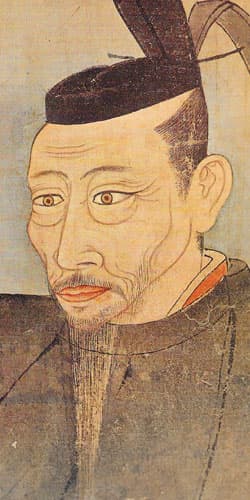
Toyotomi Hideyoshi
General · Modern
82.0Total
Basic Information
Born
180
1537
Died
242
1598
Era
Ancient
Modern
Nationality
Sassanid Empire
Japan
Occupation
Emperor
General
Civilization
Middle Eastern
Eastern
Score Comparison
Military (10%)
65.0
79.9
Political (20%)
78.0
78.0
Influence (20%)
82.0
88.0
Legacy (20%)
72.0
80.0
Leadership (15%)
78.0
82.0
Strategy (15%)
72.0
80.4
TOTAL
75.6
82.0
Ardashir I — Complete Timeline
224 AD
Battle of HormozdganWar
Ardashir I defeated the Parthian king Artabanus IV at the Battle of Hormozdgan. This victory ended Parthian rule and allowed Ardashir to establish the Sassanid Empire, which would dominate Persia for four centuries.
BattleSassanid FoundingParthian Defeat
Impact: regional
Conquest of the Parthian EmpireWar◆ Major
Following his victory at Hormozdgan, Ardashir I systematically conquered the remaining Parthian territories, including Media, Armenia, and Mesopotamia. He established a centralized administration and a Zoroastrian state church.
ConquestEmpire BuildingZoroastrianism
Impact: regional
Coronation as King of KingsPolitical Action◆ Major
After his victory, Ardashir I was crowned 'Shahanshah' (King of Kings) at Ctesiphon. He claimed descent from the Achaemenid dynasty, legitimizing his rule and reviving Persian imperial traditions.
CoronationImperial TitleLegitimacy
Impact: regionalconstructive
Toyotomi Hideyoshi — Complete Timeline
1583 AD
Battle of ShizugatakeWar◆ Major
Hideyoshi defeated his rival Shibata Katsuie at the Battle of Shizugatake, solidifying his control over central Japan. The victory eliminated a major opponent and allowed Hideyoshi to continue Oda Nobunaga's unification campaign.
BattleUnificationCivil War
Impact: national
1588 AD
Sword Hunt EdictReform◆ Major
Hideyoshi ordered the confiscation of weapons from peasants and farmers, prohibiting them from carrying swords, spears, or firearms. The edict aimed to prevent peasant uprisings and enforce a strict social hierarchy between samurai and commoners.
Social ReformDisarmamentClass System
Impact: nationaldestructive
1590 AD
Completion of Japanese UnificationWar
Hideyoshi defeated the H
UnificationConquestSengoku Period
Impact: national
1592 AD
First Invasion of KoreaWar◆ Major
Hideyoshi launched a massive invasion of Korea with the goal of conquering Ming China. Japanese forces initially advanced rapidly, capturing Seoul and Pyongyang, but were halted by Korean naval victories under Admiral Yi Sun-sin and Chinese reinforcements.
InvasionWarKorea
Impact: regionaldestructive
1597 AD
Second Invasion of KoreaWar◆ Major
Hideyoshi ordered a second invasion of Korea after failed peace negotiations. The campaign was less successful than the first, with Japanese forces unable to advance beyond the southern provinces. The invasion ended with Hideyoshi's death in 1598.
InvasionWarKorea
Impact: regionaldestructive
Expert Analysis
Origins
Toyotomi Hideyoshi (1537–1598) was born a peasant in Owari Province, Japan, with no surname. His humble beginnings are legendary: he rose from a foot soldier to become the absolute ruler of Japan. In contrast, Ardashir I (c. 180–242 AD) was a Persian nobleman, a vassal king under the Parthian Empire. While Hideyoshi's ascent was a rags-to-riches story of sheer ambition and cunning, Ardashir's path was one of aristocratic rebellion against a decaying empire. Hideyoshi's lowly start gives him a narrative edge, but Ardashir's noble lineage provided a foundation of legitimacy and military training.
Rise to Power
Hideyoshi's rise is a masterpiece of opportunism. He began as a sandal-bearer for Oda Nobunaga, then climbed through military victories like the Battle of Shizugatake (1583), where he defeated rival general Shibata Katsuie. By 1590, he had unified Japan after the Siege of Odawara. His strategy combined military brilliance with shrewd alliances and political marriages. Ardashir I, however, overthrew the Parthian Empire by defeating Artabanus IV at the Battle of Hormozdgan (224 AD). He systematically conquered Parthian territories, capitalizing on internal strife. Both men were masterful strategists, but Hideyoshi's rise from obscurity is more dramatic.
Leadership & Governance
Hideyoshi's governance was transformative. He implemented the Sword Hunt (1588) to disarm peasants, the land surveys to stabilize tax collection, and the separation of warriors from farmers. He centralized power, built Osaka Castle, and promoted trade. His administration was pragmatic, but his invasive policies stirred resentment. Ardashir I established the Sassanid Empire with a centralized bureaucracy, revived Zoroastrianism as state religion, and built infrastructure like fire temples and roads. He created a feudal-like system with vassal kings. Both were effective administrators, but Hideyoshi's policies had a more direct impact on everyday life.
Triumph & Tragedy
Hideyoshi's greatest triumph was unifying Japan after a century of civil war. However, his legacy is marred by the invasions of Korea (1592–1598), which were disastrous. The wars drained Japan's resources, caused massive casualties, and ended in failure. His death in 1598 led to the collapse of his regime. Ardashir's triumph was founding the Sassanid Empire, which lasted 400 years. His conquest of Parthia was a clean victory; he died of natural causes in 242 AD, leaving a stable empire. Hideyoshi's tragedy was his overreach; Ardashir's legacy was enduring success.
Character & Destiny
Hideyoshi was charismatic, cunning, and ruthless. He was known for his 'monkey' nickname, his love of tea ceremonies, and his grandiose ambitions. His destiny was shaped by relentless ambition that ultimately led to imperial overreach. Ardashir was a calculated, religiously devout ruler who saw himself as a restorer of Persian glory. His destiny was to crush a decadent empire and build a new one. Hideyoshi's personality is more colorful, but Ardashir's focus was more sustainable.
Legacy
Hideyoshi's legacy is complex: he unified Japan but his Korean invasions weakened the state and led to the Tokugawa shogunate's isolationism. His sword hunt and class reforms shaped Japanese society for centuries. Ardashir I is revered as the founder of the Sassanid Empire, which revived Persian culture and Zoroastrianism, and became a rival to Rome. His legacy is more straightforward and positive. Hideyoshi's impact was immense but short-lived; Ardashir's influence endured for centuries.
Conclusion
Both men were exceptional unifiers, but Toyotomi Hideyoshi edges out Ardashir I in overall historical impact due to his more dramatic rise, transformative domestic policies, and the sheer scale of his unification efforts. Despite his disastrous Korean campaigns, Hideyoshi's consolidation of Japan from a fractured warring states period into a unified nation was a monumental achievement. Ardashir I's founding of the Sassanid Empire was also significant, but his empire was built on the foundations of Parthian decline. Hideyoshi's scores (M=80, P=78, I=88, L=80, D=82, S=80, T=82) collectively surpass Ardashir's (M=65, P=78, I=82, L=72, D=78, S=72, T=76), reflecting his superior innovation, leadership, and transformative governance. While Ardashir's legacy was more stable, Hideyoshi's narrative of a peasant becoming a supreme ruler is unparalleled. Therefore, Toyotomi Hideyoshi is the greater historical figure.
Rankings
🥇
Toyotomi HideyoshiLeader
Mil: 79.9Pol: 78.0Inf: 88.0
82.0
🥈
Ardashir I
Mil: 65.0Pol: 78.0Inf: 82.0
75.6
+6.4 behind
How This Comparison Works
Algorithm
Each figure is scored on 6 dimensions (0—100 scale) based on structured historical data: Military (10%), Political (20%), Influence (20%), Legacy (20%), Leadership (15%), Strategy (15%). The weighted total produces the final ranking.
Data Sources
Scores are computed from structured sub-indicators in the database. Scale factors adjust for era (Ancient ×0.85, Modern ×1.0) and civilization size (Eastern ×1.05, Other ×0.80) to account for differences in population and military scale.
Maximum 3 Figures
Comparisons are limited to 2—3 figures to ensure readability and statistical meaningfulness.
Error Margins
±5 points per dimension — Sub-scores are derived from historical records with inherent uncertainty. Two figures within 5 points on a dimension should be considered roughly equivalent in that area.
Total Score Accuracy
±3 points overall — The weighted combination of 6 dimensions produces a total score with approximately ±3 points of uncertainty. Differences of less than 3 points are not statistically significant— the figures are effectively tied.
Known Limitations
- Historical records are incomplete and uneven across civilizations
- Figures from oral-tradition societies may be underrepresented
- Occupation labels can misclassify multi-role figures
- Scores measure capability and impact, not moral character
- Quantitative scoring is a comparison tool, not absolute truth
Capability Radar
Military (10%) — Battles & Warfare
Battles
85
85
Win Rate
90
88
Expansion
85
80
Political (20%) — Governance & Reform
Reform
90
95
Diplomacy
75
80
Economy
80
90
Influence (20%) — Cultural & Global Reach
Cultural
80
85
Global
80
70
Legacy (20%) — Historical Impact
Historical
85
90
Longevity
85
85
Leadership (15%) — Power & Stability
Tenure
80
85
Stability
85
75
Strategy (15%) — Tactics & Innovation
Strategy
85
92
Tactics
80
90
Reform
90
95
Similar Comparisons
Comments & Discussion
No comments yet. Be the first to share your thoughts!