Loading...
Ardashir I vs Toussaint Louverture
Toussaint Louverture leads by 2.9 pts · 2 figures compared
…

Ardashir I
Emperor · Ancient
75.6Total
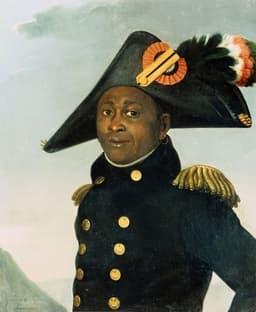
Toussaint Louverture
General · Modern
78.5Total
Basic Information
Born
180
1743
Died
242
1803
Era
Ancient
Modern
Nationality
Sassanid Empire
Haiti
Occupation
Emperor
General
Civilization
Middle Eastern
Western
Score Comparison
Military (10%)
65.0
85.0
Political (20%)
78.0
70.3
Influence (20%)
82.0
84.0
Legacy (20%)
72.0
82.0
Leadership (15%)
78.0
72.0
Strategy (15%)
72.0
72.0
TOTAL
75.6
78.5
Ardashir I — Complete Timeline
224 AD
Battle of HormozdganWar
Ardashir I defeated the Parthian king Artabanus IV at the Battle of Hormozdgan. This victory ended Parthian rule and allowed Ardashir to establish the Sassanid Empire, which would dominate Persia for four centuries.
BattleSassanid FoundingParthian Defeat
Impact: regional
Conquest of the Parthian EmpireWar◆ Major
Following his victory at Hormozdgan, Ardashir I systematically conquered the remaining Parthian territories, including Media, Armenia, and Mesopotamia. He established a centralized administration and a Zoroastrian state church.
ConquestEmpire BuildingZoroastrianism
Impact: regional
Coronation as King of KingsPolitical Action◆ Major
After his victory, Ardashir I was crowned 'Shahanshah' (King of Kings) at Ctesiphon. He claimed descent from the Achaemenid dynasty, legitimizing his rule and reviving Persian imperial traditions.
CoronationImperial TitleLegitimacy
Impact: regionalconstructive
Toussaint Louverture — Complete Timeline
1791 AD
Haitian Revolution LeadershipWar
Louverture joined the slave revolt in Saint-Domingue, quickly rising to leadership. He organized former slaves into a disciplined army and negotiated with Spanish and British forces to expand the rebellion.
Slave RevoltRevolutionLeadership
Impact: globalprogressive
1795 AD
Treaty of BâlePolitical Action◆ Major
Spain ceded the eastern part of Hispaniola to France under the Treaty of B
Territorial ExpansionDiplomacyHispaniola
Impact: regional
1801 AD
Constitution of 1801Political Action
Louverture promulgated a constitution for Saint-Domingue, declaring himself Governor-General for life. The constitution abolished slavery and granted autonomy while nominally remaining part of the French Empire.
ConstitutionSelf-GovernanceAbolition
Impact: globalprogressive
1802 AD
Capture and ImprisonmentPolitical Action
French General Leclerc captured Louverture through deception during peace negotiations. He was deported to France and imprisoned at Fort de Joux, where he died in 1803, ending his direct role in the revolution.
BetrayalImprisonmentFrench Repression
Impact: globaltragic
Expert Analysis
Origins
Toussaint Louverture was born into slavery in 1743 on a plantation in Saint-Domingue (modern Haiti). He gained freedom in his 30s and became a planter, but the French Revolution's ideals ignited his revolutionary spirit. In contrast, Ardashir I was born around 180 CE into a Persian noble family in the province of Persis (modern Fars, Iran). He was a vassal king under the Parthian Empire, but he harbored ambitions to restore the glory of the Achaemenid Empire. Both men emerged from subordinate positions—one from chattel slavery, the other from regional nobility—yet they reshaped their worlds.
Rise to Power
Toussaint's rise began with the 1791 slave uprising in Saint-Domingue. Initially a medic and later a military commander, he allied with the Spanish against the French, then switched to the French after they abolished slavery in 1794. By 1798, he expelled British and Spanish forces, becoming de facto ruler. He consolidated power through diplomacy and military campaigns, culminating in the Constitution of 1801, which made him governor-for-life. Ardashir's rise was more conventional: he rebelled against the Parthian king Artabanus IV, defeated him at the Battle of Hormozdgan in 224 CE, and conquered Ctesiphon. He was crowned King of Kings in 226 CE, founding the Sassanid Empire. Both men used military prowess and political cunning, but Toussaint's path was a revolutionary leap from slavery, while Ardashir's was a dynastic usurpation.
Leadership & Governance
Toussaint governed Saint-Domingue with a mix of authoritarianism and pragmatism. He enforced plantation labor to revive the economy, maintained trade with Britain and the US, and crafted a constitution that preserved slavery's abolition but centralized power. His military scores (M=85) reflect his tactical brilliance, but his political score (P=70) shows his struggle to balance liberty with stability. Ardashir, with P=78, established a centralized, Zoroastrian theocratic state. He built administrative structures, codified laws, and promoted Persian culture. His military score (M=65) is lower, but his institutional legacy is robust. Both leaders faced internal dissent: Toussaint dealt with labor unrest and rival generals; Ardashir suppressed feudal lords and integrated Parthian nobles. Toussaint's governance was more experimental and fragile, while Ardashir's was rooted in tradition.
Triumph & Tragedy
Toussaint's greatest triumph was the Haitian Revolution itself—the only successful slave revolt in history. He defeated three European powers (France, Spain, Britain) and established a free state. His tragedy came in 1802 when Napoleon sent a massive expedition to reimpose slavery. Toussaint negotiated a ceasefire but was betrayed, captured, and imprisoned in France, where he died in 1803. His legacy, however, inspired the Haitian victory later that year. Ardashir's triumph was the conquest of the Parthian Empire and the founding of a new dynasty that lasted four centuries. His tragedy is less personal: he died of natural causes around 242 CE, but his empire faced later threats. Toussaint's tragedy is more poignant—a hero martyred by his enemies. Score: Toussaint's triumph score (T=78) vs Ardashir's (T=76) reflects the magnitude of his achievement against odds.
Character & Destiny
Toussaint was charismatic, intelligent, and ruthless when necessary. His I=84 shows his strategic vision, but his D=72 suggests vulnerability to deception (e.g., trusting French promises). Ardashir's I=82 and D=78 indicate similar cunning but greater caution. Both were driven by a sense of destiny: Toussaint saw himself as a liberator, Ardashir as a restorer of Persian glory. Their characters shaped their fates: Toussaint's hubris led to his capture; Ardashir's pragmatism ensured a smooth succession. In a direct contest, Toussaint's military genius and inspirational leadership would likely overcome Ardashir's more conventional army, but Ardashir's institutional resilience might outlast Toussaint's revolution.
Legacy
Toussaint's legacy is immense: he inspired anti-colonial movements globally, from Latin America to Africa. Haiti's existence as a free black republic challenged racist ideologies. However, his authoritarian measures set precedents for later Haitian dictators. Ardashir's legacy is the Sassanid Empire, which revived Persian culture and Zoroastrianism, influencing Byzantine and Islamic civilizations. Both are national heroes in their respective countries. On a global scale, Toussaint's impact on human rights is more profound and universal. Score: Toussaint's L=82 vs Ardashir's L=72 reflects his broader influence.
Conclusion
Toussaint Louverture outranks Ardashir I in overall historical impact (score gap 2.9). His military genius, political vision, and moral cause—overthrowing slavery—give him a higher legacy score. While Ardashir founded a durable empire, Toussaint's revolution was a transformative event that reshaped the modern world. In a hypothetical match, Toussaint's tactical brilliance (M=85) and revolutionary fervor would likely defeat Ardashir's well-ordered but less innovative forces. Toussaint wins this comparison.
Rankings
🥇
Toussaint LouvertureLeader
Mil: 85.0Pol: 70.3Inf: 84.0
78.5
🥈
Ardashir I
Mil: 65.0Pol: 78.0Inf: 82.0
75.6
+2.9 behind
How This Comparison Works
Algorithm
Each figure is scored on 6 dimensions (0—100 scale) based on structured historical data: Military (10%), Political (20%), Influence (20%), Legacy (20%), Leadership (15%), Strategy (15%). The weighted total produces the final ranking.
Data Sources
Scores are computed from structured sub-indicators in the database. Scale factors adjust for era (Ancient ×0.85, Modern ×1.0) and civilization size (Eastern ×1.05, Other ×0.80) to account for differences in population and military scale.
Maximum 3 Figures
Comparisons are limited to 2—3 figures to ensure readability and statistical meaningfulness.
Error Margins
±5 points per dimension — Sub-scores are derived from historical records with inherent uncertainty. Two figures within 5 points on a dimension should be considered roughly equivalent in that area.
Total Score Accuracy
±3 points overall — The weighted combination of 6 dimensions produces a total score with approximately ±3 points of uncertainty. Differences of less than 3 points are not statistically significant— the figures are effectively tied.
Known Limitations
- Historical records are incomplete and uneven across civilizations
- Figures from oral-tradition societies may be underrepresented
- Occupation labels can misclassify multi-role figures
- Scores measure capability and impact, not moral character
- Quantitative scoring is a comparison tool, not absolute truth
Capability Radar
Military (10%) — Battles & Warfare
Battles
85
85
Win Rate
90
80
Expansion
85
70
Political (20%) — Governance & Reform
Reform
90
85
Diplomacy
75
80
Economy
80
60
Influence (20%) — Cultural & Global Reach
Cultural
80
85
Global
80
85
Legacy (20%) — Historical Impact
Historical
85
95
Longevity
85
90
Leadership (15%) — Power & Stability
Tenure
80
65
Stability
85
55
Strategy (15%) — Tactics & Innovation
Strategy
85
85
Tactics
80
90
Reform
90
75
Similar Comparisons
Comments & Discussion
No comments yet. Be the first to share your thoughts!