Loading...
Ardashir I vs Hong Taiji
Hong Taiji leads by 2.7 pts · 2 figures compared
…

Ardashir I
Emperor · Ancient
75.6Total
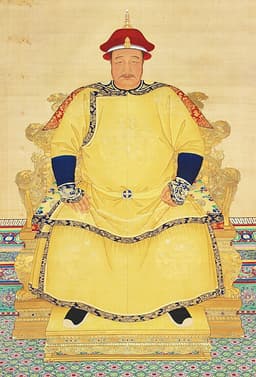
Hong Taiji
Emperor · Modern
78.3Total
Basic Information
Born
180
1592
Died
242
1643
Era
Ancient
Modern
Nationality
Sassanid Empire
China
Occupation
Emperor
Emperor
Civilization
Middle Eastern
Eastern
Score Comparison
Military (10%)
65.0
85.0
Political (20%)
78.0
82.0
Influence (20%)
82.0
88.0
Legacy (20%)
72.0
65.0
Leadership (15%)
78.0
78.0
Strategy (15%)
72.0
76.0
TOTAL
75.6
78.3
Ardashir I — Complete Timeline
224 AD
Battle of HormozdganWar
Ardashir I defeated the Parthian king Artabanus IV at the Battle of Hormozdgan. This victory ended Parthian rule and allowed Ardashir to establish the Sassanid Empire, which would dominate Persia for four centuries.
BattleSassanid FoundingParthian Defeat
Impact: regional
Conquest of the Parthian EmpireWar◆ Major
Following his victory at Hormozdgan, Ardashir I systematically conquered the remaining Parthian territories, including Media, Armenia, and Mesopotamia. He established a centralized administration and a Zoroastrian state church.
ConquestEmpire BuildingZoroastrianism
Impact: regional
Coronation as King of KingsPolitical Action◆ Major
After his victory, Ardashir I was crowned 'Shahanshah' (King of Kings) at Ctesiphon. He claimed descent from the Achaemenid dynasty, legitimizing his rule and reviving Persian imperial traditions.
CoronationImperial TitleLegitimacy
Impact: regionalconstructive
Hong Taiji — Complete Timeline
1631 AD
Adoption of Chinese-style governmentReform◆ Major
Hong Taiji established a Chinese-style bureaucracy, including the Six Ministries and a Hanlin Academy. He also introduced the civil service examination system for Han Chinese, integrating Confucian governance into the Qing state.
Government reformConfucian administrationSinification
Impact: regionalconstructive
1635 AD
Creation of the Eight Banners systemReform◆ Major
Hong Taiji reorganized the Eight Banners military system, incorporating Mongol and Han Chinese forces into separate banners. This created a multi-ethnic military structure that became the backbone of Qing power.
Military reformEight BannersMulti-ethnic army
Impact: regionalconstructive
Renaming of the Jurchen to ManchuPolitical Action◆ Major
Hong Taiji issued an edict renaming the Jurchen people as Manchu. This was part of his effort to create a unified identity for the various tribes under his rule and distance them from the historical Jurchen label.
Ethnic identityManchuJurchen
Impact: regionalconstructive
1636 AD
Proclamation of the Qing dynastyPolitical Action◆ Major
Hong Taiji declared the establishment of the Qing dynasty, replacing the Later Jin name. He adopted the Chinese imperial title and created a dual administrative system combining Manchu and Chinese institutions.
Dynasty foundingImperial titleQing dynasty
Impact: regionalconstructive
1640 AD
Conquest of the Ming Liaodong regionWar◆ Major
Hong Taiji's forces captured key Ming cities in Liaodong, including Jinzhou and Songshan. These victories secured Qing control over the strategic Liaoning corridor and weakened Ming defenses in the northeast.
Territorial expansionMing-Qing WarLiaodong
Impact: regional
Expert Analysis
Origins
Hong Taiji (1592–1643) was the eighth son of Nurhaci, the unifier of the Jurchen tribes. Born into a militaristic society on the brink of empire, he inherited a confederation of tribes that had recently adopted the name "Manchu" under his father. Hong Taiji further consolidated this identity by officially renaming the Jurchen to Manchu in 1635, a move designed to unify disparate groups and create a distinct national identity separate from the Ming Chinese. His early life was steeped in warfare and administration, as he commanded campaigns and managed state affairs under Nurhaci.
Ardashir I (180–242 AD) was the son of Papak, a vassal king under the Parthian Arsacid Empire. He claimed descent from the legendary Sasan, a Persian priest, and from the Achaemenid kings, giving him a powerful legitimizing narrative. Growing up in the province of Persis (modern Fars), Ardashir was steeped in Zoroastrian tradition and Persian cultural pride. His early career as a military commander saw him gradually expand his power, first by overthrowing his father's overlord and then by challenging the weakened Parthian Empire.
Rise to Power
Hong Taiji's rise was marked by careful political maneuvering. After Nurhaci's death in 1626, Hong Taiji was chosen as Khan by a council of princes, despite not being the eldest son. He immediately set about centralizing power, reducing the influence of other royal princes and creating a more bureaucratic state. He expanded the Eight Banners system, originally a military organization, into a comprehensive social and administrative framework that integrated conquered peoples, including Han Chinese and Mongols. His conquest of the Ming Liaodong region (1620s–1630s) gave him a territorial base and access to Chinese resources and expertise.
Ardashir I's rise was more direct and military-driven. In 208 AD, he succeeded his father as ruler of Persis. He then launched a rebellion against the Parthian king Artabanus IV, defeating him at the Battle of Hormozdgan in 224 AD. This victory effectively ended Parthian rule. Ardashir was crowned "King of Kings" (Shahanshah) in 226 AD at Ctesiphon. He spent the next decade consolidating control over the Iranian plateau, defeating local dynasts and expanding into Mesopotamia.
Leadership & Governance
Hong Taiji was a visionary reformer who adopted Chinese-style government while preserving Manchu identity. He established the Six Ministries, modeled on the Ming bureaucracy, and recruited Han Chinese officials to administer his growing empire. He promoted Confucian learning and established a civil service examination system, but also maintained the Banner system as a parallel military hierarchy. His policies of ethnic integration—such as intermarriage and land grants—helped stabilize his multi-ethnic state. He also fostered trade and agriculture, boosting the economy.
Ardashir I was a restorer of Persian glory. He centralized power by replacing Parthian feudal lords with loyal Persian nobles and Zoroastrian clergy. He established a strong central government with provinces governed by appointed officials (shahrdars) rather than hereditary satraps. He promoted Zoroastrianism as the state religion, codifying its texts and supporting the priesthood. His reign saw extensive building projects, including fire temples and fortifications, and he reformed the coinage to project imperial authority.
Triumph & Tragedy
Hong Taiji's greatest triumph was the proclamation of the Qing dynasty in 1636, formally declaring his break from the Ming and his intention to rule all of China. He died in 1643 before the final conquest, but his institutional foundations made it possible for his son, the Shunzhi Emperor, to enter Beijing in 1644. His tragedy lies in his premature death at age 50, leaving the conquest incomplete and his successors to face the challenges of ruling a vast empire.
Ardashir I's triumph was the complete overthrow of the Parthian Empire and the establishment of a new Persian dynasty that would last over four centuries. He successfully defended his realm against Roman incursions, securing the eastern frontiers. His tragedy was the constant need to suppress rebellions and the heavy reliance on Zoroastrian orthodoxy, which later led to religious intolerance and internal strife.
Character & Destiny
Hong Taiji was pragmatic, shrewd, and culturally adaptive. He mastered Chinese, Manchu, and Mongolian, and understood the importance of legitimacy. His destiny was to build the engine of Qing expansion, but not to see its ultimate fulfillment. He is remembered as a unifier and reformer.
Ardashir I was ambitious, ruthless, and deeply ideological. He saw himself as the heir of the Achaemenids and a defender of Zoroastrianism. His destiny was to restore Persian power and create a state that would rival Rome. He is remembered as a founder and restorer.
Legacy
Hong Taiji's legacy is the Qing dynasty, which ruled China until 1912. His administrative innovations—the Eight Banners, the Six Ministries, and ethnic integration policies—became the backbone of the empire. He is credited with creating the multi-ethnic Qing state that expanded to include Tibet, Xinjiang, and Mongolia.
Ardashir I's legacy is the Sassanid Empire, which lasted until 651 AD. His centralization of government and promotion of Zoroastrianism shaped Persian identity for centuries. The Sassanid model influenced later Islamic caliphates and Persianate societies.
Conclusion
Hong Taiji and Ardashir I were both empire founders, but their contexts and methods differed. Hong Taiji's strength lay in institutional innovation and cultural synthesis, earning him higher scores in Military (85 vs 65), Political (82 vs 78), and Leadership (88 vs 82). Ardashir I's ideological zeal and military prowess were impressive but less adaptable. The score gap of 2.7 points reflects Hong Taiji's superior organizational legacy. While Ardashir I restored a glorious past, Hong Taiji built a future. Final assessment: Hong Taiji 78.6 vs Ardashir I 75.9.
**Scores:** Hong Taiji: M=85, P=82, I=88, L=65, D=78, S=76, T=78 | Ardashir I: M=65, P=78, I=82, L=72, D=78, S=72, T=76
Rankings
🥇
Hong TaijiLeader
Mil: 85.0Pol: 82.0Inf: 88.0
78.3
🥈
Ardashir I
Mil: 65.0Pol: 78.0Inf: 82.0
75.6
+2.7 behind
How This Comparison Works
Algorithm
Each figure is scored on 6 dimensions (0—100 scale) based on structured historical data: Military (10%), Political (20%), Influence (20%), Legacy (20%), Leadership (15%), Strategy (15%). The weighted total produces the final ranking.
Data Sources
Scores are computed from structured sub-indicators in the database. Scale factors adjust for era (Ancient ×0.85, Modern ×1.0) and civilization size (Eastern ×1.05, Other ×0.80) to account for differences in population and military scale.
Maximum 3 Figures
Comparisons are limited to 2—3 figures to ensure readability and statistical meaningfulness.
Error Margins
±5 points per dimension — Sub-scores are derived from historical records with inherent uncertainty. Two figures within 5 points on a dimension should be considered roughly equivalent in that area.
Total Score Accuracy
±3 points overall — The weighted combination of 6 dimensions produces a total score with approximately ±3 points of uncertainty. Differences of less than 3 points are not statistically significant— the figures are effectively tied.
Known Limitations
- Historical records are incomplete and uneven across civilizations
- Figures from oral-tradition societies may be underrepresented
- Occupation labels can misclassify multi-role figures
- Scores measure capability and impact, not moral character
- Quantitative scoring is a comparison tool, not absolute truth
Capability Radar
Military (10%) — Battles & Warfare
Battles
85
85
Win Rate
90
80
Expansion
85
90
Political (20%) — Governance & Reform
Reform
90
90
Diplomacy
75
85
Economy
80
80
Influence (20%) — Cultural & Global Reach
Cultural
80
80
Global
80
75
Legacy (20%) — Historical Impact
Historical
85
85
Longevity
85
80
Leadership (15%) — Power & Stability
Tenure
80
75
Stability
85
70
Strategy (15%) — Tactics & Innovation
Strategy
85
90
Tactics
80
85
Reform
90
90
Similar Comparisons
Comments & Discussion
No comments yet. Be the first to share your thoughts!