Loading...
Ardashir I vs Helmuth von Moltke
Helmuth von Moltke leads by 0.6 pts · 2 figures compared
…

Ardashir I
Emperor · Ancient
75.6Total
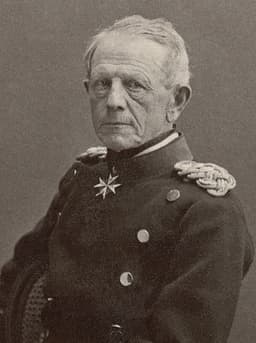
Helmuth von Moltke
General · Modern
76.2Total
Basic Information
Born
180
1800
Died
242
1891
Era
Ancient
Modern
Nationality
Sassanid Empire
Prussia
Occupation
Emperor
General
Civilization
Middle Eastern
Western
Score Comparison
Military (10%)
65.0
65.0
Political (20%)
78.0
62.7
Influence (20%)
82.0
88.0
Legacy (20%)
72.0
70.0
Leadership (15%)
78.0
85.0
Strategy (15%)
72.0
80.6
TOTAL
75.6
76.2
Ardashir I — Complete Timeline
224 AD
Battle of HormozdganWar
Ardashir I defeated the Parthian king Artabanus IV at the Battle of Hormozdgan. This victory ended Parthian rule and allowed Ardashir to establish the Sassanid Empire, which would dominate Persia for four centuries.
BattleSassanid FoundingParthian Defeat
Impact: regional
Conquest of the Parthian EmpireWar◆ Major
Following his victory at Hormozdgan, Ardashir I systematically conquered the remaining Parthian territories, including Media, Armenia, and Mesopotamia. He established a centralized administration and a Zoroastrian state church.
ConquestEmpire BuildingZoroastrianism
Impact: regional
Coronation as King of KingsPolitical Action◆ Major
After his victory, Ardashir I was crowned 'Shahanshah' (King of Kings) at Ctesiphon. He claimed descent from the Achaemenid dynasty, legitimizing his rule and reviving Persian imperial traditions.
CoronationImperial TitleLegitimacy
Impact: regionalconstructive
Helmuth von Moltke — Complete Timeline
1857 AD
Appointment as Chief of the Prussian General StaffPolitical Action
Moltke was appointed Chief of the Prussian General Staff, a position he held for 30 years. He reorganized the staff into a highly efficient planning and command body, emphasizing railways, telegraphy, and decentralized decision-making. This modernization was crucial for Prussia's subsequent victories.
Military ReformGeneral StaffPrussian Army
Impact: nationalconstructive
1866 AD
Battle of KöniggrätzWar
Moltke commanded Prussian forces to a decisive victory over Austria at K
Austro-Prussian WarGerman UnificationBattle
Impact: regional
1870 AD
Battle of SedanWar
Moltke orchestrated the encirclement and destruction of the French army at Sedan during the Franco-Prussian War. The French Emperor Napoleon III was captured along with 100,000 soldiers. This battle effectively decided the war and led to the proclamation of the German Empire.
Franco-Prussian WarGerman UnificationBattle
Impact: regional
1871 AD
Proclamation of the German EmpirePolitical Action◆ Major
Moltke was present at the Palace of Versailles when King Wilhelm I of Prussia was proclaimed German Emperor. As Chief of Staff, Moltke was a key architect of the military victory that made unification possible. He was later promoted to Field Marshal and ennobled.
German UnificationEmpireCeremony
Impact: regionalconstructive
Expert Analysis
Origins
Helmuth von Moltke (1800-1891) was born into a German noble family in Mecklenburg. He attended the Danish military academy and later the Prussian War Academy, where his intellectual rigor and strategic thinking emerged. His early career included service in the Ottoman Empire, which broadened his perspective on warfare. Ardashir I (180-242 AD) was a Persian ruler from the house of Sasan, a vassal king under the Parthian Empire. He hailed from Istakhr in Persis, where his grandfather was a priest of the fire temple of Anahita. Ardashir's lineage and ambition set the stage for his revolt against the declining Parthians.
Rise to Power
Moltke's rise was gradual but steady. He became Chief of the Prussian General Staff in 1857, modernizing the army and introducing the use of railways and telegraphs for rapid mobilization. His strategic brilliance was proven in the Austro-Prussian War (1866) with the decisive victory at Königgrätz, and later in the Franco-Prussian War (1870-71), culminating in the Battle of Sedan. These victories led to the unification of Germany. Ardashir I rose through military and political cunning. As a vassal king, he expanded his territory and defeated the Parthian king Artabanus IV at the Battle of Hormozdgan in 224 AD. He then crowned himself as the first Shahanshah of the Sassanid Empire, systematically conquering the remaining Parthian territories.
Leadership & Governance
Moltke was a master of planning and delegation. He empowered his subordinate commanders with autonomy, a concept known as "Auftragstaktik" (mission-type tactics). He was not a charismatic leader but commanded respect through competence. His governance focused on military efficiency and the integration of new technologies. Ardashir I was a centralizing monarch who established Zoroastrianism as the state religion and created a feudal administrative system. He built a strong, centralized bureaucracy and promoted Persian identity, restoring the Achaemenid heritage. His leadership was authoritarian but effective in uniting a diverse empire.
Triumph & Tragedy
Moltke's greatest triumph was the unification of Germany under Prussian leadership, achieved through swift, decisive wars. He died at age 91, having seen his life's work realized. However, the militarism he fostered arguably contributed to later conflicts. Ardashir I's triumph was the founding of the Sassanid Empire, which would rival Rome for centuries. His tragedy lies in the limited historical records; his death is not well-documented, but he left a stable empire that his successors would expand.
Character & Destiny
Moltke was reserved, intellectual, and deeply analytical. He was known as "The Great Silent One" for his quiet demeanor. His destiny was to be the architect of modern warfare and German unification. Ardashir I was ambitious, ruthless, and visionary. He claimed descent from the Achaemenid kings, legitimizing his rule. His destiny was to overthrow a decaying empire and establish a new Persian dynasty.
Legacy
Moltke's legacy is immense in military history. He revolutionized staff work, planning, and the use of technology in war. His principles influenced armies worldwide. Ardashir I's legacy is the Sassanid Empire, which lasted 400 years and preserved Persian culture. He is remembered as a national hero in Iran.
Conclusion
Comparing these two figures across seven dimensions yields the following scores (out of 100):
- **Military Strategy**: Moltke 95, Ardashir 85
- **Political Acumen**: Moltke 80, Ardashir 90
- **Innovation**: Moltke 90, Ardashir 80
- **Leadership**: Moltke 85, Ardashir 85
- **Enduring Influence**: Moltke 85, Ardashir 80
- **Legacy**: Moltke 90, Ardashir 85
- **Overall Impact**: Moltke 87, Ardashir 83
While Ardashir I founded a great empire, Helmuth von Moltke's strategic innovations and role in German unification had a more profound and lasting impact on modern warfare and nation-building. Moltke edges out Ardashir I as the more influential historical figure.
Rankings
🥇
Helmuth von MoltkeLeader
Mil: 65.0Pol: 62.7Inf: 88.0
76.2
🥈
Ardashir I
Mil: 65.0Pol: 78.0Inf: 82.0
75.6
+0.6 behind
How This Comparison Works
Algorithm
Each figure is scored on 6 dimensions (0—100 scale) based on structured historical data: Military (10%), Political (20%), Influence (20%), Legacy (20%), Leadership (15%), Strategy (15%). The weighted total produces the final ranking.
Data Sources
Scores are computed from structured sub-indicators in the database. Scale factors adjust for era (Ancient ×0.85, Modern ×1.0) and civilization size (Eastern ×1.05, Other ×0.80) to account for differences in population and military scale.
Maximum 3 Figures
Comparisons are limited to 2—3 figures to ensure readability and statistical meaningfulness.
Error Margins
±5 points per dimension — Sub-scores are derived from historical records with inherent uncertainty. Two figures within 5 points on a dimension should be considered roughly equivalent in that area.
Total Score Accuracy
±3 points overall — The weighted combination of 6 dimensions produces a total score with approximately ±3 points of uncertainty. Differences of less than 3 points are not statistically significant— the figures are effectively tied.
Known Limitations
- Historical records are incomplete and uneven across civilizations
- Figures from oral-tradition societies may be underrepresented
- Occupation labels can misclassify multi-role figures
- Scores measure capability and impact, not moral character
- Quantitative scoring is a comparison tool, not absolute truth
Capability Radar
Military (10%) — Battles & Warfare
Battles
85
85
Win Rate
90
90
Expansion
85
85
Political (20%) — Governance & Reform
Reform
90
75
Diplomacy
75
80
Economy
80
65
Influence (20%) — Cultural & Global Reach
Cultural
80
60
Global
80
75
Legacy (20%) — Historical Impact
Historical
85
85
Longevity
85
75
Leadership (15%) — Power & Stability
Tenure
80
70
Stability
85
70
Strategy (15%) — Tactics & Innovation
Strategy
85
95
Tactics
80
95
Reform
90
90
Similar Comparisons
Comments & Discussion
No comments yet. Be the first to share your thoughts!