Loading...
Antonio Canovas del Castillo vs Jeanine Anez
Antonio Canovas del Castillo leads by 20.0 pts · 2 figures compared
…

Antonio Canovas del Castillo
Politician · Modern
58.7Total
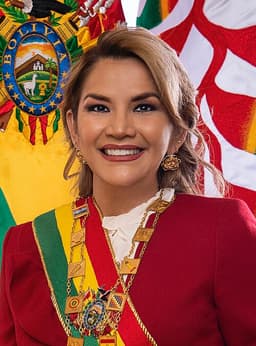
Jeanine Anez
Politician · Modern
38.7Total
Basic Information
Born
1828
1967
Died
1897
—
Era
Modern
Modern
Nationality
Spain
Bolivia
Occupation
Politician
Politician
Civilization
Western
Western
Score Comparison
Military (10%)
48.2
49.5
Political (20%)
72.0
26.4
Influence (20%)
55.0
47.1
Legacy (20%)
55.0
35.8
Leadership (15%)
75.0
31.2
Strategy (15%)
43.2
43.7
TOTAL
58.7
38.7
Antonio Canovas del Castillo — Complete Timeline
1874 AD
Architect of the Bourbon RestorationPolitical Action
After the collapse of the First Spanish Republic, Canovas engineered the restoration of the Bourbon monarchy under Alfonso XII. He orchestrated a pronunciamiento by General Martinez Campos in December 1874, ending the republican experiment and establishing a stable monarchical regime.
RestorationMonarchyPolitical Transition
Impact: nationalconstructive
1876 AD
Drafted the 1876 ConstitutionPolitical Action◆ Major
Canovas del Castillo oversaw the drafting and implementation of the Spanish Constitution of 1876. This document established a conservative, constitutional monarchy under Alfonso XII, defining the political framework of the Bourbon Restoration and limiting democratic reforms.
ConstitutionBourbon RestorationPolitical Reform
Impact: nationalconstructive
1881 AD
Implemented the Turno Pacifico SystemPolitical Action◆ Major
Canovas established the turno pacifico, a system of alternating power between the Conservative and Liberal parties. This arrangement, based on electoral manipulation and caciquismo, ensured political stability but prevented genuine democratic representation in Spain.
Political SystemElectoral ManipulationStability
Impact: national
1897 AD
Assassinated by Michele AngiolilloPolitical Action◆ Major
Canovas del Castillo was shot and killed at the Santa Agueda spa in Mondragon by Italian anarchist Michele Angiolillo. The assassination was in retaliation for the execution of anarchists in the Montjuic trial following the 1896 Barcelona Corpus Christi procession bombing.
AssassinationAnarchismPolitical Violence
Impact: nationaltragic
Jeanine Anez — Complete Timeline
2019 AD
Became Interim PresidentPolitical Action◆ Major
After the resignation of President Evo Morales following disputed elections, Jeanine
Interim PresidencyCrisis
Impact: national
Suppressed ProtestsPolitical Action◆ Major
Áñez's government faced widespread protests from supporters of Evo Morales. Her administration was accused of using excessive force, including military and police crackdowns, resulting in deaths and injuries, particularly in Senkata and Sacaba.
RepressionProtests
Impact: nationaldestructive
2020 AD
Called for New ElectionsPolitical Action◆ Major
Áñez's government organized new general elections in 2020, which were won by Luis Arce, a candidate from Morales' party. She stepped down after the election, ending her interim presidency.
ElectionsTransition
Impact: nationalconstructive
2021 AD
Arrested and ImprisonedPolitical Action◆ Major
Áñez was arrested and imprisoned on charges of terrorism, sedition, and conspiracy related to her role in the 2019 political crisis. Her imprisonment was seen by supporters as political persecution and by opponents as justice for human rights abuses.
ArrestImprisonmentLegal
Impact: nationaltragic
Expert Analysis
Origins
Antonio Canovas del Castillo was born on February 8, 1828, in Málaga, Spain, into a modest family. His father was a schoolteacher, and his mother came from a middle-class background. Canovas studied law at the University of Madrid, where he developed a deep interest in history and politics. His early career included journalism and writing, which shaped his conservative views. Jeanine Anez was born on June 13, 1967, in Santa Cruz de la Sierra, Bolivia, into a politically active family. Her father was a lawyer and politician, and her mother a homemaker. She studied law at the University of Santa Cruz and later worked in television broadcasting. Anez entered politics through departmental government, serving as a senator from Santa Cruz. Their origins reflect different paths: Canovas from intellectual and legal circles, Anez from media and regional politics.
Rise to Power
Canovas rose to prominence during the turbulent period of the First Spanish Republic. After the abdication of King Amadeo I in 1873, the republic faced instability. Canovas, as a conservative politician and historian, advocated for a restoration of the Bourbon monarchy. In 1874, he orchestrated a pronunciamiento (military coup) that brought Alfonso XII to the throne, becoming the architect of the Bourbon Restoration. His political acumen earned him the role of prime minister multiple times between 1875 and 1881. Anez's rise was more abrupt. In 2019, after disputed elections led to the resignation of President Evo Morales, Anez, as second vice president of the Senate, declared herself interim president on November 12, 2019, citing constitutional succession. Her claim was controversial, as she lacked a legislative quorum. She quickly consolidated power with support from the military and opposition parties. Canovas scored 72.0 in political skill, reflecting his calculated rise, while Anez scored 26.4, indicating a more opportunistic and contested ascent.
Leadership & Governance
Canovas's leadership was defined by his creation of the turno pacifico, a system of alternating power between the Conservative and Liberal parties. This arrangement, based on electoral manipulation (caciquismo), ensured stability but limited democratic representation. He drafted the 1876 Constitution, which established a conservative, constitutional monarchy with limited suffrage. Canovas focused on centralization, economic recovery, and suppressing regionalist movements like the Carlists. In contrast, Anez's governance was marked by crisis management. She faced massive protests from Morales supporters, which she met with force, including military deployment. Her government was accused of human rights abuses, particularly during the Senkata and Sacaba massacres. She prioritized calling new elections in 2020, which were won by Luis Arce. Anez's leadership score of 31.2 reflects her inability to build consensus or maintain order, while Canovas scored 75.0, demonstrating effective control through institutional mechanisms.
Triumph & Tragedy
Canovas's greatest triumph was the restoration of the Bourbon monarchy and the stabilization of Spain after the republican experiment. The 1876 Constitution provided a framework that lasted until 1923. His turno pacifico brought political peace for decades. However, his greatest failure was the assassination of Prime Minister Antonio Cánovas del Castillo (himself) by an Italian anarchist in 1897, which highlighted the violent opposition to his regime. Additionally, his system perpetuated corruption and excluded the working class. Anez's triumph was her role in ending Morales's nearly 14-year rule, which many viewed as authoritarian. She successfully organized new elections, allowing a democratic transition. Her tragedy was the subsequent imprisonment on charges of terrorism, sedition, and conspiracy, which many saw as political persecution. Her legacy is tarnished by accusations of excessive force during protests. Canovas's total score of 58.7 compares to Anez's 38.7, with Canovas's legacy score of 55.0 versus Anez's 35.8.
Character & Destiny
Canovas was a pragmatic conservative, intellectual, and historian. He believed in order and stability above all, which led him to engineer a system that traded democracy for peace. His assassination was a direct consequence of his repressive policies against anarchists and socialists. Anez is described as determined but politically inexperienced. Her decision to assume the presidency without clear constitutional backing and her hardline stance against protests shaped her fate. Her imprisonment reflects the polarized nature of Bolivian politics. Canovas's character was that of a builder of institutions; Anez's was that of a crisis manager unable to transcend her circumstances.
Legacy
Canovas's legacy is the Bourbon Restoration, which shaped Spanish politics until the Second Republic. The 1876 Constitution and turno pacifico influenced governance for decades, though they are criticized for being undemocratic. He is remembered as a statesman who prioritized stability. Anez's legacy is more contested. She is seen by some as a defender of democracy against Morales's authoritarianism, and by others as a coup leader. Her imprisonment has made her a symbol of political persecution. Her impact on Bolivian politics is limited to the 2019-2020 transition. Canovas's influence score of 55.0 exceeds Anez's 47.1, reflecting his longer-lasting impact.
Conclusion
Antonio Canovas del Castillo had a greater historical impact than Jeanine Anez. His political score of 72.0 and leadership score of 75.0 far surpass Anez's 26.4 and 31.2. Canovas's institutional reforms shaped Spain for decades, while Anez's brief tenure was reactive and controversial. Though both faced crises, Canovas built a system that endured, whereas Anez's actions were a response to immediate events. The score gap of 20.0 points underscores this disparity. Canovas's legacy as a political architect outweighs Anez's as a transitional figure. Thus, Canovas emerges as the more impactful figure in history.
Rankings
🥇
Antonio Canovas del CastilloLeader
Mil: 48.2Pol: 72.0Inf: 55.0
58.7
🥈
Jeanine Anez
Mil: 49.5Pol: 26.4Inf: 47.1
38.7
+20.0 behind
How This Comparison Works
Algorithm
Each figure is scored on 6 dimensions (0—100 scale) based on structured historical data: Military (10%), Political (20%), Influence (20%), Legacy (20%), Leadership (15%), Strategy (15%). The weighted total produces the final ranking.
Data Sources
Scores are computed from structured sub-indicators in the database. Scale factors adjust for era (Ancient ×0.85, Modern ×1.0) and civilization size (Eastern ×1.05, Other ×0.80) to account for differences in population and military scale.
Maximum 3 Figures
Comparisons are limited to 2—3 figures to ensure readability and statistical meaningfulness.
Error Margins
±5 points per dimension — Sub-scores are derived from historical records with inherent uncertainty. Two figures within 5 points on a dimension should be considered roughly equivalent in that area.
Total Score Accuracy
±3 points overall — The weighted combination of 6 dimensions produces a total score with approximately ±3 points of uncertainty. Differences of less than 3 points are not statistically significant— the figures are effectively tied.
Known Limitations
- Historical records are incomplete and uneven across civilizations
- Figures from oral-tradition societies may be underrepresented
- Occupation labels can misclassify multi-role figures
- Scores measure capability and impact, not moral character
- Quantitative scoring is a comparison tool, not absolute truth
Capability Radar
Military (10%) — Battles & Warfare
Battles
31
26
Win Rate
31
33
Expansion
36
37
Political (20%) — Governance & Reform
Reform
80
10
Diplomacy
75
15
Economy
70
10
Influence (20%) — Cultural & Global Reach
Cultural
60
5
Global
60
5
Legacy (20%) — Historical Impact
Historical
70
10
Longevity
65
5
Leadership (15%) — Power & Stability
Tenure
85
10
Stability
80
5
Strategy (15%) — Tactics & Innovation
Strategy
37
39
Tactics
43
42
Reform
45
45
Similar Comparisons
Comments & Discussion
No comments yet. Be the first to share your thoughts!