Loading...
Antonio Canovas del Castillo vs Gitanas Nauseda
Antonio Canovas del Castillo leads by 12.2 pts · 2 figures compared
…

Antonio Canovas del Castillo
Politician · Modern
58.7Total
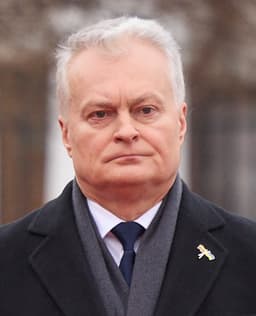
Gitanas Nauseda
Politician · Modern
46.5Total
Basic Information
Born
1828
1964
Died
1897
—
Era
Modern
Modern
Nationality
Spain
Lithuania
Occupation
Politician
Politician
Civilization
Western
Western
Score Comparison
Military (10%)
48.2
13.5
Political (20%)
72.0
68.0
Influence (20%)
55.0
51.0
Legacy (20%)
55.0
37.5
Leadership (15%)
75.0
64.0
Strategy (15%)
43.2
31.8
TOTAL
58.7
46.5
Antonio Canovas del Castillo — Complete Timeline
1874 AD
Architect of the Bourbon RestorationPolitical Action
After the collapse of the First Spanish Republic, Canovas engineered the restoration of the Bourbon monarchy under Alfonso XII. He orchestrated a pronunciamiento by General Martinez Campos in December 1874, ending the republican experiment and establishing a stable monarchical regime.
RestorationMonarchyPolitical Transition
Impact: nationalconstructive
1876 AD
Drafted the 1876 ConstitutionPolitical Action◆ Major
Canovas del Castillo oversaw the drafting and implementation of the Spanish Constitution of 1876. This document established a conservative, constitutional monarchy under Alfonso XII, defining the political framework of the Bourbon Restoration and limiting democratic reforms.
ConstitutionBourbon RestorationPolitical Reform
Impact: nationalconstructive
1881 AD
Implemented the Turno Pacifico SystemPolitical Action◆ Major
Canovas established the turno pacifico, a system of alternating power between the Conservative and Liberal parties. This arrangement, based on electoral manipulation and caciquismo, ensured political stability but prevented genuine democratic representation in Spain.
Political SystemElectoral ManipulationStability
Impact: national
1897 AD
Assassinated by Michele AngiolilloPolitical Action◆ Major
Canovas del Castillo was shot and killed at the Santa Agueda spa in Mondragon by Italian anarchist Michele Angiolillo. The assassination was in retaliation for the execution of anarchists in the Montjuic trial following the 1896 Barcelona Corpus Christi procession bombing.
AssassinationAnarchismPolitical Violence
Impact: nationaltragic
Gitanas Nauseda — Complete Timeline
2019 AD
Elected President of LithuaniaPolitical Action◆ Major
Nauseda won the Lithuanian presidential election as an independent candidate, defeating Ingrida
ElectionPresidentIndependent
Impact: nationalconstructive
2020 AD
Strong Stance on Belarus and RussiaPolitical Action◆ Major
Nauseda condemned the Belarusian government's crackdown on protesters after the disputed 2020 election. He supported EU sanctions against Belarus and provided support to Belarusian opposition figures.
BelarusHuman RightsForeign Policy
Impact: regionalconstructive
2022 AD
Support for Ukraine During Russian InvasionPolitical Action◆ Major
Nauseda was a vocal supporter of Ukraine after Russia's full-scale invasion. He advocated for NATO's eastern flank reinforcement and Lithuania provided military aid to Ukraine.
UkraineNATOSecurity
Impact: globalconstructive
2024 AD
Re-elected President of LithuaniaPolitical Action◆ Major
Nauseda won re-election in the 2024 Lithuanian presidential election, defeating Prime Minister Ingrida
ElectionRe-electionPresident
Impact: nationalconstructive
Expert Analysis
Origins
Antonio Canovas del Castillo was born on February 8, 1828, in Málaga, Spain, into a middle-class family. His father was a schoolteacher, and his mother came from a modest background. Canovas studied law at the University of Madrid, where he developed a conservative political philosophy influenced by the French doctrinaires. He entered politics early, serving in the Cortes Generales from 1854.
Gitanas Nauseda was born on May 19, 1964, in Klaipėda, Lithuania, then part of the Soviet Union. His father was a worker, and his mother was a teacher. Nauseda studied economics at Vilnius University, earning a doctorate in economics in 1993. He worked as an economist and later as a financial analyst before entering politics.
Rise to Power
Canovas rose to prominence during the turbulent years of the First Spanish Republic (1873-1874). After the republic collapsed, he orchestrated the restoration of the Bourbon monarchy under Alfonso XII in December 1874. He engineered a pronunciamiento (military coup) by General Arsenio Martínez Campos, which declared Alfonso king. Canovas then served as prime minister multiple times, drafting the 1876 Constitution and establishing the turno pacifico system. His political skill scored 72.0, reflecting his ability to stabilize Spain.
Nauseda ran for president in 2019 as an independent candidate. He won the first round with 31% of the vote and defeated Prime Minister Ingrida Šimonytė in the runoff with 66%. His campaign focused on economic reforms and social issues. He took office in July 2019. His political score of 68.0 is close to Canovas's, but his rise was less dramatic.
Leadership & Governance
Canovas governed Spain through a conservative, constitutional monarchy. He believed in a strong executive and limited suffrage. His turno pacifico system alternated power between the Conservative and Liberal parties, but it relied on electoral manipulation (caciquismo) to ensure outcomes. He suppressed dissent, including the socialist movement and regional nationalism. His leadership score of 75.0 reflects his effectiveness, though his methods were authoritarian.
Nauseda leads as a president in a semi-presidential system. He has focused on foreign policy, taking a strong stance against Belarus and Russia. He condemned the 2020 Belarusian election crackdown and supported EU sanctions. After Russia's 2022 invasion of Ukraine, he advocated for NATO reinforcement and provided military aid to Ukraine. Domestically, he has promoted economic growth but faced criticism for not addressing income inequality. His leadership score of 64.0 is lower than Canovas's.
Triumph & Tragedy
Canovas's greatest triumph was restoring the Bourbon monarchy and drafting the 1876 Constitution, which provided stability for 45 years. He also oversaw economic growth and expansion of the railway. However, his turno pacifico system was corrupt and excluded the working class. His greatest tragedy was his assassination on August 8, 1897, by Italian anarchist Michele Angiolillo, which destabilized Spain. He also failed to prevent the loss of Cuba and the Philippines in 1898, though he died before the Spanish-American War.
Nauseda's triumph is his strong international stance, particularly on Ukraine. He has been re-elected in 2024, indicating public support. However, his domestic achievements are modest; Lithuania still faces emigration and economic challenges. His legacy score of 37.5 is low because he is still in office and his long-term impact is uncertain.
Character & Destiny
Canovas was pragmatic and authoritarian. He believed in order over democracy, which shaped his policies. His assassination cut short his career, but his system endured until 1923. Nauseda is cautious and consensus-oriented, reflecting his economic background. His destiny is still unfolding, but his foreign policy positions have defined his presidency.
Legacy
Canovas's legacy is the Bourbon Restoration and the 1876 Constitution, which shaped Spain for decades. However, his system's flaws contributed to the eventual fall of the monarchy. He is remembered as a conservative statesman. Nauseda's legacy is still being built, but he has strengthened Lithuania's role in NATO and the EU. His scores: influence 51.0, legacy 37.5.
Conclusion
Antonio Canovas del Castillo had greater impact, with a total score of 58.7 compared to Nauseda's 46.5. Canovas transformed Spain's political structure and stabilized a chaotic period. Nauseda has been a competent president but has not achieved structural change. Canovas's reforms endured for decades, while Nauseda's influence is limited to his presidency. Therefore, Canovas del Castillo is the more significant historical figure.
Rankings
🥇
Antonio Canovas del CastilloLeader
Mil: 48.2Pol: 72.0Inf: 55.0
58.7
🥈
Gitanas Nauseda
Mil: 13.5Pol: 68.0Inf: 51.0
46.5
+12.2 behind
How This Comparison Works
Algorithm
Each figure is scored on 6 dimensions (0—100 scale) based on structured historical data: Military (10%), Political (20%), Influence (20%), Legacy (20%), Leadership (15%), Strategy (15%). The weighted total produces the final ranking.
Data Sources
Scores are computed from structured sub-indicators in the database. Scale factors adjust for era (Ancient ×0.85, Modern ×1.0) and civilization size (Eastern ×1.05, Other ×0.80) to account for differences in population and military scale.
Maximum 3 Figures
Comparisons are limited to 2—3 figures to ensure readability and statistical meaningfulness.
Error Margins
±5 points per dimension — Sub-scores are derived from historical records with inherent uncertainty. Two figures within 5 points on a dimension should be considered roughly equivalent in that area.
Total Score Accuracy
±3 points overall — The weighted combination of 6 dimensions produces a total score with approximately ±3 points of uncertainty. Differences of less than 3 points are not statistically significant— the figures are effectively tied.
Known Limitations
- Historical records are incomplete and uneven across civilizations
- Figures from oral-tradition societies may be underrepresented
- Occupation labels can misclassify multi-role figures
- Scores measure capability and impact, not moral character
- Quantitative scoring is a comparison tool, not absolute truth
Capability Radar
Military (10%) — Battles & Warfare
Battles
31
21
Win Rate
31
26
Expansion
36
25
Political (20%) — Governance & Reform
Reform
80
40
Diplomacy
75
55
Economy
70
50
Influence (20%) — Cultural & Global Reach
Cultural
60
20
Global
60
25
Legacy (20%) — Historical Impact
Historical
70
20
Longevity
65
15
Leadership (15%) — Power & Stability
Tenure
85
30
Stability
80
45
Strategy (15%) — Tactics & Innovation
Strategy
37
34
Tactics
43
33
Reform
45
35
Similar Comparisons
Comments & Discussion
No comments yet. Be the first to share your thoughts!