Loading...
Analysis will be generated on first visit.
Scores and timeline are available below. The page will refresh automatically when ready.
Antonin Novotny vs Julius Caesar
Julius Caesar leads by 23.3 pts · 2 figures compared
…
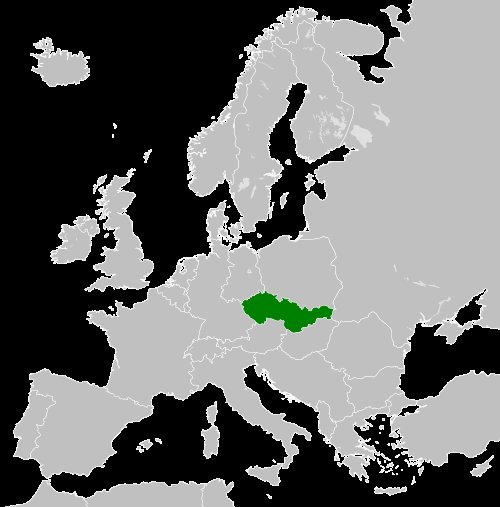
Antonin Novotny
Politician · Modern
60.0Total
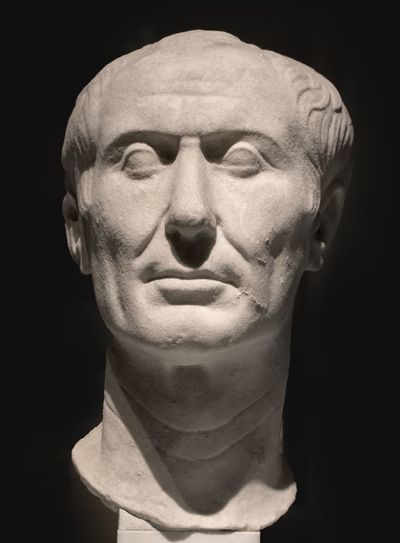
Julius Caesar
General · Ancient
83.3Total
Basic Information
Born
1904
-100
Died
1975
-44
Era
Modern
Ancient
Nationality
Czechoslovakia
Roman Republic
Occupation
Politician
General
Civilization
Western
Western
Score Comparison
Military (10%)
37.5
88.0
Political (20%)
72.0
78.0
Influence (20%)
67.1
85.0
Legacy (20%)
52.4
82.0
Leadership (15%)
84.1
82.0
Strategy (15%)
35.3
88.0
TOTAL
60.0
83.3
Rankings
🥇
Julius CaesarLeader
Mil: 88.0Pol: 78.0Inf: 85.0
83.3
🥈
Antonin Novotny
Mil: 37.5Pol: 72.0Inf: 67.1
60.0
+23.3 behind
How This Comparison Works
Algorithm
Each figure is scored on 6 dimensions (0—100 scale) based on structured historical data: Military (10%), Political (20%), Influence (20%), Legacy (20%), Leadership (15%), Strategy (15%). The weighted total produces the final ranking.
Data Sources
Scores are computed from structured sub-indicators in the database. Scale factors adjust for era (Ancient ×0.85, Modern ×1.0) and civilization size (Eastern ×1.05, Other ×0.80) to account for differences in population and military scale.
Maximum 3 Figures
Comparisons are limited to 2—3 figures to ensure readability and statistical meaningfulness.
Error Margins
±5 points per dimension — Sub-scores are derived from historical records with inherent uncertainty. Two figures within 5 points on a dimension should be considered roughly equivalent in that area.
Total Score Accuracy
±3 points overall — The weighted combination of 6 dimensions produces a total score with approximately ±3 points of uncertainty. Differences of less than 3 points are not statistically significant— the figures are effectively tied.
Known Limitations
- Historical records are incomplete and uneven across civilizations
- Figures from oral-tradition societies may be underrepresented
- Occupation labels can misclassify multi-role figures
- Scores measure capability and impact, not moral character
- Quantitative scoring is a comparison tool, not absolute truth
Capability Radar
Military (10%) — Battles & Warfare
Battles
31
95
Win Rate
32
92
Expansion
34
97
Political (20%) — Governance & Reform
Reform
20
90
Diplomacy
25
85
Economy
30
82
Influence (20%) — Cultural & Global Reach
Cultural
15
88
Global
15
94
Legacy (20%) — Historical Impact
Historical
20
95
Longevity
10
96
Leadership (15%) — Power & Stability
Tenure
40
75
Stability
35
60
Strategy (15%) — Tactics & Innovation
Strategy
35
94
Tactics
42
96
Reform
42
88
Analysis will be generated on first visit.
Scores and timeline are available below. The page will refresh automatically when ready.
Antonin Novotny — Complete Timeline
1953 AD
Consolidation of Stalinist rule in CzechoslovakiaPolitical Action◆ Major
After the death of Stalin and Czechoslovak President Klement Gottwald, Novotny became First Secretary of the Communist Party of Czechoslovakia. He consolidated power by purging rivals and enforcing Stalinist policies, including show trials and suppression of dissent.
StalinismPurgeCommunist Party
Impact: nationaldestructive
1960 AD
Adoption of the 1960 ConstitutionPolitical Action◆ Major
Novotny oversaw the adoption of a new constitution that renamed the country the Czechoslovak Socialist Republic. The constitution formalized the leading role of the Communist Party and centralized state control over the economy and society.
ConstitutionSocialist RepublicCentralization
Impact: national
1962 AD
Economic stagnation and failure of the Third Five-Year PlanOther◆ Major
The Third Five-Year Plan (1961-1965) failed to meet targets, leading to economic stagnation. Industrial output declined, consumer goods shortages worsened, and the planned economy showed structural weaknesses, contributing to growing dissatisfaction with Novotny's leadership.
Economic FailureFive-Year PlanStagnation
Impact: nationaldestructive
1968 AD
Removal from power during the Prague SpringPolitical Action
In January 1968, Novotny was replaced as First Secretary by Alexander Dubcek amid growing reformist pressures. He was later expelled from the Communist Party in May 1968, marking the end of his political career and the beginning of the Prague Spring liberalization.
Prague SpringDubcekPolitical Change
Impact: national
Similar Comparisons
Comments & Discussion
No comments yet. Be the first to share your thoughts!