Loading...
Anthemius vs Honorius
Anthemius leads by 3.4 pts · 2 figures compared
…

Anthemius
Emperor · Ancient
39.7Total
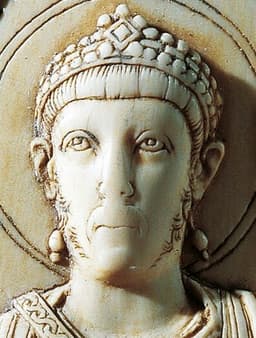
Honorius
Emperor · Ancient
36.3Total
Basic Information
Born
420
384
Died
472
423
Era
Ancient
Ancient
Nationality
Western Roman Empire
Western Roman Empire
Occupation
Emperor
Emperor
Civilization
Western
Western
Score Comparison
Military (10%)
50.0
10.2
Political (20%)
29.3
32.1
Influence (20%)
44.8
44.8
Legacy (20%)
38.3
38.3
Leadership (15%)
34.6
34.6
Strategy (15%)
43.7
45.0
TOTAL
39.7
36.3
Anthemius — Complete Timeline
467 AD
Proclaimed Western Roman EmperorPolitical Action◆ Major
The Eastern Roman Emperor Leo I appointed Anthemius as Western Roman Emperor, sending him to Italy with military support. Anthemius was a capable general and administrator, and his elevation was intended to restore stability to the Western Empire.
Imperial SuccessionEastern-Western Relations
Impact: regionalconstructive
468 AD
Launched joint expedition against the VandalsWar
Anthemius, in cooperation with the Eastern Emperor Leo I, launched a massive joint naval expedition against the Vandal Kingdom in North Africa. The campaign ended in a disastrous defeat at the Battle of Cape Bon, draining the resources of both empires.
Vandal WarMilitary CampaignNaval Battle
Impact: regionaldestructive
472 AD
Besieged and killed by RicimerWar
After a prolonged conflict with his magister militum Ricimer, Anthemius was besieged in Rome. Ricimer's forces captured the city, and Anthemius was captured and executed. His death marked the end of the last serious attempt to revive the Western Empire.
Civil WarSiege of RomeAssassination
Impact: regionaltragic
Honorius — Complete Timeline
408 AD
Execution of StilichoPolitical Action◆ Major
Honorius ordered the execution of his magister militum Stilicho, who had effectively ruled the Western Empire. Stilicho was accused of treason and executed, leading to the massacre of barbarian soldiers' families and weakening Roman defenses.
Court IntrigueStilichoMilitary
Impact: nationaldestructive
410 AD
Sack of Rome by AlaricWar
The Visigoths under King Alaric sacked the city of Rome, the first time in 800 years that the city had fallen to a foreign enemy. Honorius, residing in Ravenna, failed to prevent the sack, which shocked the Roman world.
Barbarian InvasionsVisigothsFall of Rome
Impact: globaltragic
Loss of BritainPolitical Action◆ Major
Honorius wrote to the cities of Britain telling them to look to their own defense, effectively ending Roman rule in Britain. This withdrawal allowed Anglo-Saxon settlement and the formation of early medieval kingdoms.
BritainRoman WithdrawalAnglo-Saxons
Impact: regional
Expert Analysis
Origins
Anthemius was born c. 420 AD in Constantinople, the son of a wealthy and influential Eastern Roman official named Procopius. He received a thorough education in the Greek East, studying rhetoric, philosophy, and military tactics. His family had strong ties to the Eastern court, and he rose through the ranks of the bureaucracy and military. In contrast, Honorius was born in 384 AD in the Western capital, Ravenna, as the younger son of Emperor Theodosius I. His father was the last emperor to rule both halves of the Roman Empire. Honorius grew up in a court dominated by powerful generals and was never prepared for independent rule. His education was supervised by the Vandal general Stilicho, who effectively governed for him.
Rise to Power
Anthemius was appointed Western Roman Emperor in 467 AD by the Eastern Emperor Leo I, who sent him to Italy with an army. He was the last Eastern-appointed Western emperor and brought a reputation as a capable general and administrator. His rise was based on his own merit and Eastern support. Honorius became co-emperor at age 9 in 393 AD and sole Western emperor at age 11 after his father's death in 395 AD. His rise was purely dynastic. He relied entirely on Stilicho, who defeated barbarian invasions and maintained stability. After Stilicho's execution in 408 AD, Honorius was left without a capable advisor.
Leadership & Governance
Anthemius attempted to restore Western Roman authority through military campaigns and alliances. He cooperated with the East to launch a massive naval expedition against the Vandals in 468 AD, which failed due to poor coordination and the Vandal use of fire ships. He also tried to reassert control over Gaul, but his general Ricimer, a barbarian warlord, opposed him. Anthemius scored 29.3 in political governance, reflecting his inability to manage Ricimer. Honorius, with a political score of 32.1, was slightly better but still weak. He relied on Stilicho for most of his reign. After Stilicho's death, Honorius made disastrous decisions, such as refusing to negotiate with Alaric, leading to the sack of Rome in 410 AD. He also wrote to the cities of Britain in 410 AD telling them to look to their own defense, effectively ending Roman rule there. Honorius's leadership score is 34.6, while Anthemius's is 34.6 as well, indicating similar ineffectiveness.
Triumph & Tragedy
Anthemius's greatest success was the joint expedition against the Vandals, which, though a failure, demonstrated a rare attempt at coordinated Roman action. He also managed to rule for four years without losing territory to barbarians, a relative achievement in the late Western Empire. His tragedy was his betrayal by Ricimer, who besieged him in Rome in 472 AD. Anthemius was captured and killed, possibly by Ricimer's nephew. Honorius's greatest success was surviving a series of usurpations and barbarian invasions, including the defeat of the Goth Radagaisus in 406 AD by Stilicho. His tragedy was the sack of Rome, which exposed the empire's weakness. He also lost Britain, Gaul, and Spain to barbarian incursions. Honorius's military score is 10.2, the lowest among Western emperors, reflecting his complete lack of military ability.
Character & Destiny
Anthemius was educated, ambitious, and attempted to revive Roman fortunes, but he was also overly reliant on the East and failed to secure the loyalty of his own military. His character was that of a reformer, but his destiny was to be overwhelmed by the internal power struggles that plagued the late empire. Honorius was passive, indecisive, and more interested in religious affairs and his pets than in governance. He is famously said to have been more upset about the death of his pet chicken, named Rome, than the sack of the city. His destiny was to preside over the collapse of the West, though he himself died of natural causes in 423 AD.
Legacy
Anthemius is remembered as the last capable Western emperor, but his failure to restore the empire cemented the end. His total score is 39.7, slightly higher than Honorius's 36.3. Honorius's legacy is one of incompetence and decline. He is infamous for the sack of Rome and the loss of Britain. The phrase "Honorius's chickens" became a symbol of misguided priorities. Neither emperor left any lasting positive reforms, but Anthemius at least attempted to reverse the decline.
Conclusion
Anthemius had greater impact than Honorius, despite their similar low scores. Anthemius's total score of 39.7 exceeds Honorius's 36.3 by 3.4 points. While both failed to save the Western Empire, Anthemius attempted meaningful action, such as the joint expedition and efforts to curb Ricimer. Honorius, by contrast, passively allowed the empire to disintegrate. Anthemius's leadership and military scores (34.6 and 50.0) are far superior to Honorius's (34.6 and 10.2). Although neither was a great emperor, Anthemius represents the last glimmer of Roman capability, while Honorius epitomizes the ineptitude that doomed the West.
Rankings
🥇
AnthemiusLeader
Mil: 50.0Pol: 29.3Inf: 44.8
39.7
🥈
Honorius
Mil: 10.2Pol: 32.1Inf: 44.8
36.3
+3.4 behind
How This Comparison Works
Algorithm
Each figure is scored on 6 dimensions (0—100 scale) based on structured historical data: Military (10%), Political (20%), Influence (20%), Legacy (20%), Leadership (15%), Strategy (15%). The weighted total produces the final ranking.
Data Sources
Scores are computed from structured sub-indicators in the database. Scale factors adjust for era (Ancient ×0.85, Modern ×1.0) and civilization size (Eastern ×1.05, Other ×0.80) to account for differences in population and military scale.
Maximum 3 Figures
Comparisons are limited to 2—3 figures to ensure readability and statistical meaningfulness.
Error Margins
±5 points per dimension — Sub-scores are derived from historical records with inherent uncertainty. Two figures within 5 points on a dimension should be considered roughly equivalent in that area.
Total Score Accuracy
±3 points overall — The weighted combination of 6 dimensions produces a total score with approximately ±3 points of uncertainty. Differences of less than 3 points are not statistically significant— the figures are effectively tied.
Known Limitations
- Historical records are incomplete and uneven across civilizations
- Figures from oral-tradition societies may be underrepresented
- Occupation labels can misclassify multi-role figures
- Scores measure capability and impact, not moral character
- Quantitative scoring is a comparison tool, not absolute truth
Capability Radar
Military (10%) — Battles & Warfare
Battles
20
5
Win Rate
15
5
Expansion
5
5
Political (20%) — Governance & Reform
Reform
20
10
Diplomacy
35
10
Economy
15
10
Influence (20%) — Cultural & Global Reach
Cultural
15
10
Global
10
15
Legacy (20%) — Historical Impact
Historical
30
20
Longevity
20
20
Leadership (15%) — Power & Stability
Tenure
30
30
Stability
10
10
Strategy (15%) — Tactics & Innovation
Strategy
20
5
Tactics
25
5
Reform
10
5
Similar Comparisons
Comments & Discussion
No comments yet. Be the first to share your thoughts!