Loading...
Anne Robert Turgot vs Imre Nagy
Imre Nagy leads by 0.3 pts · 2 figures compared
…

Anne Robert Turgot
Politician · Modern
55.0Total
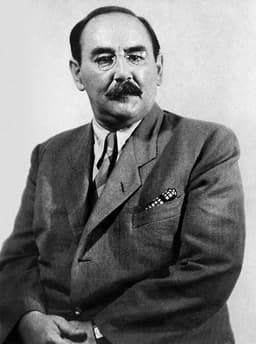
Imre Nagy
Politician · Modern
55.3Total
Basic Information
Born
1727
1896
Died
1781
1958
Era
Modern
Modern
Nationality
France
Hungary
Occupation
Politician
Politician
Civilization
Western
Western
Score Comparison
Military (10%)
47.2
47.7
Political (20%)
72.0
68.0
Influence (20%)
54.1
61.0
Legacy (20%)
49.2
54.0
Leadership (15%)
61.1
48.4
Strategy (15%)
45.0
43.0
TOTAL
55.0
55.3
Anne Robert Turgot — Complete Timeline
1774 AD
Introduction of Free Grain TradeReform◆ Major
Turgot implemented the free trade of grain within France, removing internal tariffs and restrictions. This policy aimed to stabilize grain prices and prevent famines, but it led to price spikes and the 'Flour War' riots in 1775, forcing its temporary suspension.
Economic ReformFree TradeRiots
Impact: nationalconstructive
Appointed Controller-General of FinancesPolitical Action◆ Major
Turgot was appointed Controller-General of Finances by King Louis XVI, tasked with reforming the French economy. A leading Physiocrat, he advocated for free trade and the removal of feudal restrictions, aiming to modernize the ancien r
AppointmentEconomic ReformGovernment
Impact: national
1776 AD
Edict of 1776: Abolition of GuildsReform◆ Major
Turgot issued the Edict of 1776, which abolished the system of trade guilds and corporations in France. This reform aimed to promote economic freedom and competition but faced fierce opposition from vested interests, leading to its eventual repeal.
Economic ReformFree TradeGuilds
Impact: nationalconstructive
Dismissal from OfficePolitical Action◆ Major
Facing opposition from the Parlements, the court, and Queen Marie Antoinette, Turgot was dismissed by Louis XVI. His reforms were reversed, and the opportunity for peaceful fiscal reform was lost, contributing to the later financial crisis that led to the Revolution.
DismissalPolitical FailureReform Reversal
Impact: nationaldestructive
1781 AD
Death of TurgotPolitical Action
Turgot died in Paris, having retired from public life after his dismissal. His ideas on economic liberalism and reform influenced later thinkers, but his failure to implement lasting change highlighted the structural resistance to modernization in pre-revolutionary France.
DeathLegacyEconomic Thought
Impact: national
Imre Nagy — Complete Timeline
1953 AD
Appointment as Prime Minister of HungaryPolitical Action◆ Major
Nagy was appointed Prime Minister by Stalin, replacing the hardline Matyas Rakosi. He initiated a 'New Course' that relaxed Stalinist policies, released some political prisoners, and allowed limited private enterprise.
Communist leadershipReform
Impact: nationalconstructive
1956 AD
Soviet Invasion of HungaryWar
Soviet forces invaded Hungary to crush the revolution. Nagy's government was overthrown, and he sought refuge in the Yugoslav embassy. The invasion resulted in thousands of deaths and a massive refugee crisis.
Soviet interventionCold War
Impact: globaltragic
Hungarian Revolution of 1956Political Action
Nagy was reinstated as Prime Minister during the Hungarian Revolution. He announced the withdrawal of Hungary from the Warsaw Pact and declared neutrality, seeking a multi-party system. This directly challenged Soviet control.
RevolutionCold War
Impact: global
1958 AD
Execution of Imre NagyPolitical Action◆ Major
Nagy was abducted from the Yugoslav embassy, tried in secret by the Kadar government, and executed by hanging. His death made him a martyr for the Hungarian people and a symbol of resistance to Soviet domination.
Political repressionMartyrdom
Impact: nationaltragic
Expert Analysis
Origins
Anne Robert Jacques Turgot (1727–1781) was born into a Parisian noble family, the son of a high-ranking civil servant. Educated at the Sorbonne, he was influenced by Enlightenment thinkers and became a leading Physiocrat, believing that land was the sole source of wealth and that free trade would bring prosperity. Imre Nagy (1896–1958) was born into a peasant family in Kaposvár, Hungary. After fighting in World War I, he became a communist, studying agriculture in the Soviet Union. His early career was shaped by Stalinist orthodoxy, but he developed a reformist bent after witnessing the horrors of collectivization.
Rise to Power
Turgot rose through administrative ranks, serving as Intendant of Limoges from 1761 to 1774, where he implemented tax reforms and introduced free grain trade. His success caught the attention of King Louis XVI, who appointed him Controller-General of Finances in 1774. Nagy rose within the Hungarian Communist Party, becoming Prime Minister in 1953 after Stalin's death. He launched a 'New Course,' releasing political prisoners and easing collectivization. However, hardliners forced him out in 1955. During the 1956 Hungarian Revolution, Nagy was reinstated as Prime Minister and announced Hungary's withdrawal from the Warsaw Pact, a turning point that led to Soviet invasion.
Leadership & Governance
Turgot's leadership was technocratic and reformist. He issued the Edict of 1776 abolishing guilds, removed internal tariffs, and attempted to reduce royal spending. His approach was logical but politically naive; he alienated the nobility, clergy, and even the king by opposing France's intervention in the American Revolution. Nagy's leadership was crisis-driven. During his brief second tenure, he legalized non-communist parties, declared neutrality, and appealed to the UN. Both men attempted structural reforms against entrenched opposition, but Nagy operated under existential threat while Turgot faced institutional inertia.
Triumph & Tragedy
Turgot's greatest success was his intellectual legacy: his ideas on free trade and deregulation influenced later economists like Adam Smith. His tragedy was his dismissal in 1776 after only 20 months, before reforms could take hold. His policies were reversed, and France's financial crisis worsened, contributing to the 1789 Revolution. Nagy's greatest success was embodying the hope of the 1956 Revolution; his declaration of neutrality remains a symbol of Hungarian sovereignty. His tragedy was his execution in 1958 after being tricked into leaving the Yugoslav embassy. His death made him a martyr, but his reforms were crushed by Soviet tanks.
Character & Destiny
Turgot was a principled rationalist, often described as rigid and uncompromising. His belief in economic logic blinded him to political realities—he refused to compromise with vested interests, leading to his downfall. Nagy was a reluctant revolutionary, a reformer who initially sought to work within the system but was forced by events to take radical steps. His hesitation and trust in Soviet promises led to his capture. Both men were undone by forces they could not control: Turgot by court intrigue, Nagy by Soviet imperialism.
Legacy
Turgot's scores reflect his influence (54.1) and political skill (72.0), but his legacy (49.2) is limited to economic thought. He is remembered as a precursor to classical liberalism. Nagy's influence (61.0) and legacy (54.0) are higher; he is a national hero in Hungary, and his execution discredited Soviet rule. The 1956 Revolution, though crushed, planted seeds for later dissent. In total scores, Nagy leads 55.3 to 55.0, a narrow margin.
Conclusion
Imre Nagy had greater impact. While Turgot's reforms were intellectually significant, they were quickly reversed and had no immediate effect. Nagy's martyrdom and the 1956 Revolution had lasting political consequences, weakening Soviet legitimacy and inspiring future uprisings. Nagy's total score of 55.3 versus Turgot's 55.0 reflects this, but the gap understates his historical weight. Turgot remains a footnote in economic history; Nagy is a symbol of resistance.
Rankings
🥇
Imre NagyLeader
Mil: 47.7Pol: 68.0Inf: 61.0
55.3
🥈
Anne Robert Turgot
Mil: 47.2Pol: 72.0Inf: 54.1
55.0
+0.3 behind
How This Comparison Works
Algorithm
Each figure is scored on 6 dimensions (0—100 scale) based on structured historical data: Military (10%), Political (20%), Influence (20%), Legacy (20%), Leadership (15%), Strategy (15%). The weighted total produces the final ranking.
Data Sources
Scores are computed from structured sub-indicators in the database. Scale factors adjust for era (Ancient ×0.85, Modern ×1.0) and civilization size (Eastern ×1.05, Other ×0.80) to account for differences in population and military scale.
Maximum 3 Figures
Comparisons are limited to 2—3 figures to ensure readability and statistical meaningfulness.
Error Margins
±5 points per dimension — Sub-scores are derived from historical records with inherent uncertainty. Two figures within 5 points on a dimension should be considered roughly equivalent in that area.
Total Score Accuracy
±3 points overall — The weighted combination of 6 dimensions produces a total score with approximately ±3 points of uncertainty. Differences of less than 3 points are not statistically significant— the figures are effectively tied.
Known Limitations
- Historical records are incomplete and uneven across civilizations
- Figures from oral-tradition societies may be underrepresented
- Occupation labels can misclassify multi-role figures
- Scores measure capability and impact, not moral character
- Quantitative scoring is a comparison tool, not absolute truth
Capability Radar
Military (10%) — Battles & Warfare
Battles
29
30
Win Rate
34
34
Expansion
37
36
Political (20%) — Governance & Reform
Reform
65
70
Diplomacy
40
40
Economy
70
20
Influence (20%) — Cultural & Global Reach
Cultural
30
40
Global
35
55
Legacy (20%) — Historical Impact
Historical
55
65
Longevity
40
50
Leadership (15%) — Power & Stability
Tenure
20
30
Stability
25
10
Strategy (15%) — Tactics & Innovation
Strategy
38
40
Tactics
38
41
Reform
43
43
Similar Comparisons
Comments & Discussion
No comments yet. Be the first to share your thoughts!