Loading...
Angela Merkel vs Francisco Macias Nguema
Angela Merkel leads by 9.6 pts · 2 figures compared
…

Angela Merkel
Politician · Modern
63.8Total
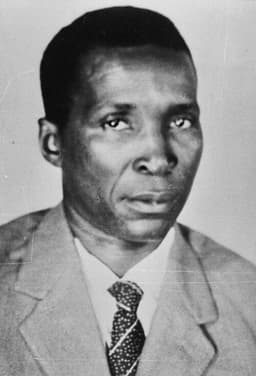
Francisco Macias Nguema
Politician · Modern
54.2Total
Basic Information
Born
1954
1924
Died
—
—
Era
Modern
Modern
Nationality
Germany
Equatorial Guinea
Occupation
Politician
Politician
Civilization
Western
Other
Score Comparison
Military (10%)
48.5
50.0
Political (20%)
78.0
68.0
Influence (20%)
68.0
60.0
Legacy (20%)
55.0
40.8
Leadership (15%)
80.7
62.9
Strategy (15%)
43.5
43.3
TOTAL
63.8
54.2
Angela Merkel — Complete Timeline
2005 AD
Election as Chancellor of GermanyPolitical Action
Merkel became the first female Chancellor of Germany after her CDU/CSU alliance won a narrow victory in federal elections. She formed a grand coalition with the SPD, marking the start of her 16-year tenure as Europe's most powerful leader.
German ElectionChancellorshipGrand Coalition
Impact: global
2010 AD
Management of the Eurozone Debt CrisisPolitical Action◆ Major
Merkel played a central role in the EU's response to the Greek debt crisis, insisting on austerity measures in exchange for bailout funds. Her policies were credited with stabilizing the euro but were criticized for causing severe economic hardship in Greece.
Eurozone CrisisAusterityGreek Bailout
Impact: regional
2015 AD
Open-Door Policy for Syrian RefugeesPolitical Action
Merkel decided to keep Germany's borders open to Syrian refugees fleeing civil war, allowing over one million asylum seekers into the country. The policy was praised as humanitarian but led to political backlash, the rise of the AfD, and strained EU relations.
Refugee CrisisSyrian WarHumanitarian Policy
Impact: globalprogressive
Francisco Macias Nguema — Complete Timeline
1968 AD
Became First President of Equatorial GuineaPolitical Action◆ Major
Francisco Macias Nguema was elected as the first president of Equatorial Guinea upon its independence from Spain. He quickly consolidated power, establishing a one-party state and eliminating political opponents.
IndependenceFirst PresidentAuthoritarianism
Impact: national
1972 AD
Declared Himself President for LifePolitical Action
Macias Nguema declared himself President for Life, centralizing all power in his hands. He initiated a reign of terror, ordering the execution of thousands of political opponents, intellectuals, and perceived enemies.
DictatorshipRepressionHuman Rights Abuses
Impact: nationaldestructive
1979 AD
Overthrown and ExecutedPolitical Action
Macias Nguema was overthrown in a coup led by his nephew Teodoro Obiang Nguema Mbasogo. He was captured, tried for crimes including genocide and treason, and executed by firing squad. His regime had caused the death of an estimated 50,000 people.
CoupExecutionEnd of Tyranny
Impact: nationaltragic
Expert Analysis
Origins
Angela Merkel was born in 1954 in Hamburg, West Germany, but grew up in East Germany. Her father was a Lutheran pastor, and the family moved to Templin in the GDR when she was an infant. Merkel studied physics at the University of Leipzig, earning a doctorate in quantum chemistry. She worked as a research scientist until the fall of the Berlin Wall in 1989, which prompted her entry into politics.
Francisco Macias Nguema was born around 1924 in the village of Nsegayong, Spanish Guinea (now Equatorial Guinea). He belonged to the Fang ethnic group. He received minimal formal education and worked as a civil servant under Spanish colonial administration. He rose through the ranks of the colonial bureaucracy, eventually becoming mayor of Mongomo and later a member of the colonial parliament.
Rise to Power
Merkel's political rise began after German reunification. She joined the Christian Democratic Union (CDU) and was elected to the Bundestag in 1990. She served as Minister for Women and Youth (1991-1994) and Minister for the Environment (1994-1998). In 2000, she became the first female leader of the CDU. Following a narrow victory in the 2005 federal election, Merkel became Chancellor of Germany, leading a grand coalition with the SPD. She was re-elected in 2009, 2013, and 2017, serving until 2021.
Macias Nguema came to power in 1968 when Equatorial Guinea gained independence from Spain. He won the presidency in a UN-supervised election, defeating Bonifacio Ondó Edu. Soon after, he consolidated power by eliminating political opponents. In 1972, he declared himself President for Life, and in 1973 he assumed absolute control over all state institutions. He established a cult of personality, declaring himself the "Great Leader" and "Unique Miracle."
Leadership & Governance
Merkel's leadership style was pragmatic and consensus-driven. She managed the Eurozone debt crisis by insisting on austerity measures in exchange for bailout funds, a policy that stabilized the euro but caused economic hardship in Greece. In 2015, she adopted an open-door policy for Syrian refugees, allowing over one million asylum seekers into Germany. Her political score is 78.0, reflecting her ability to navigate coalition governments and maintain stability.
Macias Nguema's governance was characterized by extreme brutality. He nationalized foreign-owned plantations, expelled Spanish settlers, and banned Christianity. He ordered the execution of thousands of political opponents, including members of his own government. His regime destroyed the economy, with GDP per capita falling by 80% during his rule. His leadership score is 62.9, but his legacy score is 40.8 due to the catastrophic impact.
Triumph & Tragedy
Merkel's greatest success was steering Germany through multiple crises: the global financial crisis (2008-2009), the Eurozone crisis (2010-2012), and the refugee crisis (2015-2016). She earned the nickname "Mutti" (mother) for her steady leadership. However, her open-door refugee policy led to political backlash, fueling the rise of the far-right Alternative for Germany (AfD). Her legacy is mixed: she is praised for humanitarianism but criticized for the lack of EU burden-sharing.
Macias Nguema's triumph is limited to leading Equatorial Guinea to independence. His tragedy is the systematic destruction of his country: by 1979, an estimated 50,000 to 80,000 people had been killed out of a population of 300,000. He also mismanaged the economy, leading to widespread famine. His overthrow in 1979 by his nephew Teodoro Obiang Nguema Mbasogo ended his reign, but Obiang continued the authoritarian rule.
Character & Destiny
Merkel was known for her cautious, analytical approach. As a physicist, she approached problems methodically, earning a reputation for waiting until the last moment to make decisions. Her character shaped her destiny: she remained Chancellor for 16 years, becoming the de facto leader of the European Union. Her strategy score is 43.5, reflecting her reactive rather than proactive style.
Macias Nguema was paranoid, superstitious, and ruthless. He believed in witchcraft and ordered the execution of anyone he perceived as a threat. His character led to international isolation and internal rebellion. His total score of 54.2 reflects his inability to build sustainable institutions or maintain power beyond 11 years.
Legacy
Merkel's legacy is the stabilization of the European Union during turbulent times. She advanced Germany's role as a global leader, though her policies on Russia and energy (Nord Stream 2) remain controversial. Her influence score is 68.0, and she is remembered as the most powerful woman in the world during her tenure.
Macias Nguema is remembered as one of the worst dictators in African history. His regime is a case study in kleptocracy and human rights abuses. Equatorial Guinea remains under authoritarian rule, and the country's oil wealth has not benefited the population. His legacy is a cautionary tale of how unchecked power leads to disaster.
Conclusion
Angela Merkel had a far greater impact on the world stage. Her political score of 78.0 and leadership score of 80.7 dwarf Macias Nguema's 68.0 and 62.9. While Merkel's policies were not without flaws, she governed democratically and improved the lives of millions. Macias Nguema, by contrast, destroyed his country and killed a significant portion of its population. The score gap of 9.6 points understates the chasm in their contributions. Merkel's legacy is one of stability and humanitarianism; Macias Nguema's is one of genocide and ruin.
Rankings
🥇
Angela MerkelLeader
Mil: 48.5Pol: 78.0Inf: 68.0
63.8
🥈
Francisco Macias Nguema
Mil: 50.0Pol: 68.0Inf: 60.0
54.2
+9.6 behind
How This Comparison Works
Algorithm
Each figure is scored on 6 dimensions (0—100 scale) based on structured historical data: Military (10%), Political (20%), Influence (20%), Legacy (20%), Leadership (15%), Strategy (15%). The weighted total produces the final ranking.
Data Sources
Scores are computed from structured sub-indicators in the database. Scale factors adjust for era (Ancient ×0.85, Modern ×1.0) and civilization size (Eastern ×1.05, Other ×0.80) to account for differences in population and military scale.
Maximum 3 Figures
Comparisons are limited to 2—3 figures to ensure readability and statistical meaningfulness.
Error Margins
±5 points per dimension — Sub-scores are derived from historical records with inherent uncertainty. Two figures within 5 points on a dimension should be considered roughly equivalent in that area.
Total Score Accuracy
±3 points overall — The weighted combination of 6 dimensions produces a total score with approximately ±3 points of uncertainty. Differences of less than 3 points are not statistically significant— the figures are effectively tied.
Known Limitations
- Historical records are incomplete and uneven across civilizations
- Figures from oral-tradition societies may be underrepresented
- Occupation labels can misclassify multi-role figures
- Scores measure capability and impact, not moral character
- Quantitative scoring is a comparison tool, not absolute truth
Capability Radar
Military (10%) — Battles & Warfare
Battles
31
21
Win Rate
34
27
Expansion
33
30
Political (20%) — Governance & Reform
Reform
75
0
Diplomacy
90
0
Economy
80
0
Influence (20%) — Cultural & Global Reach
Cultural
65
0
Global
75
0
Legacy (20%) — Historical Impact
Historical
70
5
Longevity
60
0
Leadership (15%) — Power & Stability
Tenure
85
11
Stability
85
0
Strategy (15%) — Tactics & Innovation
Strategy
39
28
Tactics
40
32
Reform
46
37
Similar Comparisons
Comments & Discussion
No comments yet. Be the first to share your thoughts!