Loading...
This comparison has not been analyzed yet.
One-time AI generation (~1 minute). Scores and timeline are already available below.
Ancus Marcius vs Postumus
Postumus leads by 6.1 pts · 2 figures compared
…

Ancus Marcius
Emperor · Ancient
49.4Total
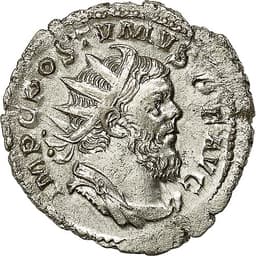
Postumus
Emperor · Ancient
55.5Total
Basic Information
Born
-642
220
Died
-617
269
Era
Ancient
Ancient
Nationality
Roman Kingdom
Gallic Empire
Occupation
Emperor
Emperor
Civilization
Western
Western
Score Comparison
Military (10%)
55.0
60.0
Political (20%)
46.6
68.0
Influence (20%)
48.6
48.6
Legacy (20%)
44.2
42.5
Leadership (15%)
65.7
70.0
Strategy (15%)
38.3
60.0
TOTAL
49.4
55.5
Ancus Marcius — Complete Timeline
640 BC
Foundation of OstiaOther◆ Major
Ancus Marcius founded the port city of Ostia at the mouth of the Tiber River. This colony served as Rome's primary naval base and commercial port, facilitating trade and military control over the Tyrrhenian Sea and the salt flats.
ColonizationPort CityRoman Trade
Impact: regionalconstructive
Construction of the Pons SubliciusCultural
Ancus Marcius ordered the construction of the Pons Sublicius, the first bridge across the Tiber River in Rome. This wooden bridge improved transportation and communication between Rome and the Janiculum hill, and became a strategic military structure.
InfrastructureBridgeTiber River
constructive
Annexation of the Janiculum HillOther
Ancus Marcius incorporated the Janiculum hill into the city of Rome, fortifying it with walls. This strategic hill on the west bank of the Tiber provided a defensive position and was used as a citadel against Etruscan threats.
Urban ExpansionFortificationJaniculum
constructive
Establishment of the Salt WorksOther
Ancus Marcius established state-controlled salt works near Ostia, securing a vital resource for Rome. Salt was essential for food preservation and trade, and this monopoly generated revenue and ensured supply for the growing Roman population.
Economic PolicySalt ProductionState Monopoly
Impact: nationalconstructive
630 BC
War with the LatinsWar◆ Major
Ancus Marcius waged war against the Latin tribes, defeating them and expanding Roman territory. He annexed several Latin towns and forcibly relocated their populations to Rome, increasing the city's population and extending Roman hegemony over Latium.
Roman ExpansionLatin WarTerritorial Gain
Impact: regional
Postumus — Complete Timeline
260 AD
Proclaimed emperor in Gaul after Valerian's capturePolitical Action
Following the capture of Emperor Valerian by the Sassanids, Postumus was proclaimed emperor by his troops in Gaul. He established the Gallic Empire, a breakaway state comprising Gaul, Britain, and Hispania, with its capital at Colonia Agrippina.
Gallic EmpireUsurpationCrisis of the Third Century
Impact: regional
261 AD
Defeated Gallienus at the Battle of MursaWar◆ Major
Postumus repelled an invasion by Emperor Gallienus, defeating him at the Battle of Mursa. This victory secured the Gallic Empire's independence and forced Gallienus to abandon attempts to reconquer the western provinces.
BattleGallic EmpireRoman Civil War
Impact: regional
269 AD
Stabilized the Gallic Empire for nine yearsPolitical Action◆ Major
Postumus successfully defended the Gallic Empire against both internal usurpers and external Germanic invasions for nine years. His reign provided stability to the western provinces during the Crisis of the Third Century, with effective administration and coinage.
Gallic EmpireStabilityAdministration
Impact: regionalconstructive
Killed by his own troops after refusing to sack MainzPolitical Action◆ Major
After defeating the usurper Laelianus at Mainz, Postumus refused to allow his troops to sack the city. His soldiers mutinied and killed him, ending his reign. His death led to a period of instability in the Gallic Empire.
MutinyDeathGallic Empire
Impact: regionaltragic
This comparison has not been analyzed yet.
One-time AI generation (~1 minute). Scores and timeline are already available below.
Rankings
🥇
PostumusLeader
Mil: 60.0Pol: 68.0Inf: 48.6
55.5
🥈
Ancus Marcius
Mil: 55.0Pol: 46.6Inf: 48.6
49.4
+6.1 behind
How This Comparison Works
Algorithm
Each figure is scored on 6 dimensions (0—100 scale) based on structured historical data: Military (10%), Political (20%), Influence (20%), Legacy (20%), Leadership (15%), Strategy (15%). The weighted total produces the final ranking.
Data Sources
Scores are computed from structured sub-indicators in the database. Scale factors adjust for era (Ancient ×0.85, Modern ×1.0) and civilization size (Eastern ×1.05, Other ×0.80) to account for differences in population and military scale.
Maximum 3 Figures
Comparisons are limited to 2—3 figures to ensure readability and statistical meaningfulness.
Error Margins
±5 points per dimension — Sub-scores are derived from historical records with inherent uncertainty. Two figures within 5 points on a dimension should be considered roughly equivalent in that area.
Total Score Accuracy
±3 points overall — The weighted combination of 6 dimensions produces a total score with approximately ±3 points of uncertainty. Differences of less than 3 points are not statistically significant— the figures are effectively tied.
Known Limitations
- Historical records are incomplete and uneven across civilizations
- Figures from oral-tradition societies may be underrepresented
- Occupation labels can misclassify multi-role figures
- Scores measure capability and impact, not moral character
- Quantitative scoring is a comparison tool, not absolute truth
Capability Radar
Military (10%) — Battles & Warfare
Battles
20
55
Win Rate
25
60
Expansion
35
45
Political (20%) — Governance & Reform
Reform
45
40
Diplomacy
35
45
Economy
50
50
Influence (20%) — Cultural & Global Reach
Cultural
30
30
Global
20
20
Legacy (20%) — Historical Impact
Historical
40
35
Longevity
35
30
Leadership (15%) — Power & Stability
Tenure
40
60
Stability
45
55
Strategy (15%) — Tactics & Innovation
Strategy
30
55
Tactics
20
50
Reform
15
30
Similar Comparisons
Comments & Discussion
No comments yet. Be the first to share your thoughts!