Loading...
Amyntas of Galatia vs Julius Caesar
Julius Caesar leads by 39.7 pts · 2 figures compared
…
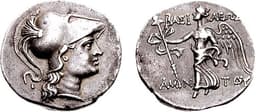
Amyntas of Galatia
Emperor · Ancient
43.1Total

Julius Caesar
General · Ancient
82.8Total
Basic Information
Born
-60
-100
Died
-25
-44
Era
Ancient
Ancient
Nationality
Galatia
Roman Republic
Occupation
Emperor
General
Civilization
Western
Western
Score Comparison
Military (10%)
38.3
88.0
Political (20%)
40.8
78.0
Influence (20%)
45.5
85.0
Legacy (20%)
36.7
82.0
Leadership (15%)
55.3
80.0
Strategy (15%)
43.3
85.0
TOTAL
43.1
82.8
Amyntas of Galatia — Complete Timeline
25 BC
Death in Campaign Against the HomanadesWar◆ Major
Amyntas of Galatia led a military campaign against the Homanades, a rebellious tribe in the Taurus Mountains. He was killed in battle, ending his rule. After his death, Galatia was annexed by Rome as a province.
BattleDeathRoman Annexation
Impact: regionaltragic
Julius Caesar — Complete Timeline
58 BC
Gallic WarsWar◆ Major
Caesar, as proconsul of Gaul, launched a series of campaigns that conquered all of Gaul (modern France, Belgium, and parts of Switzerland). He fought numerous battles, including against the Helvetii, the Belgae, and the Gallic chieftain Vercingetorix. The wars brought immense wealth and a loyal army to Caesar.
Gallic WarsConquestRoman Expansion
Impact: regional
49 BC
Crossing the RubiconPolitical Action◆ Major
Caesar led Legio XIII across the Rubicon River into Italy, defying the Roman Senate's order to disband his army. This act triggered a civil war against Pompey and the Optimates, ultimately leading to Caesar's dictatorship and the end of the Roman Republic.
Roman Civil WarEnd of RepublicPower Struggle
Impact: global
48 BC
Battle of PharsalusWar◆ Major
Caesar's outnumbered army defeated the larger forces of Pompey the Great at Pharsalus in Greece. Caesar's tactical use of a reserve line to counter Pompey's cavalry charge proved decisive. Pompey fled to Egypt, where he was assassinated, leaving Caesar as the undisputed master of the Roman world.
Roman Civil WarBattleDecisive Victory
Impact: regional
44 BC
Appointment as Dictator for LifePolitical Action◆ Major
The Roman Senate appointed Caesar dictator perpetuo (dictator for life), granting him unprecedented personal power. This move concentrated military, legislative, and judicial authority in one person, effectively ending the Roman Republic's traditional system of checks and balances and alarming many senators.
DictatorshipEnd of RepublicPower Consolidation
Impact: regionaldestructive
Assassination on the Ides of MarchPolitical Action◆ Major
A group of Roman senators, led by Marcus Junius Brutus and Gaius Cassius Longinus, stabbed Caesar to death at a meeting of the Senate in the Theatre of Pompey. The assassination was intended to restore the Republic, but instead triggered another civil war that led to the rise of the Roman Empire.
AssassinationRoman PoliticsEnd of Republic
Impact: globaldestructive
Expert Analysis
amyntas-of-galatia-vs-julius-caesar
# The Conqueror and the King: Why Some Leaders Shape History While Others Fade
On a spring morning in 44 BCE, the most powerful man in the Roman world fell beneath the daggers of his friends in the Senate chamber. Across the eastern Mediterranean, in the rugged Taurus Mountains of Anatolia, another ruler was waging a desperate campaign against mountain tribes, unaware that his own death was only nineteen years away. Julius Caesar and Amyntas of Galatia—both rose from the chaos of the late Republic, both commanded armies, both died violently. Yet one became the hinge on which Western history turned, while the other survives only as a footnote in the annals of forgotten kings. What separated them was not merely talent, but the nature of the stage they walked upon.
Origins
Caesar was born into the patrician Julian clan in 100 BCE, a family claiming descent from the goddess Venus, yet one that had lost much of its political relevance. He grew up in a Rome convulsed by civil wars, where the old senatorial aristocracy was crumbling under the weight of imperial expansion and military ambition. His aunt had married Gaius Marius, the populist general who had reformed the army and challenged the Senate. This family connection would prove both a blessing and a curse—it gave Caesar early political connections, but also marked him as a target during the subsequent Sullan purges.
Amyntas, born around 60 BCE, came from a very different world. Galatia was a Celtic kingdom in central Anatolia, settled by Gallic tribes centuries earlier, now a client state caught between Rome and the eastern powers. He was a Galatian tetrarch, a local noble in a land where power flowed not from ancient lineage but from military prowess and the ability to navigate Roman patronage. His rise depended entirely on his usefulness to the great Roman warlords who dominated the Mediterranean.
Rise to Power
Caesar’s path to power was a masterclass in calculated risk. He refused Sulla’s order to divorce his wife, fled Rome, and began a military career in Asia Minor. He was captured by pirates and famously told them they would demand a higher ransom, then returned with a fleet to crucify them. He climbed the Roman political ladder—quaestor, aedile, pontifex maximus—borrowing enormous sums to stage lavish games that won popular support. In 59 BCE, he formed the First Triumvirate with Pompey and Crassus, an alliance that gave him the consulship and, crucially, command of Gaul.
Amyntas rose through a different mechanism: patronage. When Rome’s civil wars erupted between Mark Antony and Octavian, Amyntas chose Antony’s side. Antony appointed him king of Galatia in 36 BCE, displacing the previous ruler. But Amyntas understood something essential about client kingship: survival meant flexibility. After Antony’s defeat at Actium in 31 BCE, Amyntas swiftly transferred his allegiance to Octavian. The future emperor confirmed him as king, valuing stability in the Anatolian frontier over punishing a former enemy.
Leadership & Governance
Caesar governed through personal magnetism, military genius, and revolutionary reform. In Gaul, he commanded an army that became personally loyal to him rather than to the Republic. His *Commentaries* show a leader who understood the power of narrative—he was both the actor and the chronicler of his own deeds. As dictator, he reformed the calendar, extended citizenship to provincials, initiated public works, and centralized authority in ways that broke the old senatorial order. His military strategy was audacious: the crossing of the Rubicon in 49 BCE was not just a military maneuver but a political act that announced he would rather destroy the Republic than accept exile.
Amyntas ruled as a client king, his authority derivative of Roman power. His governance was local and pragmatic. He maintained order in Galatia, collected taxes for Rome, and defended the frontier against restless tribes like the Homanades. When he led his campaign into the Taurus Mountains in 25 BCE, it was not for personal glory or imperial ambition, but because these tribes threatened the stability of his kingdom—and by extension, Roman interests. His strategy was competent but conventional, the work of a regional strongman, not a world-historical figure.
Triumph & Tragedy
Caesar’s greatest triumph was the conquest of Gaul (58–50 BCE), where he defeated hundreds of tribes, crossed the Rhine into Germany, and landed in Britain—all while writing his own legend. His tragedy was the assassination on the Ides of March, 44 BCE, when the men he had pardoned and promoted turned on him. His dying words to Brutus—“You too, my child?”—capture the personal betrayal at the heart of his fall.
Amyntas’s triumph was simply surviving the transition from Antony to Octavian, a feat that many client rulers failed to achieve. His tragedy came in 25 BCE, when his campaign against the Homanades ended in his own death. He was killed in the mountains, his body likely lost or mutilated. His kingdom was annexed by Rome and became the province of Galatia. There was no dramatic betrayal, no conspiracy of senators—just a soldier’s death in a minor war against a tribe history has all but forgotten.
Character & Destiny
Caesar was driven by an insatiable desire for glory (*gloria* in Latin), a competitive ambition that could never be satisfied. He was generous to his enemies, brilliant in his calculations, and ruthless in pursuit of power. His character shaped his destiny: his clemency made him popular but also made his assassins feel threatened; his ambition made him great but also made his dictatorship intolerable to the old aristocracy.
Amyntas was a survivor, a man who understood the limits of his power. He did not dream of conquering Rome or reshaping the world. His character was that of a local king in a Roman world—pragmatic, adaptable, and ultimately expendable. When he died, his kingdom simply disappeared into the empire he had served. His destiny was not to change history but to be absorbed by it.
Legacy
Caesar’s legacy is immeasurable. His name became synonymous with imperial authority—*Kaiser* in German, *Tsar* in Russian. The Julian calendar he reformed is still the basis of our own. His writings shaped military education for two millennia. His assassination set off the final civil wars that ended the Republic and birthed the Empire. He is the lens through which we still debate the nature of power, ambition, and the cost of greatness.
Amyntas left behind only a name in inscriptions and the briefest entries in ancient histories. The Galatian kingdom he ruled vanished so completely that its language and customs are known only from fragments. He was the last of his line, a king who died in a mountain skirmish, remembered today only because he crossed paths with figures like Antony and Octavian.
Conclusion
Standing before the statue of Caesar in the Roman Forum, one feels the weight of a man who broke the world and remade it. Searching for Amyntas in the landscape of Galatia, one finds only silence. The difference between them was not simply talent or luck—it was the scale of their ambition and the nature of the stage on which they performed. Caesar played for the highest stakes in human history: the fate of the Mediterranean world. Amyntas played for the survival of a small kingdom, and even that he could not hold. In the end, history remembers not just the winners, but those who dared to win everything. The others, however competent, become dust.
Rankings
🥇
Julius CaesarLeader
Mil: 88.0Pol: 78.0Inf: 85.0
82.8
🥈
Amyntas of Galatia
Mil: 38.3Pol: 40.8Inf: 45.5
43.1
+39.7 behind
How This Comparison Works
Algorithm
Each figure is scored on 6 dimensions (0—100 scale) based on structured historical data: Military (10%), Political (20%), Influence (20%), Legacy (20%), Leadership (15%), Strategy (15%). The weighted total produces the final ranking.
Data Sources
Scores are computed from structured sub-indicators in the database. Scale factors adjust for era (Ancient ×0.85, Modern ×1.0) and civilization size (Eastern ×1.05, Other ×0.80) to account for differences in population and military scale.
Maximum 3 Figures
Comparisons are limited to 2—3 figures to ensure readability and statistical meaningfulness.
Error Margins
±5 points per dimension — Sub-scores are derived from historical records with inherent uncertainty. Two figures within 5 points on a dimension should be considered roughly equivalent in that area.
Total Score Accuracy
±3 points overall — The weighted combination of 6 dimensions produces a total score with approximately ±3 points of uncertainty. Differences of less than 3 points are not statistically significant— the figures are effectively tied.
Known Limitations
- Historical records are incomplete and uneven across civilizations
- Figures from oral-tradition societies may be underrepresented
- Occupation labels can misclassify multi-role figures
- Scores measure capability and impact, not moral character
- Quantitative scoring is a comparison tool, not absolute truth
Capability Radar
Military (10%) — Battles & Warfare
Battles
35
95
Win Rate
30
92
Expansion
25
97
Political (20%) — Governance & Reform
Reform
30
90
Diplomacy
45
85
Economy
35
82
Influence (20%) — Cultural & Global Reach
Cultural
20
88
Global
10
94
Legacy (20%) — Historical Impact
Historical
25
95
Longevity
15
96
Leadership (15%) — Power & Stability
Tenure
40
75
Stability
30
60
Strategy (15%) — Tactics & Innovation
Strategy
30
94
Tactics
30
96
Reform
20
88
Similar Comparisons
Comments & Discussion
帝国史观战士6/17/2026
把阿敏塔斯和恺撒放在一起比较本身就是一种历史的残酷。恺撒的名字统治了两千年的大西洋文明,而阿敏塔斯在维基百科上只有三段话,里面还有一句写错了他的继位年份。这不是能力差距,是平台差距。阿敏塔斯在安纳托利亚的山沟里打游击,恺撒在元老院、广场和无数军团面前表演。历史记住了站在舞台中央的人,哪怕他背后的手段同样肮脏。
DATA_SKEPTIC6/17/2026
This comparison rests on survivorship bias and scale inflation. We know everything about Caesar because Cicero's letters survived, because Suetonius and Plutarch wrote about him, because his own propaganda became the standard curriculum for two millennia. Amyntas's kingdom minted coins, built monuments, and likely produced its own archives—they just got looted, burned, or ignored. If the sources were reversed, we'd be debating why a Roman warlord failed to conquer Galatia. The difference isn't g
剑与桂冠的争论者6/17/2026
两人都以暴力收场,但恺撒的死被包装成了历史悲剧,阿敏塔斯的死只是地方新闻。恺撒在元老院被六十个贵族刺死,马上成为史诗素材,布鲁图斯的匕首变成了文化符号。阿敏塔斯却是在一次伏击中被射杀,连凶手是谁都记不清了。同一件事——统治者的暴毙——因为发生在罗马和加拉提亚的两个世界,历史赋予了完全不同的意义。这不是个人质量的差异,是叙事权力的分配。
SocraticMethodMan6/17/2026
Amyntas was a Celtic warlord playing for small stakes; Caesar was remaking the entire Mediterranean world. Amyntas fought mountain tribes for regional supremacy, Caesar crossed the Rubicon and broke the Republic. One conquered Galatia; the other conquered Gaul, Britain, Egypt, and Rome itself. To compare them is to compare a talented middle manager with a revolutionary who changed the course of history forever. Caesar's ambition was cosmic; Amyntas's was local. That's not a slight—it's a reality