Loading...
Analysis will be generated on first visit.
Scores and timeline are available below. The page will refresh automatically when ready.
Amenhotep III vs Napoleon Bonaparte
Napoleon Bonaparte leads by 15.0 pts · 2 figures compared
…

Amenhotep III
Emperor · Ancient
67.4Total
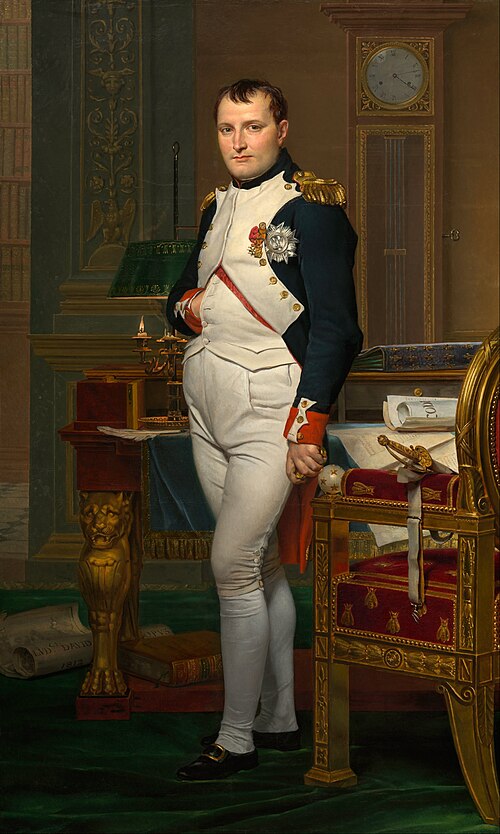
Napoleon Bonaparte
General · Modern
82.4Total
Basic Information
Born
-1390
1769
Died
-1352
1821
Era
Ancient
Modern
Nationality
Egypt
France
Occupation
Emperor
General
Civilization
Middle Eastern
Western
Score Comparison
Military (10%)
44.0
94.0
Political (20%)
61.9
75.0
Influence (20%)
69.4
82.0
Legacy (20%)
74.6
78.0
Leadership (15%)
77.7
80.0
Strategy (15%)
67.8
93.0
TOTAL
67.4
82.4
Rankings
🥇
Napoleon BonaparteLeader
Mil: 94.0Pol: 75.0Inf: 82.0
82.4
🥈
Amenhotep III
Mil: 44.0Pol: 61.9Inf: 69.4
67.4
+15.0 behind
How This Comparison Works
Algorithm
Each figure is scored on 6 dimensions (0—100 scale) based on structured historical data: Military (10%), Political (20%), Influence (20%), Legacy (20%), Leadership (15%), Strategy (15%). The weighted total produces the final ranking.
Data Sources
Scores are computed from structured sub-indicators in the database. Scale factors adjust for era (Ancient ×0.85, Modern ×1.0) and civilization size (Eastern ×1.05, Other ×0.80) to account for differences in population and military scale.
Maximum 3 Figures
Comparisons are limited to 2—3 figures to ensure readability and statistical meaningfulness.
Error Margins
±5 points per dimension — Sub-scores are derived from historical records with inherent uncertainty. Two figures within 5 points on a dimension should be considered roughly equivalent in that area.
Total Score Accuracy
±3 points overall — The weighted combination of 6 dimensions produces a total score with approximately ±3 points of uncertainty. Differences of less than 3 points are not statistically significant— the figures are effectively tied.
Known Limitations
- Historical records are incomplete and uneven across civilizations
- Figures from oral-tradition societies may be underrepresented
- Occupation labels can misclassify multi-role figures
- Scores measure capability and impact, not moral character
- Quantitative scoring is a comparison tool, not absolute truth
Capability Radar
Military (10%) — Battles & Warfare
Battles
30
95
Win Rate
40
90
Expansion
25
95
Political (20%) — Governance & Reform
Reform
70
95
Diplomacy
90
80
Economy
85
85
Influence (20%) — Cultural & Global Reach
Cultural
85
85
Global
70
90
Legacy (20%) — Historical Impact
Historical
80
95
Longevity
75
90
Leadership (15%) — Power & Stability
Tenure
85
85
Stability
90
70
Strategy (15%) — Tactics & Innovation
Strategy
40
95
Tactics
35
98
Reform
20
92
Analysis will be generated on first visit.
Scores and timeline are available below. The page will refresh automatically when ready.
Amenhotep III — Complete Timeline
1390 BC
Reign of Peace and ProsperityPolitical Action◆ Major
Amenhotep III's reign was marked by unprecedented peace and prosperity. He maintained diplomatic relations with major powers like Mitanni, Babylon, and Assyria through marriage alliances and trade, avoiding major wars and allowing Egypt to flourish.
PeaceProsperityDiplomacy
Impact: regionalconstructive
1380 BC
Construction of the Mortuary Temple at Kom el-HettanCultural◆ Major
Amenhotep III built a massive mortuary temple at Kom el-Hettan on the west bank of Thebes. The temple, now largely destroyed, was the largest of its kind in Egypt and included the Colossi of Memnon, two giant statues of the pharaoh.
ArchitectureTempleColossi of Memnon
Impact: globalconstructive
1375 BC
Diplomatic Marriage to GilukhepaPolitical Action◆ Major
Amenhotep III married Gilukhepa, a daughter of the Mitanni king Shuttarna II. This marriage strengthened the alliance between Egypt and Mitanni, bringing peace and stability to the region.
DiplomacyMitanniMarriage
Impact: regionalconstructive
1370 BC
Construction of the Luxor TempleCultural◆ Major
Amenhotep III commissioned the construction of the Luxor Temple in Thebes, dedicated to the god Amun. The temple became a major religious center and a masterpiece of Egyptian architecture, featuring colossal statues and intricate reliefs.
ArchitectureLuxor TempleReligion
Impact: globalconstructive
Similar Comparisons
Comments & Discussion
No comments yet. Be the first to share your thoughts!