Loading...
Aly Maher Pasha vs Volodymyr Zelenskyy
Volodymyr Zelenskyy leads by 0.7 pts · 2 figures compared
…
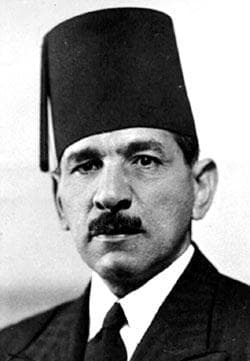
Aly Maher Pasha
Politician · Modern
51.9Total
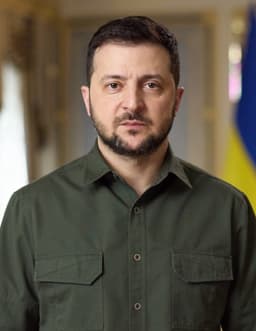
Volodymyr Zelenskyy
Politician · Modern
52.6Total
Basic Information
Born
1882
1978
Died
1960
—
Era
Modern
Modern
Nationality
Egypt
Ukraine
Occupation
Politician
Politician
Civilization
Middle Eastern
Western
Score Comparison
Military (10%)
29.8
25.0
Political (20%)
68.0
45.0
Influence (20%)
51.0
68.0
Legacy (20%)
42.5
55.0
Leadership (15%)
74.0
40.0
Strategy (15%)
42.2
66.3
TOTAL
51.9
52.6
Aly Maher Pasha — Complete Timeline
1942 AD
Served as Prime Minister during the 1942 CrisisPolitical Action◆ Major
Aly Maher Pasha served as prime minister during the Abdeen Palace incident, when British forces surrounded the royal palace to force King Farouk to appoint a pro-Allied government. Maher resigned shortly after the crisis.
World War IIBritish InfluencePolitical Crisis
Impact: national
1952 AD
Appointed as Prime Minister after the 1952 RevolutionPolitical Action◆ Major
After the 1952 Egyptian Revolution, the Free Officers appointed Aly Maher Pasha as prime minister to manage the transition from monarchy to republic. He served briefly from July to September 1952 before being replaced.
RevolutionTransitionFree Officers
Impact: nationalconstructive
Resigned as Prime MinisterPolitical Action◆ Major
Maher resigned in September 1952 after disagreements with the Free Officers over land reform and the pace of political change. His resignation marked the end of civilian oversight and the consolidation of military rule.
ResignationFree OfficersPolitical Change
Impact: national
Volodymyr Zelenskyy — Complete Timeline
2019 AD
Elected President of UkrainePolitical Action
Zelenskyy won the Ukrainian presidential election in a landslide, defeating incumbent Petro Poroshenko with 73% of the vote. He was a political outsider and former comedian with no prior political experience.
ElectionLandslidePolitical Outsider
Impact: nationalconstructive
2022 AD
Russian Full-Scale Invasion of UkraineWar
Russia launched a full-scale invasion of Ukraine on February 24, 2022. Zelenskyy remained in Kyiv and rallied national and international support, becoming a symbol of Ukrainian resistance.
InvasionResistanceLeadership
Impact: globaltragic
Counteroffensive in Kharkiv and KhersonWar◆ Major
Ukrainian forces under Zelenskyy's leadership launched successful counteroffensives, liberating large territories in Kharkiv Oblast and the city of Kherson. These were major military victories against Russian forces.
CounteroffensiveMilitary VictoryLiberation
Impact: regionalconstructive
Address to the United Nations General AssemblyPolitical Action◆ Major
Zelenskyy addressed the UN General Assembly via video, calling for a special tribunal for Russian war crimes and demanding accountability. He urged global unity against aggression.
UNWar CrimesDiplomacy
Impact: globalconstructive
Advocated for EU and NATO MembershipPolitical Action◆ Major
Zelenskyy formally submitted Ukraine's application for EU membership and continued to push for NATO membership. Ukraine was granted EU candidate status in June 2022.
EUNATOIntegration
Impact: globalconstructive
Expert Analysis
Origins
Aly Maher Pasha was born in 1882 in Cairo, Egypt, into a prominent political family. His father, Muhammad Maher Pasha, served as a minister. Maher studied law at the Khedivial School of Law in Cairo and later in France, gaining exposure to European legal systems. He began his career in the Egyptian judiciary, eventually becoming a judge and then a minister. His early experiences with British colonial administration shaped his nationalist leanings.
Volodymyr Zelenskyy was born on January 25, 1978, in Kryvyi Rih, Ukraine, into a Jewish family. His father was a professor of cybernetics, and his mother was an engineer. Zelenskyy studied law at the Kryvyi Rih Institute of Economics and Law, but he never practiced law. Instead, he pursued a career in entertainment, founding the comedy troupe Kvartal 95 and starring in the popular TV series 'Servant of the People' as a fictional president. His background as a comedian gave him no prior political or military experience.
Rise to Power
Aly Maher Pasha's rise was gradual through the Egyptian political system. He first served as Minister of Justice in 1925, then Minister of Education in 1926. He became Prime Minister for the first time in 1936, but his tenure was brief. His most significant appointment came in 1942 during the Abdeen Palace incident, when British forces surrounded the royal palace to force King Farouk to appoint a pro-British government. Maher was chosen as a compromise candidate, but he resigned after only two months due to disagreements with the British. His final appointment came after the 1952 Revolution, when the Free Officers asked him to manage the transition from monarchy to republic. He served from July to September 1952, resigning over land reform disputes.
Zelenskyy's rise was meteoric. He announced his candidacy for president on New Year's Eve 2018, leveraging his fame from the TV show. He won the first round of the election on March 31, 2019, with 30.2% of the vote, and the runoff on April 21 with 73.2%, defeating incumbent Petro Poroshenko. His victory was fueled by anti-corruption sentiment and a desire for outsider leadership. He took office on May 20, 2019, with no political experience.
Leadership & Governance
Maher Pasha's leadership style was cautious and legalistic. As prime minister in 1942, he navigated between British demands and Egyptian sovereignty, ultimately choosing to resign rather than enforce British policies. In 1952, he attempted to slow land reform, favoring gradual redistribution over the Free Officers' radical plans. He scored 74.0 in leadership, reflecting his ability to manage crises, but his political score of 68.0 indicates limited long-term influence.
Zelenskyy's leadership transformed during the 2022 invasion. Initially, he was criticized for being inexperienced and too conciliatory toward Russia. However, after the invasion began, he became a symbol of resistance. He refused evacuation offers, remained in Kyiv, and gave daily addresses to rally Ukrainians and the world. His strategy score of 66.3 reflects his adept use of media and diplomacy, though his political score of 45.0 shows challenges in domestic governance before the war.
Triumph & Tragedy
Maher Pasha's greatest success was managing the 1952 transition without immediate civil war, maintaining stability for three months. His tragedy was his inability to influence the revolution's direction; his resignation marked the end of the old political elite. He scored 42.5 in legacy, as his contributions are largely forgotten.
Zelenskyy's triumph is his effective leadership during the war: he united Ukraine, secured Western aid, and launched successful counteroffensives in Kharkiv and Kherson in 2022. His tragedy is the ongoing destruction and loss of life, and the pre-war failures to reform the economy and combat corruption. His legacy score of 55.0 is still evolving.
Character & Destiny
Maher Pasha was a nationalist but also a pragmatist who respected legal processes. His caution prevented him from taking bold steps, leading to his marginalization. His character fit a transitional figure but not a revolutionary.
Zelenskyy's character shifted from a populist outsider to a wartime leader. His decision to stay in Kyiv was a defining moment, reflecting courage and strategic communication. His background as a performer helped him craft compelling narratives, but his lack of military experience was a liability.
Legacy
Maher Pasha's legacy is tied to the end of the Egyptian monarchy. He is remembered as a caretaker who facilitated the Free Officers' takeover but failed to shape the new republic. His scores: military 29.8, influence 51.0.
Zelenskyy's legacy is still being written, but he has already become a symbol of resistance against aggression. He has pushed Ukraine toward EU and NATO integration, securing candidate status in 2022. His influence score of 68.0 reflects global recognition.
Conclusion
While both men led during transitions, Zelenskyy's impact is greater. His leadership during a full-scale war has reshaped European security and Ukraine's national identity. Maher Pasha scored 51.9 total versus Zelenskyy's 52.6, but the gap underestimates Zelenskyy's influence. Zelenskyy's actions have immediate global consequences, whereas Maher Pasha's were confined to a brief period of Egyptian history. Therefore, Volodymyr Zelenskyy had a greater impact.
Rankings
🥇
Volodymyr ZelenskyyLeader
Mil: 25.0Pol: 45.0Inf: 68.0
52.6
🥈
Aly Maher Pasha
Mil: 29.8Pol: 68.0Inf: 51.0
51.9
+0.7 behind
How This Comparison Works
Algorithm
Each figure is scored on 6 dimensions (0—100 scale) based on structured historical data: Military (10%), Political (20%), Influence (20%), Legacy (20%), Leadership (15%), Strategy (15%). The weighted total produces the final ranking.
Data Sources
Scores are computed from structured sub-indicators in the database. Scale factors adjust for era (Ancient ×0.85, Modern ×1.0) and civilization size (Eastern ×1.05, Other ×0.80) to account for differences in population and military scale.
Maximum 3 Figures
Comparisons are limited to 2—3 figures to ensure readability and statistical meaningfulness.
Error Margins
±5 points per dimension — Sub-scores are derived from historical records with inherent uncertainty. Two figures within 5 points on a dimension should be considered roughly equivalent in that area.
Total Score Accuracy
±3 points overall — The weighted combination of 6 dimensions produces a total score with approximately ±3 points of uncertainty. Differences of less than 3 points are not statistically significant— the figures are effectively tied.
Known Limitations
- Historical records are incomplete and uneven across civilizations
- Figures from oral-tradition societies may be underrepresented
- Occupation labels can misclassify multi-role figures
- Scores measure capability and impact, not moral character
- Quantitative scoring is a comparison tool, not absolute truth
Capability Radar
Military (10%) — Battles & Warfare
Battles
24
65
Win Rate
22
60
Expansion
25
10
Political (20%) — Governance & Reform
Reform
40
50
Diplomacy
50
85
Economy
35
45
Influence (20%) — Cultural & Global Reach
Cultural
20
70
Global
15
80
Legacy (20%) — Historical Impact
Historical
25
75
Longevity
20
55
Leadership (15%) — Power & Stability
Tenure
55
55
Stability
30
40
Strategy (15%) — Tactics & Innovation
Strategy
33
75
Tactics
33
70
Reform
35
60
Similar Comparisons
Comments & Discussion
No comments yet. Be the first to share your thoughts!