Loading...
Alojzije Stepinac vs Ivanoe Bonomi
Ivanoe Bonomi leads by 5.7 pts · 2 figures compared
…
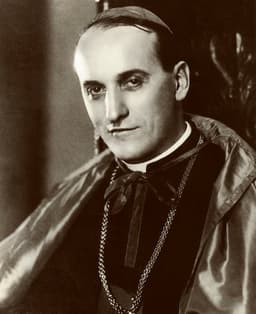
Alojzije Stepinac
Politician · Modern
42.4Total

Ivanoe Bonomi
Politician · Modern
48.1Total
Basic Information
Born
1898
1873
Died
1960
1951
Era
Modern
Modern
Nationality
Croatia
Italy
Occupation
Politician
Politician
Civilization
Western
Western
Score Comparison
Military (10%)
47.6
50.0
Political (20%)
25.0
46.6
Influence (20%)
52.5
51.0
Legacy (20%)
45.0
43.3
Leadership (15%)
38.1
55.3
Strategy (15%)
38.0
42.0
TOTAL
42.4
48.1
Alojzije Stepinac — Complete Timeline
1937 AD
Appointment as Archbishop of ZagrebPolitical Action◆ Major
Alojzije Stepinac was appointed Archbishop of Zagreb, the highest Catholic ecclesiastical office in Croatia. This position made him a prominent moral and political figure during the turbulent years of World War II and the subsequent communist takeover.
Church AppointmentCatholic ChurchCroatia
Impact: regional
1946 AD
Trial and Conviction for War CrimesPolitical Action
Stepinac was tried by the communist Yugoslav government on charges of collaboration with the Usta
TrialWar CrimesCommunist Yugoslavia
Impact: regionaltragic
Imprisonment and House ArrestOther◆ Major
Following his conviction, Stepinac was imprisoned in Lepoglava prison. In 1951, due to international pressure, his sentence was commuted to house arrest in his native village of Kra
ImprisonmentHouse ArrestCommunist Repression
Impact: nationaltragic
Ivanoe Bonomi — Complete Timeline
1944 AD
Prime Minister of the Kingdom of ItalyPolitical Action◆ Major
Bonomi became prime minister of the Kingdom of Italy after the liberation of Rome. He led a government of national unity composed of anti-fascist parties. His cabinet coordinated with the Allies and administered liberated territories during the final phase of World War II.
World War IIGovernmentLiberation
Impact: nationalconstructive
1945 AD
Resignation Over CLN DisputesPolitical Action
Bonomi resigned as prime minister in June 1945 after conflicts within the Committee of National Liberation (CLN) over economic policy and the pace of purges. He was succeeded by Ferruccio Parri. His resignation marked the end of the first post-liberation government.
GovernmentResignationCLN
Impact: national
Expert Analysis
Origins
Alojzije Stepinac was born on May 8, 1898, in Brezarić, Croatia, then part of Austria-Hungary. He grew up in a devout Catholic family and initially studied agriculture before entering the priesthood. He was ordained in 1930 after studying at the Pontifical Gregorian University in Rome. Stepinac quickly rose through church ranks, becoming Archbishop of Zagreb in 1937 at age 39. Ivanoe Bonomi was born on October 18, 1873, in Mantua, Italy. He studied law and became a journalist and socialist politician. Bonomi was a reformist socialist, serving as Minister of Public Works in 1916 and later as Prime Minister briefly in 1921-1922. He opposed Mussolini's fascist regime and withdrew from politics, returning only after the fall of fascism in 1943.
Rise to Power
Stepinac's appointment as Archbishop of Zagreb in 1937 made him the highest Catholic authority in Croatia. During World War II, the Axis-aligned Independent State of Croatia (NDH) was established in 1941 under the Ustaše regime. Stepinac initially welcomed the NDH, seeing it as a safeguard against communism and Serbian domination. However, he later protested Ustaše atrocities, notably in a 1943 sermon. Bonomi's rise came after the fall of Mussolini. In 1944, following the liberation of Rome, Bonomi became Prime Minister of the Kingdom of Italy, leading a government of national unity comprising anti-fascist parties. He was chosen as a moderate figure acceptable to both the Allies and the Italian left.
Leadership & Governance
Stepinac led the Croatian Catholic Church during a period of extreme violence. He maintained a complex relationship with the Ustaše regime: while he criticized some policies, he did not excommunicate members or publicly condemn the regime's genocidal actions. His governance focused on preserving church institutions and mediating between the regime and the Vatican. Bonomi's leadership was pragmatic and coalition-building. He oversaw the transition from fascism to democracy, managing tensions between the Communists, Socialists, Christian Democrats, and Liberals. His government implemented early de-fascistization policies and cooperated with Allied forces. Bonomi's political score of 46.6 reflects his ability to navigate factions, while Stepinac's political score of 25.0 indicates his limited political maneuvering within a totalitarian context.
Triumph & Tragedy
Stepinac's greatest triumph was his beatification in 1998 by Pope John Paul II, recognizing his martyrdom under communism. However, his tragedy was his 1946 conviction for war crimes and collaboration with the Ustaše. The trial, which scored Stepinac a military rating of 47.6, remains controversial: critics argue he failed to speak out forcefully against genocide, while supporters claim he saved many Jews and Serbs. Bonomi's triumph was successfully leading Italy's first post-fascist government and restoring democratic institutions. His tragedy was the brevity of his tenure: he resigned in June 1945 due to internal CLN disputes, and his legacy was overshadowed by later leaders like Alcide De Gasperi. Bonomi's leadership score of 55.3 reflects his effective but short-lived governance.
Character & Destiny
Stepinac was characterized by deep religious conviction and a cautious, legalistic approach. He believed in working within the system to mitigate evil, which led to ambiguous moral positions. His destiny was shaped by the communist takeover, which made him a symbol of anti-communist resistance. Bonomi was a pragmatic socialist, dedicated to democratic governance and anti-fascism. His character was that of a mediator, but his lack of strong ideological drive limited his long-term impact. Bonomi's strategy score of 42.0 indicates moderate strategic thinking, while Stepinac's strategy score of 38.0 reflects his reactive rather than proactive stance.
Legacy
Stepinac's legacy is deeply divided. In Croatia, he is venerated as a martyr and saintly figure; the Catholic Church honors him as a witness to faith. Internationally, he remains controversial, with some historians labeling him a collaborator. His influence score of 52.5 reflects his symbolic power. Bonomi's legacy is more modest: he is remembered as a transitional figure who helped restore democracy but lacked the vision to shape Italy's postwar trajectory. His legacy score of 43.3 indicates his limited enduring impact. Bonomi's total score of 48.1 exceeds Stepinac's 42.4, suggesting a marginally greater historical footprint in terms of political effectiveness.
Conclusion
Ivanoe Bonomi had a greater impact on historical events. His leadership during Italy's transition from fascism to democracy was crucial, even if short-lived. Stepinac's role was more symbolic and ambiguous, with his legacy serving as a polarizing emblem rather than a driver of political change. The 5.7-point score gap favors Bonomi, who scored higher in leadership (55.3 vs. 38.1) and political acumen (46.6 vs. 25.0). While Stepinac's moral influence is significant, Bonomi's concrete actions in rebuilding a nation tip the scales in his favor.
Rankings
🥇
Ivanoe BonomiLeader
Mil: 50.0Pol: 46.6Inf: 51.0
48.1
🥈
Alojzije Stepinac
Mil: 47.6Pol: 25.0Inf: 52.5
42.4
+5.7 behind
How This Comparison Works
Algorithm
Each figure is scored on 6 dimensions (0—100 scale) based on structured historical data: Military (10%), Political (20%), Influence (20%), Legacy (20%), Leadership (15%), Strategy (15%). The weighted total produces the final ranking.
Data Sources
Scores are computed from structured sub-indicators in the database. Scale factors adjust for era (Ancient ×0.85, Modern ×1.0) and civilization size (Eastern ×1.05, Other ×0.80) to account for differences in population and military scale.
Maximum 3 Figures
Comparisons are limited to 2—3 figures to ensure readability and statistical meaningfulness.
Error Margins
±5 points per dimension — Sub-scores are derived from historical records with inherent uncertainty. Two figures within 5 points on a dimension should be considered roughly equivalent in that area.
Total Score Accuracy
±3 points overall — The weighted combination of 6 dimensions produces a total score with approximately ±3 points of uncertainty. Differences of less than 3 points are not statistically significant— the figures are effectively tied.
Known Limitations
- Historical records are incomplete and uneven across civilizations
- Figures from oral-tradition societies may be underrepresented
- Occupation labels can misclassify multi-role figures
- Scores measure capability and impact, not moral character
- Quantitative scoring is a comparison tool, not absolute truth
Capability Radar
Military (10%) — Battles & Warfare
Battles
30
28
Win Rate
32
32
Expansion
37
35
Political (20%) — Governance & Reform
Reform
10
40
Diplomacy
25
45
Economy
5
30
Influence (20%) — Cultural & Global Reach
Cultural
30
15
Global
25
20
Legacy (20%) — Historical Impact
Historical
40
30
Longevity
30
20
Leadership (15%) — Power & Stability
Tenure
20
30
Stability
5
20
Strategy (15%) — Tactics & Innovation
Strategy
40
36
Tactics
43
43
Reform
46
42
Similar Comparisons
Comments & Discussion
No comments yet. Be the first to share your thoughts!