Loading...
Ali Bongo Ondimba vs Wang Jingwei
Ali Bongo Ondimba leads by 0.0 pts · 2 figures compared
…
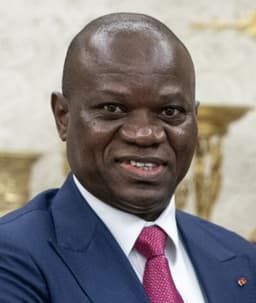
Ali Bongo Ondimba
Politician · Modern
43.7Total

Wang Jingwei
Politician · Modern
43.7Total
Basic Information
Born
1959
1883
Died
—
1944
Era
Modern
Modern
Nationality
Gabon
China
Occupation
Politician
Politician
Civilization
Other
Eastern
Score Comparison
Military (10%)
48.1
36.6
Political (20%)
32.2
26.4
Influence (20%)
47.9
50.2
Legacy (20%)
37.5
40.0
Leadership (15%)
55.3
55.3
Strategy (15%)
44.0
52.8
TOTAL
43.7
43.7
Ali Bongo Ondimba — Complete Timeline
2009 AD
Elected President of GabonPolitical Action◆ Major
Following the death of his father Omar Bongo, Ali Bongo Ondimba won the presidential election in Gabon. His victory was contested by the opposition, leading to protests and accusations of electoral fraud.
ElectionSuccessionControversy
Impact: national
2018 AD
Suffered StrokeOther◆ Major
Ali Bongo Ondimba suffered a stroke while attending a summit in Saudi Arabia. He spent months abroad recovering, which fueled speculation about his health and ability to govern, leading to a power vacuum and attempted coup in 2019.
Health CrisisPower VacuumSpeculation
Impact: nationaltragic
2023 AD
Overthrown in Coup d'ÉtatPolitical Action
On August 30, 2023, military officers led by General Brice Oligui Nguema announced the overthrow of President Ali Bongo Ondimba. The coup occurred shortly after Bongo was declared winner of a disputed election, ending his 14-year rule.
CoupEnd of RegimeMilitary Takeover
Impact: nationaldestructive
Wang Jingwei — Complete Timeline
1910 AD
Assassination attempt on Prince Regent ZaifengPolitical Action◆ Major
Wang Jingwei attempted to assassinate the Prince Regent Zaifeng in Beijing using a bomb. The plot failed, and Wang was arrested and imprisoned, gaining fame as a revolutionary martyr.
RevolutionaryAssassination AttemptQing Dynasty
Impact: nationaldestructive
1927 AD
Became head of the Kuomintang government in WuhanPolitical Action◆ Major
Wang Jingwei led the left-wing Kuomintang government in Wuhan, opposing Chiang Kai-shek's right-wing faction in Nanjing. This split the KMT and led to the purge of Communists from the Wuhan government.
Kuomintang SplitWuhan GovernmentChinese Civil War
Impact: nationaldestructive
1940 AD
Formed the Wang Jingwei regimePolitical Action◆ Major
Wang Jingwei established a collaborationist government in Nanjing under Japanese occupation, serving as its president. This regime was recognized by the Axis powers and opposed by the Chinese Nationalists and Communists.
CollaborationWorld War IIJapanese Occupation
Impact: nationaldestructive
Signed the Basic Treaty with JapanPolitical Action◆ Major
Wang Jingwei's government signed the Basic Treaty with Japan, which recognized Manchukuo and granted Japan extensive economic and military rights in China. This treaty formalized the collaborationist relationship.
CollaborationTreatyWorld War II
Impact: nationaldestructive
1944 AD
Died in Nagoya, JapanOther◆ Major
Wang Jingwei died in Nagoya, Japan, where he had been receiving medical treatment. His death ended the collaborationist regime, which collapsed after Japan's surrender in 1945.
DeathCollaborationWorld War II
Impact: nationaltragic
Expert Analysis
Origins
Ali Bongo Ondimba was born on February 9, 1959, in Brazzaville, Congo, as the son of Omar Bongo, who would become Gabon's long-serving president. He studied law at the Sorbonne in Paris and later worked in his father's government. Wang Jingwei was born on May 4, 1883, in Sanshui, Guangdong, China. He studied law in Japan and became a revolutionary follower of Sun Yat-sen, joining the Tongmenghui in 1905. Both were shaped by powerful mentors: Ali by his father, Wang by Sun.
Rise to Power
Ali Bongo was appointed Minister of Foreign Affairs in 1989 and later served as Minister of Defense. After his father's death in 2009, he won the presidential election with 41.7% of the vote, though the election was widely disputed. He consolidated power through patronage and control of Gabon's oil wealth. Wang Jingwei rose to prominence as a radical revolutionary. In 1910, he attempted to assassinate the Prince Regent Zaifeng in Beijing, gaining fame as a martyr. He later became a key leader in the Kuomintang, heading the left-wing government in Wuhan in 1927, opposing Chiang Kai-shek's right-wing faction.
Leadership & Governance
Ali Bongo governed Gabon as an autocrat, relying on a small elite and oil revenues. He maintained stability but faced criticism for corruption and lack of democratic reforms. His political score of 32.2 reflects weak governance. Wang Jingwei's leadership was marked by his collaboration with Japan during World War II. In 1940, he formed a puppet government in Nanjing, recognized by Japan but not by most of the world. His strategy score of 52.8 indicates tactical maneuvering, but his political score of 26.4 shows the failure of his collaborationist state.
Triumph & Tragedy
Ali Bongo's triumph was maintaining power for 14 years despite health issues and a contested 2016 election. However, his tragedy was the 2023 coup that ousted him, orchestrated by General Brice Oligui Nguema while he was under house arrest. Wang Jingwei's triumph was his early revolutionary zeal, including the assassination attempt that made him a hero. His tragedy was his collaboration with Japan, which led to his regime being seen as treasonous and collapsing after his death in 1944. His military score of 36.6 and influence score of 50.2 reflect his mixed legacy.
Character & Destiny
Ali Bongo was seen as aloof and reliant on his father's legacy. His stroke in 2018 weakened his control, leading to a power vacuum. Wang Jingwei was idealistic but pragmatic to a fault, believing collaboration was the only way to preserve Chinese sovereignty. Both were driven by ambition but ultimately failed to secure their power. Ali Bongo's leadership score of 55.3 matches Wang Jingwei's, indicating similar effectiveness in crisis.
Legacy
Ali Bongo's legacy is that of a failed autocrat overthrown by a coup, with his family's 56-year rule ended. He scores 37.5 in legacy, reflecting limited positive impact. Wang Jingwei is remembered as a traitor in China, though some scholars debate his motivations. His legacy score of 40.0 is slightly higher, but still low. Neither figure left enduring institutions; both are cautionary tales.
Conclusion
Wang Jingwei had a slightly greater impact due to his role in shaping wartime China, despite his collaborationist regime's failure. His influence score of 50.2 exceeds Ali Bongo's 47.9. However, both are historically minor figures, with total scores of 43.7 each. Wang's actions had broader geopolitical consequences, while Ali Bongo's fall was a regional event. Thus, Wang Jingwei edges ahead in historical significance.
Rankings
🥇
Ali Bongo OndimbaLeader
Mil: 48.1Pol: 32.2Inf: 47.9
43.7
🥈
Wang Jingwei
Mil: 36.6Pol: 26.4Inf: 50.2
43.7
How This Comparison Works
Algorithm
Each figure is scored on 6 dimensions (0—100 scale) based on structured historical data: Military (10%), Political (20%), Influence (20%), Legacy (20%), Leadership (15%), Strategy (15%). The weighted total produces the final ranking.
Data Sources
Scores are computed from structured sub-indicators in the database. Scale factors adjust for era (Ancient ×0.85, Modern ×1.0) and civilization size (Eastern ×1.05, Other ×0.80) to account for differences in population and military scale.
Maximum 3 Figures
Comparisons are limited to 2—3 figures to ensure readability and statistical meaningfulness.
Error Margins
±5 points per dimension — Sub-scores are derived from historical records with inherent uncertainty. Two figures within 5 points on a dimension should be considered roughly equivalent in that area.
Total Score Accuracy
±3 points overall — The weighted combination of 6 dimensions produces a total score with approximately ±3 points of uncertainty. Differences of less than 3 points are not statistically significant— the figures are effectively tied.
Known Limitations
- Historical records are incomplete and uneven across civilizations
- Figures from oral-tradition societies may be underrepresented
- Occupation labels can misclassify multi-role figures
- Scores measure capability and impact, not moral character
- Quantitative scoring is a comparison tool, not absolute truth
Capability Radar
Military (10%) — Battles & Warfare
Battles
21
5
Win Rate
24
5
Expansion
30
5
Political (20%) — Governance & Reform
Reform
15
20
Diplomacy
30
15
Economy
20
10
Influence (20%) — Cultural & Global Reach
Cultural
10
15
Global
15
15
Legacy (20%) — Historical Impact
Historical
15
20
Longevity
10
10
Leadership (15%) — Power & Stability
Tenure
40
40
Stability
10
10
Strategy (15%) — Tactics & Innovation
Strategy
31
5
Tactics
34
5
Reform
35
5
Similar Comparisons
Comments & Discussion
No comments yet. Be the first to share your thoughts!