Loading...
This comparison has not been analyzed yet.
One-time AI generation (~1 minute). Scores and timeline are already available below.
Ali Benflis vs N. Chandrababu Naidu
N. Chandrababu Naidu leads by 18.9 pts · 2 figures compared
…

Ali Benflis
Politician · Modern
41.6Total
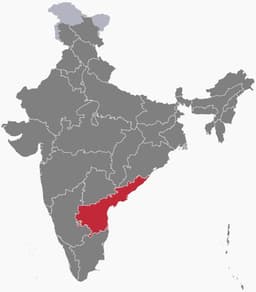
N. Chandrababu Naidu
Politician · Modern
60.5Total
Basic Information
Born
1944
1950
Died
—
—
Era
Modern
Modern
Nationality
Algeria
India
Occupation
Politician
Politician
Civilization
Middle Eastern
Indian
Score Comparison
Military (10%)
15.3
53.5
Political (20%)
40.8
72.0
Influence (20%)
48.6
61.0
Legacy (20%)
39.2
49.2
Leadership (15%)
51.9
72.0
Strategy (15%)
42.6
60.0
TOTAL
41.6
60.5
Ali Benflis — Complete Timeline
2000 AD
Appointed Prime Minister of AlgeriaPolitical Action◆ Major
Ali Benflis was appointed Prime Minister of Algeria on August 27, 2000, by President Abdelaziz Bouteflika, succeeding Ahmed Benbitour. His appointment marked the beginning of a close political alliance with Bouteflika, as he implemented the president's policies.
AppointmentGovernmentBouteflika
Impact: national
Implemented the Civil Concord lawPolitical Action◆ Major
Benflis's government implemented the Civil Concord law in 2000, offering amnesty to Islamist fighters who surrendered, as part of Bouteflika's national reconciliation policy. The law helped reduce violence in the Algerian Civil War, leading to the surrender of thousands of insurgents.
Civil ConcordNational ReconciliationAlgerian Civil War
Impact: nationalconstructive
2003 AD
Resigned as Prime MinisterPolitical Action◆ Major
Benflis resigned as Prime Minister on May 5, 2003, after nearly three years in office. His resignation followed a power struggle with President Bouteflika, who sought to consolidate control, leading to Benflis's replacement by Ahmed Ouyahia.
ResignationGovernment ChangePower Struggle
Impact: national
2004 AD
Ran for president as an opposition candidatePolitical Action◆ Major
Benflis ran as the main opposition candidate against President Bouteflika in the 2004 presidential election, after breaking with the FLN. He campaigned on a platform of political reform and anti-corruption, but lost to Bouteflika, who won with 85% of the vote amid allegations of fraud.
Presidential ElectionOppositionBouteflika
Impact: national
2019 AD
Arrested and imprisoned on corruption chargesPolitical Action◆ Major
Benflis was arrested in June 2019 on corruption charges related to his time as prime minister, as part of a crackdown on former officials after Bouteflika's resignation. He was sentenced to five years in prison in 2020, though the charges were widely seen as politically motivated.
ArrestCorruptionPolitical Repression
Impact: nationaltragic
N. Chandrababu Naidu — Complete Timeline
1999 AD
Launched the 'Vision 2020' Development PlanReform◆ Major
Naidu unveiled 'Vision 2020', a comprehensive plan to transform Andhra Pradesh into a developed state by 2020. The plan focused on IT, biotechnology, infrastructure, and education, attracting global investment.
DevelopmentVision 2020Andhra Pradesh
Impact: regionalconstructive
Became Chief Minister of Andhra Pradesh (first term)Political Action◆ Major
Naidu became Chief Minister of Andhra Pradesh after the death of N. T. Rama Rao. He focused on economic reforms, IT development, and infrastructure, transforming Hyderabad into a global tech hub.
Andhra PradeshIT RevolutionHyderabad
Impact: nationalconstructive
2004 AD
Lost 2004 Assembly Election to Y. S. Rajasekhara ReddyPolitical Action◆ Major
Naidu's Telugu Desam Party was defeated by the Congress-led coalition in the Andhra Pradesh assembly elections. The loss ended his nine-year tenure as Chief Minister, attributed to rural discontent and anti-incumbency.
ElectionDefeatAndhra Pradesh
Impact: regional
2014 AD
Returned as Chief Minister of Andhra Pradesh (second term)Political Action◆ Major
Naidu led the TDP to victory in the 2014 Andhra Pradesh elections after the state's bifurcation. He became the first CM of the residual state, focusing on rebuilding Amaravati as the new capital.
Andhra PradeshBifurcationAmaravati
Impact: regionalconstructive
2015 AD
Launched the 'Amaravati' Capital City ProjectReform◆ Major
Naidu initiated the construction of Amaravati as the new capital of Andhra Pradesh, designed as a world-class greenfield city. The project involved land pooling and attracted international investment, but faced delays and cost overruns.
AmaravatiCapital CityInfrastructure
Impact: regionalconstructive
2023 AD
Arrested in Corruption Case (Skill Development Scam)Political Action◆ Major
Naidu was arrested by the Andhra Pradesh CID in connection with the Skill Development Corporation scam, alleging misappropriation of funds. He was remanded to judicial custody, marking a major political setback.
CorruptionArrestAndhra Pradesh
Impact: regionaldestructive
This comparison has not been analyzed yet.
One-time AI generation (~1 minute). Scores and timeline are already available below.
Rankings
🥇
N. Chandrababu NaiduLeader
Mil: 53.5Pol: 72.0Inf: 61.0
60.5
🥈
Ali Benflis
Mil: 15.3Pol: 40.8Inf: 48.6
41.6
+18.9 behind
How This Comparison Works
Algorithm
Each figure is scored on 6 dimensions (0—100 scale) based on structured historical data: Military (10%), Political (20%), Influence (20%), Legacy (20%), Leadership (15%), Strategy (15%). The weighted total produces the final ranking.
Data Sources
Scores are computed from structured sub-indicators in the database. Scale factors adjust for era (Ancient ×0.85, Modern ×1.0) and civilization size (Eastern ×1.05, Other ×0.80) to account for differences in population and military scale.
Maximum 3 Figures
Comparisons are limited to 2—3 figures to ensure readability and statistical meaningfulness.
Error Margins
±5 points per dimension — Sub-scores are derived from historical records with inherent uncertainty. Two figures within 5 points on a dimension should be considered roughly equivalent in that area.
Total Score Accuracy
±3 points overall — The weighted combination of 6 dimensions produces a total score with approximately ±3 points of uncertainty. Differences of less than 3 points are not statistically significant— the figures are effectively tied.
Known Limitations
- Historical records are incomplete and uneven across civilizations
- Figures from oral-tradition societies may be underrepresented
- Occupation labels can misclassify multi-role figures
- Scores measure capability and impact, not moral character
- Quantitative scoring is a comparison tool, not absolute truth
Capability Radar
Military (10%) — Battles & Warfare
Battles
19
43
Win Rate
22
46
Expansion
26
47
Political (20%) — Governance & Reform
Reform
30
75
Diplomacy
35
70
Economy
30
80
Influence (20%) — Cultural & Global Reach
Cultural
15
40
Global
15
55
Legacy (20%) — Historical Impact
Historical
20
50
Longevity
15
45
Leadership (15%) — Power & Stability
Tenure
25
65
Stability
20
55
Strategy (15%) — Tactics & Innovation
Strategy
30
55
Tactics
32
58
Reform
40
61
Similar Comparisons
Comments & Discussion
No comments yet. Be the first to share your thoughts!