Loading...
Ali Adil Shah I vs Jigme Singye Wangchuck
Jigme Singye Wangchuck leads by 12.4 pts · 2 figures compared
…
Ali Adil Shah I
Emperor · Modern
51.0Total

Jigme Singye Wangchuck
Emperor · Modern
63.4Total
Basic Information
Born
1558
1955
Died
1580
—
Era
Modern
Modern
Nationality
India
Bhutan
Occupation
Emperor
Emperor
Civilization
Indian
Eastern
Score Comparison
Military (10%)
20.0
52.8
Political (20%)
68.0
78.0
Influence (20%)
51.0
56.7
Legacy (20%)
40.8
54.0
Leadership (15%)
66.0
81.7
Strategy (15%)
60.0
65.0
TOTAL
51.0
63.4
Ali Adil Shah I — Complete Timeline
1565 AD
Battle of TalikotaWar
Ali Adil Shah I participated in the Battle of Talikota as a key commander of the Deccan sultanates' coalition. The coalition decisively defeated the Vijayanagara Empire, leading to the sacking of Vijayanagara city and the empire's collapse.
BattleVijayanagaraDeccan Coalition
Impact: regional
Alliance with VijayanagaraPolitical Action◆ Major
Ali Adil Shah I formed a temporary alliance with the Vijayanagara Empire against the other Deccan sultanates. This unusual alliance aimed to counterbalance the power of Ahmadnagar and Golconda but was short-lived due to mutual distrust.
AllianceVijayanagaraDeccan Politics
Impact: regional
1570 AD
Construction of Ibrahim RauzaCultural◆ Major
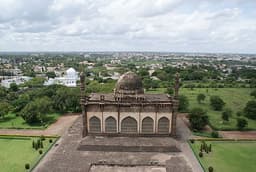
Ali Adil Shah I commissioned the construction of the Ibrahim Rauza, a mausoleum complex in Bijapur. The structure is considered a masterpiece of Deccan architecture and reflects the cultural synthesis of the Adil Shahi period.
ArchitectureBijapurCultural Patronage
Impact: regionalconstructive
1575 AD
Conflict with AhmadnagarWar
Ali Adil Shah I engaged in military conflict with Ahmadnagar over control of the former Vijayanagara territories. The war weakened both sultanates and allowed the Mughals to later expand into the Deccan.
WarAhmadnagarDeccan Conflicts
Impact: regionaldestructive
Jigme Singye Wangchuck — Complete Timeline
1972 AD
Introduced Gross National Happiness as a development philosophyCultural
King Jigme Singye Wangchuck declared that Gross National Happiness (GNH) was more important than Gross Domestic Product (GDP). This philosophy prioritized well-being, cultural preservation, and environmental protection over material growth, shaping Bhutan's unique development path.
GNHDevelopment philosophyBhutan
Impact: globalconstructive
1974 AD
Crowned as the Fourth Dragon King of BhutanPolitical Action◆ Major
Jigme Singye Wangchuck was formally crowned as the Druk Gyalpo (Dragon King) of Bhutan at the age of 19. His coronation marked the beginning of a reign focused on modernization while preserving Bhutanese culture and traditions.
CoronationMonarchyBhutan
Impact: nationalconstructive
2006 AD
Abdicated the throne in favor of his sonPolitical Action◆ Major
King Jigme Singye Wangchuck announced his abdication, handing the throne to his son, Jigme Khesar Namgyel Wangchuck. The move was part of his plan to ensure a smooth transition to democracy and allow his son to lead the country through the new political system.
AbdicationSuccessionDemocracy
Impact: nationalconstructive
2008 AD
Introduced a constitutional monarchy and democratic reformsReform
King Jigme Singye Wangchuck voluntarily ceded absolute power and oversaw the drafting of Bhutan's first constitution. He transformed the country into a constitutional monarchy, with the first democratic elections held in 2008, ensuring a peaceful transition to democracy.
DemocracyConstitutionMonarchy
Impact: nationalconstructive
Expert Analysis
Origins
Ali Adil Shah I (1558–1580) was born into the Adil Shahi dynasty of the Bijapur Sultanate in the Deccan region of India. His father, Ibrahim Adil Shah I, ruled before him. Ali received a princely education in statecraft and military arts, but little is documented about his early years. He ascended the throne around age 20, inheriting a kingdom engaged in constant rivalry with neighboring sultanates (Ahmadnagar, Golconda, Bidar) and the Vijayanagara Empire.
Jigme Singye Wangchuck (born 1955) was the fourth Dragon King of Bhutan. He was born in Dechenchholing Palace to King Jigme Dorji Wangchuck and Queen Ashi Kesang Choden. Educated in Bhutan and the United Kingdom (attended Heatherdown School and later studied at Oxford briefly), he was groomed for kingship from a young age. He became king at 17 after his father's sudden death in 1972.
Rise to Power
Ali Adil Shah I became sultan in 1558 after his father's death. He quickly sought to expand Bijapur's influence. His most notable early move was forming a temporary alliance with the Vijayanagara Empire against the other Deccan sultanates. This alliance, unusual given the historical Hindu-Muslim conflicts, allowed him to secure his borders and focus on internal consolidation. However, the alliance was short-lived; by 1565, Ali joined the Deccan sultanates coalition against Vijayanagara at the Battle of Talikota, which resulted in the defeat and sack of Vijayanagara. The victory gave Bijapur control over significant territories, including parts of the Vijayanagara empire.
Jigme Singye Wangchuck became king at 17 after his father's death. His early reign focused on continuing modernization while preserving Bhutanese culture. He gradually consolidated power, but his defining moment came in the late 1990s when he initiated a series of democratic reforms. He voluntarily ceded absolute power, introducing a constitutional monarchy and overseeing the drafting of Bhutan's first constitution. In 2006, he abdicated in favor of his son, Jigme Khesar Namgyel Wangchuck, ensuring a peaceful transition.
Leadership & Governance
Ali Adil Shah I's leadership was characterized by military expansion and patronage of architecture. He waged wars against Ahmadnagar over control of former Vijayanagara territories, which weakened both sultanates. His governance focused on consolidating conquered lands and promoting Deccan culture. He commissioned the Ibrahim Rauza, a mausoleum complex in Bijapur, considered a masterpiece of Deccan architecture. However, his rule lacked institutional reforms; the sultanate remained an autocracy dependent on his personal authority.
Jigme Singye Wangchuck pioneered a unique development philosophy: Gross National Happiness (GNH), which prioritizes well-being over economic growth. He implemented policies that balanced modernization with cultural preservation, such as limiting tourism and promoting environmental conservation. His democratic reforms transformed Bhutan from an absolute monarchy into a constitutional monarchy with a parliamentary system. The first general elections were held in 2008, after his abdication. His leadership scored 81.7 in leadership, compared to Ali's 66.0.
Triumph & Tragedy
Ali Adil Shah I's greatest triumph was his participation in the Battle of Talikota (1565), which led to the collapse of the Vijayanagara Empire and the expansion of Bijapur's territory. His patronage of architecture, particularly the Ibrahim Rauza, left a cultural landmark. However, his conflicts with Ahmadnagar drained resources and ultimately weakened the Deccan sultanates, contributing to their later vulnerability to the Mughals. His alliance with Vijayanagara was pragmatic but duplicitous, earning him distrust.
Jigme Singye Wangchuck's greatest triumph was the peaceful transition to democracy, ensuring Bhutan's stability and international reputation. The introduction of GNH brought global attention and influenced development discourse. His abdication in 2006 was a historic act of selfless leadership. However, his reign saw the forced expulsion of ethnic Nepalis (Lhotshampas) in the 1990s, a human rights issue that tarnished his legacy. The policy of 'One Nation, One People' led to tens of thousands fleeing to Nepal, creating a refugee crisis.
Character & Destiny
Ali Adil Shah I was a pragmatic and ambitious ruler, willing to form temporary alliances with Hindu powers to achieve his goals. His decision to join the coalition against Vijayanagara after allying with them shows a calculating nature. He was also a patron of culture, reflecting a refined sensibility. However, his military focus led to overextension, and his kingdom declined after his death.
Jigme Singye Wangchuck demonstrated visionary and selfless character. His voluntary abdication and introduction of democracy are rare in monarchical history. He prioritized long-term stability over personal power. However, his handling of the ethnic Nepali issue reveals a less progressive side, prioritizing national unity over minority rights.
Legacy
Ali Adil Shah I's legacy is mixed: he contributed to the destruction of Vijayanagara, a major Hindu empire, but also left architectural gems. His reign marked a high point for Bijapur, but the sultanate declined soon after. His military score of 20.0 reflects limited strategic success beyond Talikota. His total score is 51.0.
Jigme Singye Wangchuck's legacy is transformative: he is credited with introducing GNH, which continues to guide Bhutan's policies. His democratic reforms set a precedent for monarchies in the region. Bhutan remains a stable, constitutional monarchy with high happiness indices. His total score is 63.4, reflecting greater overall impact.
Conclusion
Jigme Singye Wangchuck had a greater and more positive impact than Ali Adil Shah I. Wangchuck's scores in leadership (81.7 vs 66.0), political (78.0 vs 68.0), and legacy (54.0 vs 40.8) reflect his lasting contributions to governance and well-being. Ali Adil Shah I's military score of 20.0 and legacy score of 40.8 indicate limited strategic success and cultural impact that did not endure. While Ali participated in a historically significant battle, his reign lacked the institutional reforms and visionary philosophy that define Wangchuck's rule. Wangchuck's voluntary abdication and introduction of GNH set a global example, securing his place as a transformative leader.
Rankings
🥇
Jigme Singye WangchuckLeader
Mil: 52.8Pol: 78.0Inf: 56.7
63.4
🥈
Ali Adil Shah I
Mil: 20.0Pol: 68.0Inf: 51.0
51.0
+12.4 behind
How This Comparison Works
Algorithm
Each figure is scored on 6 dimensions (0—100 scale) based on structured historical data: Military (10%), Political (20%), Influence (20%), Legacy (20%), Leadership (15%), Strategy (15%). The weighted total produces the final ranking.
Data Sources
Scores are computed from structured sub-indicators in the database. Scale factors adjust for era (Ancient ×0.85, Modern ×1.0) and civilization size (Eastern ×1.05, Other ×0.80) to account for differences in population and military scale.
Maximum 3 Figures
Comparisons are limited to 2—3 figures to ensure readability and statistical meaningfulness.
Error Margins
±5 points per dimension — Sub-scores are derived from historical records with inherent uncertainty. Two figures within 5 points on a dimension should be considered roughly equivalent in that area.
Total Score Accuracy
±3 points overall — The weighted combination of 6 dimensions produces a total score with approximately ±3 points of uncertainty. Differences of less than 3 points are not statistically significant— the figures are effectively tied.
Known Limitations
- Historical records are incomplete and uneven across civilizations
- Figures from oral-tradition societies may be underrepresented
- Occupation labels can misclassify multi-role figures
- Scores measure capability and impact, not moral character
- Quantitative scoring is a comparison tool, not absolute truth
Capability Radar
Military (10%) — Battles & Warfare
Battles
45
50
Win Rate
40
57
Expansion
40
58
Political (20%) — Governance & Reform
Reform
35
80
Diplomacy
65
75
Economy
50
60
Influence (20%) — Cultural & Global Reach
Cultural
30
70
Global
15
55
Legacy (20%) — Historical Impact
Historical
35
65
Longevity
20
60
Leadership (15%) — Power & Stability
Tenure
60
85
Stability
55
90
Strategy (15%) — Tactics & Innovation
Strategy
55
60
Tactics
50
62
Reform
30
69
Similar Comparisons
Comments & Discussion
No comments yet. Be the first to share your thoughts!