Loading...
This comparison has not been analyzed yet.
One-time AI generation (~1 minute). Scores and timeline are already available below.
Algirdas Brazauskas vs Gotabaya Rajapaksa
Algirdas Brazauskas leads by 8.3 pts · 2 figures compared
…
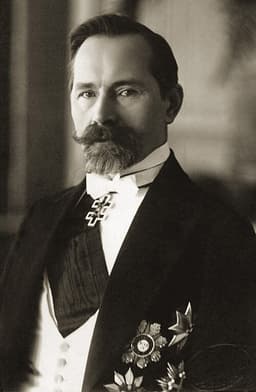
Algirdas Brazauskas
Politician · Modern
56.4Total

Gotabaya Rajapaksa
Politician · Modern
48.1Total
Basic Information
Born
1932
1949
Died
—
—
Era
Modern
Modern
Nationality
Lithuania
Sri Lanka
Occupation
Politician
Politician
Civilization
Western
Indian
Score Comparison
Military (10%)
48.9
55.0
Political (20%)
70.0
35.1
Influence (20%)
53.3
50.2
Legacy (20%)
46.7
40.8
Leadership (15%)
78.0
62.2
Strategy (15%)
42.7
52.5
TOTAL
56.4
48.1
Algirdas Brazauskas — Complete Timeline
1993 AD
Introduction of the Lithuanian litasReform◆ Major
Brazauskas oversaw the introduction of the Lithuanian litas as the national currency in June 1993, replacing the temporary talonas. The move was part of broader economic reforms to stabilize the economy and establish monetary independence from Russia.
Lithuanian PoliticsCurrency ReformEconomic Independence
Impact: nationalconstructive
Election as President of LithuaniaPolitical Action
Algirdas Brazauskas was elected President of Lithuania in February 1993, winning 60% of the vote. He was the first president of independent Lithuania after the dissolution of the Soviet Union, having previously served as the last leader of the Lithuanian Communist Party.
Lithuanian PoliticsFirst PresidentPost-Soviet
Impact: national
Lithuania's withdrawal of Soviet troopsPolitical Action◆ Major
Brazauskas negotiated the withdrawal of the last Russian troops from Lithuania in August 1993, completing the country's full independence. The agreement was reached after months of talks, and the troops left by the end of the year.
Lithuanian PoliticsIndependenceTroop Withdrawal
Impact: nationalconstructive
Gotabaya Rajapaksa — Complete Timeline
2005 AD
Defense Secretary during Sri Lankan Civil WarWar
As Defense Secretary under President Mahinda Rajapaksa, Gotabaya Rajapaksa oversaw the military campaign against the Liberation Tigers of Tamil Eelam (LTTE). The war ended in 2009 with the defeat of the LTTE, but was marked by allegations of civilian casualties and human rights abuses.
Civil WarLTTEMilitary
Impact: nationaldestructive
2019 AD
Election as President of Sri LankaPolitical Action◆ Major
Rajapaksa won the presidential election with a landslide victory, securing 52.25% of the vote. His campaign focused on national security and economic development, appealing to Sinhalese Buddhist nationalism.
ElectionPresidencySri Lanka
Impact: national
2022 AD
Economic Crisis and DefaultPolitical Action
Under Rajapaksa's presidency, Sri Lanka faced its worst economic crisis since independence, with shortages of food, fuel, and medicine. The government defaulted on its foreign debt for the first time in history, leading to widespread protests.
Economic CrisisDefaultProtests
Impact: nationaltragic
Resignation and Flight from Sri LankaPolitical Action◆ Major
Following massive protests and the occupation of the presidential palace, Rajapaksa fled to the Maldives and then Singapore. He resigned as president via email, ending his presidency in disgrace.
ResignationProtestExile
Impact: nationaltragic
This comparison has not been analyzed yet.
One-time AI generation (~1 minute). Scores and timeline are already available below.
Rankings
🥇
Algirdas BrazauskasLeader
Mil: 48.9Pol: 70.0Inf: 53.3
56.4
🥈
Gotabaya Rajapaksa
Mil: 55.0Pol: 35.1Inf: 50.2
48.1
+8.3 behind
How This Comparison Works
Algorithm
Each figure is scored on 6 dimensions (0—100 scale) based on structured historical data: Military (10%), Political (20%), Influence (20%), Legacy (20%), Leadership (15%), Strategy (15%). The weighted total produces the final ranking.
Data Sources
Scores are computed from structured sub-indicators in the database. Scale factors adjust for era (Ancient ×0.85, Modern ×1.0) and civilization size (Eastern ×1.05, Other ×0.80) to account for differences in population and military scale.
Maximum 3 Figures
Comparisons are limited to 2—3 figures to ensure readability and statistical meaningfulness.
Error Margins
±5 points per dimension — Sub-scores are derived from historical records with inherent uncertainty. Two figures within 5 points on a dimension should be considered roughly equivalent in that area.
Total Score Accuracy
±3 points overall — The weighted combination of 6 dimensions produces a total score with approximately ±3 points of uncertainty. Differences of less than 3 points are not statistically significant— the figures are effectively tied.
Known Limitations
- Historical records are incomplete and uneven across civilizations
- Figures from oral-tradition societies may be underrepresented
- Occupation labels can misclassify multi-role figures
- Scores measure capability and impact, not moral character
- Quantitative scoring is a comparison tool, not absolute truth
Capability Radar
Military (10%) — Battles & Warfare
Battles
26
60
Win Rate
33
65
Expansion
38
10
Political (20%) — Governance & Reform
Reform
60
30
Diplomacy
70
25
Economy
55
20
Influence (20%) — Cultural & Global Reach
Cultural
30
20
Global
30
20
Legacy (20%) — Historical Impact
Historical
45
30
Longevity
35
15
Leadership (15%) — Power & Stability
Tenure
65
45
Stability
60
15
Strategy (15%) — Tactics & Innovation
Strategy
40
70
Tactics
39
55
Reform
44
75
Similar Comparisons
Comments & Discussion
No comments yet. Be the first to share your thoughts!