Loading...
Alfredo Stroessner vs Le Kha Phieu
Alfredo Stroessner leads by 8.6 pts · 2 figures compared
…
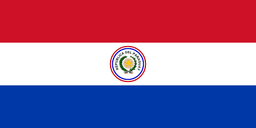
Alfredo Stroessner
General · Modern
50.8Total

Le Kha Phieu
General · Modern
42.2Total
Basic Information
Born
1912
1931
Died
2006
—
Era
Modern
Modern
Nationality
Paraguay
Vietnam
Occupation
General
General
Civilization
Western
Eastern
Score Comparison
Military (10%)
25.9
22.6
Political (20%)
48.0
37.9
Influence (20%)
54.9
49.4
Legacy (20%)
46.7
38.3
Leadership (15%)
78.0
57.6
Strategy (15%)
38.6
36.8
TOTAL
50.8
42.2
Alfredo Stroessner — Complete Timeline
1954 AD
1954 Coup and Rise to PowerPolitical Action◆ Major
General Alfredo Stroessner, with support from the military and the Colorado Party, led a coup d'
Coup d'étatCold WarDictatorship
Impact: nationaldestructive
Consolidation of Dictatorship and Repression (1954-1989)Political Action◆ Major
Stroessner established a repressive regime characterized by the suppression of political opposition, torture, and human rights abuses. He ruled under a state of siege for most of his tenure, using the military and police to crush dissent. His regime was marked by corruption and the concentration of power in the Colorado Party.
RepressionHuman RightsAuthoritarianism
Impact: nationaldestructive
1973 AD
Economic Development and Itaipu DamOther◆ Major
Stroessner's regime signed the Treaty of Itaipu with Brazil, leading to the construction of the Itaipu Dam, one of the world's largest hydroelectric plants. The project brought significant economic development and foreign investment to Paraguay, but also increased dependency on Brazil and was marred by corruption.
Itaipu DamEconomic DevelopmentHydroelectric
Impact: regionalconstructive
1989 AD
Overthrow and Exile (1989)Political Action◆ Major
Stroessner was overthrown in a coup led by his son-in-law, General Andr
CoupExileTransition to Democracy
Impact: nationalconstructive
Le Kha Phieu — Complete Timeline
1996 AD
Oversaw the 8th National Party CongressPolitical Action◆ Major
Le Kha Phieu played a key role in organizing the 8th National Party Congress, which set the direction for Vietnam's economic reforms (Doi Moi) and foreign policy. The congress reaffirmed the party's commitment to market-oriented reforms.
Doi MoiParty CongressEconomic Reform
Impact: nationalconstructive
1997 AD
Elected as General Secretary of the Communist Party of VietnamPolitical Action◆ Major
Le Kha Phieu was elected as General Secretary of the Communist Party of Vietnam, succeeding Do Muoi. His election marked a shift in leadership during a period of economic reform and normalization of relations with the US.
Communist PartyLeadershipVietnam
Impact: national
2001 AD
Removed from Party LeadershipPolitical Action◆ Major
Le Kha Phieu was removed as General Secretary at the 9th National Party Congress, replaced by Nong Duc Manh. His removal was attributed to internal party disputes and perceived failures in economic management.
Political PurgeLeadership ChangeParty Dispute
Impact: nationaltragic
2006 AD
Expelled from the Communist PartyPolitical Action◆ Major
Le Kha Phieu was expelled from the Communist Party of Vietnam for alleged violations of party discipline. The expulsion marked a dramatic fall from grace for the former top leader, though he remained a controversial figure.
ExpulsionParty DisciplineDisgrace
Impact: nationaltragic
Expert Analysis
Origins
Alfredo Stroessner was born on November 3, 1912, in Encarnación, Paraguay, to a German immigrant father and a Paraguayan mother. He entered the military academy at age 16, graduating as an artillery officer. His early career was marked by participation in the Chaco War (1932-1935) against Bolivia, where he gained combat experience and rapid promotions. By 1948, he became a general, leveraging his military connections and the Colorado Party.
Le Kha Phieu was born on December 27, 1931, in Thanh Hoa Province, French Indochina (now Vietnam). He joined the Viet Minh resistance against French colonial rule at age 18, serving as a soldier and political officer. He received military training in China and rose through the ranks of the People's Army of Vietnam during the Vietnam War. His background was firmly rooted in communist ideology and party loyalty, with limited exposure outside military-political affairs.
Rise to Power
Stroessner orchestrated a coup on May 4, 1954, overthrowing President Federico Chávez with support from the military and Colorado Party. He assumed the presidency in a controlled election later that year, consolidating power by eliminating rivals within the military and party. His rise was swift, capitalizing on political instability and his reputation as a capable officer. By 1958, he had suppressed internal opposition and established a single-party state.
Le Kha Phieu's ascent was more gradual and bureaucratic. He became a member of the Communist Party Central Committee in 1976, and later held key military political posts. In 1997, he was elected General Secretary of the Communist Party of Vietnam, succeeding Do Muoi. His rise was aided by his reputation as a hardliner and his role in managing party discipline. However, his leadership was contested from the start, with factions within the party viewing him as a compromise candidate.
Leadership & Governance
Stroessner ruled Paraguay with an iron fist from 1954 to 1989. He maintained power through a combination of military support, patronage, and systematic repression. His regime employed torture, disappearances, and censorship to silence dissent. Economically, he pursued large infrastructure projects, most notably the Itaipu Dam with Brazil, which generated significant revenue but also massive debt and corruption. His governance scored 78.0 in leadership but only 25.9 in military, reflecting his reliance on political manipulation rather than martial skill.
Le Kha Phieu led Vietnam during a period of economic reform (Doi Moi) but struggled with internal party conflicts. He attempted to balance market liberalization with communist orthodoxy, but his leadership was indecisive. He oversaw the 8th National Party Congress in 1996, which reaffirmed Doi Moi, but failed to implement significant political reforms. His leadership score of 57.6 reflects a cautious, bureaucratic style that lacked the assertiveness of his predecessor or successor. His political score of 37.9 indicates limited effectiveness in navigating party politics.
Triumph & Tragedy
Stroessner's greatest triumph was the construction of Itaipu Dam, completed in 1984, which made Paraguay a major energy exporter and brought economic growth. However, the benefits were unevenly distributed, and the regime's corruption and human rights abuses were staggering. His downfall came in 1989 when his son-in-law, General Andrés Rodríguez, staged a coup. Stroessner fled to Brazil, where he died in exile in 2006. His legacy is marred by the suffering of thousands of political prisoners and the suppression of democratic institutions.
Le Kha Phieu's tenure saw Vietnam's continued economic growth, but his greatest failure was his inability to maintain party unity. He was removed from the General Secretary position in 2001 at the 9th National Congress, replaced by Nong Duc Manh. Later, in 2006, he was expelled from the Communist Party for alleged discipline violations, a rare public disgrace for a former leader. His achievements were overshadowed by internal strife and lack of visionary policy.
Character & Destiny
Stroessner was calculating and ruthless, with a focus on personal power. He maintained stability through co-optation and fear, avoiding direct military confrontation. His character was shaped by a desire for control, leading to a 35-year rule that ended only when his inner circle turned against him. Historical assessments describe him as a classic caudillo, blending authoritarianism with populist gestures.
Le Kha Phieu was seen as a loyal party soldier but lacking charisma or strategic vision. He was a product of the party machine, unable to break free from factional constraints. His destiny was to be a placeholder leader, removed when he no longer served the interests of the dominant faction. His expulsion highlighted the ruthless nature of Vietnamese communist politics.
Legacy
Stroessner's legacy is that of a long-lasting dictatorship that left Paraguay with a weak democratic culture and deep social inequalities. The Itaipu Dam remains a symbol of both progress and corruption. His influence score of 54.9 reflects the lasting impact of his regime on Paraguay's political landscape, though it is largely negative.
Le Kha Phieu's legacy is minimal. He is remembered as a transitional figure who failed to leave a mark on Vietnam's development. His legacy score of 38.3 indicates that his contributions were overshadowed by the more dynamic leaders around him. Vietnam's continued economic rise is attributed to the reforms of his predecessors, not his own efforts.
Conclusion
Alfredo Stroessner had a greater impact than Le Kha Phieu, as reflected in his higher total score of 50.8 versus 42.2. Stroessner's 35-year rule fundamentally shaped Paraguay's political and economic trajectory, for better or worse. Le Kha Phieu, in contrast, was a brief and ineffective leader whose removal and expulsion underscore his failure to consolidate power or drive significant change. While Stroessner's legacy is negative, his impact is undeniable; Le Kha Phieu's is forgettable. Thus, Stroessner emerges as the more consequential figure.
Rankings
🥇
Alfredo StroessnerLeader
Mil: 25.9Pol: 48.0Inf: 54.9
50.8
🥈
Le Kha Phieu
Mil: 22.6Pol: 37.9Inf: 49.4
42.2
+8.6 behind
How This Comparison Works
Algorithm
Each figure is scored on 6 dimensions (0—100 scale) based on structured historical data: Military (10%), Political (20%), Influence (20%), Legacy (20%), Leadership (15%), Strategy (15%). The weighted total produces the final ranking.
Data Sources
Scores are computed from structured sub-indicators in the database. Scale factors adjust for era (Ancient ×0.85, Modern ×1.0) and civilization size (Eastern ×1.05, Other ×0.80) to account for differences in population and military scale.
Maximum 3 Figures
Comparisons are limited to 2—3 figures to ensure readability and statistical meaningfulness.
Error Margins
±5 points per dimension — Sub-scores are derived from historical records with inherent uncertainty. Two figures within 5 points on a dimension should be considered roughly equivalent in that area.
Total Score Accuracy
±3 points overall — The weighted combination of 6 dimensions produces a total score with approximately ±3 points of uncertainty. Differences of less than 3 points are not statistically significant— the figures are effectively tied.
Known Limitations
- Historical records are incomplete and uneven across civilizations
- Figures from oral-tradition societies may be underrepresented
- Occupation labels can misclassify multi-role figures
- Scores measure capability and impact, not moral character
- Quantitative scoring is a comparison tool, not absolute truth
Capability Radar
Military (10%) — Battles & Warfare
Battles
10
10
Win Rate
10
10
Expansion
10
5
Political (20%) — Governance & Reform
Reform
30
20
Diplomacy
40
30
Economy
35
20
Influence (20%) — Cultural & Global Reach
Cultural
20
15
Global
30
10
Legacy (20%) — Historical Impact
Historical
40
20
Longevity
30
10
Leadership (15%) — Power & Stability
Tenure
85
40
Stability
60
20
Strategy (15%) — Tactics & Innovation
Strategy
20
10
Tactics
15
10
Reform
25
10
Similar Comparisons
Comments & Discussion
No comments yet. Be the first to share your thoughts!