Loading...
Alfredo Stroessner vs Claude Victor-Perrin
Claude Victor-Perrin leads by 4.0 pts · 2 figures compared
…
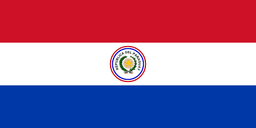
Alfredo Stroessner
General · Modern
50.8Total

Claude Victor-Perrin
General · Modern
54.8Total
Basic Information
Born
1912
1764
Died
2006
1841
Era
Modern
Modern
Nationality
Paraguay
France
Occupation
General
General
Civilization
Western
Western
Score Comparison
Military (10%)
25.9
67.5
Political (20%)
48.0
48.0
Influence (20%)
54.9
54.9
Legacy (20%)
46.7
48.3
Leadership (15%)
78.0
62.0
Strategy (15%)
38.6
57.5
TOTAL
50.8
54.8
Alfredo Stroessner — Complete Timeline
1954 AD
1954 Coup and Rise to PowerPolitical Action◆ Major
General Alfredo Stroessner, with support from the military and the Colorado Party, led a coup d'
Coup d'étatCold WarDictatorship
Impact: nationaldestructive
Consolidation of Dictatorship and Repression (1954-1989)Political Action◆ Major
Stroessner established a repressive regime characterized by the suppression of political opposition, torture, and human rights abuses. He ruled under a state of siege for most of his tenure, using the military and police to crush dissent. His regime was marked by corruption and the concentration of power in the Colorado Party.
RepressionHuman RightsAuthoritarianism
Impact: nationaldestructive
1973 AD
Economic Development and Itaipu DamOther◆ Major
Stroessner's regime signed the Treaty of Itaipu with Brazil, leading to the construction of the Itaipu Dam, one of the world's largest hydroelectric plants. The project brought significant economic development and foreign investment to Paraguay, but also increased dependency on Brazil and was marred by corruption.
Itaipu DamEconomic DevelopmentHydroelectric
Impact: regionalconstructive
1989 AD
Overthrow and Exile (1989)Political Action◆ Major
Stroessner was overthrown in a coup led by his son-in-law, General Andr
CoupExileTransition to Democracy
Impact: nationalconstructive
Claude Victor-Perrin — Complete Timeline
1806 AD
Battle of Jena-AuerstedtWar◆ Major
Victor commanded a division at Jena. His forces captured the Prussian heights and pursued the retreating army, contributing to the decisive French victory.
Napoleonic WarsBattleDivision Command
Impact: regional
1812 AD
Battle of the BerezinaWar◆ Major
Victor commanded the IX Corps at the Berezina. His corps fought a rearguard action against the Russians, allowing the main army to cross the river, but suffered heavy losses.
Napoleonic WarsRetreatBerezina
Impact: regional
1813 AD
Battle of DresdenWar◆ Major
Victor commanded a corps at Dresden. His forces held the French left flank against Allied attacks, contributing to Napoleon's tactical victory.
Napoleonic WarsBattleCorps Command
Impact: regional
Battle of LeipzigWar◆ Major
Victor commanded a corps at Leipzig. His forces were overwhelmed by Allied numbers, and he was wounded while trying to hold the French position.
Napoleonic WarsBattleDefeatWounded
Impact: global
1814 AD
Defection to the BourbonsPolitical Action◆ Major
Victor defected to the Bourbon monarchy after Napoleon's abdication. He was appointed a peer of France and served under Louis XVIII.
BetrayalBourbon RestorationPeerage
Impact: national
Expert Analysis
Origins
Alfredo Stroessner was born on November 3, 1912, in Encarnación, Paraguay. His father was a German immigrant brewer, and his mother was a Paraguayan of Spanish descent. He entered the military academy at age 16, graduating as an artillery officer. His early career was marked by participation in the Chaco War (1932-1935) against Bolivia, where he served as a lieutenant and earned a reputation for competence.
Claude Victor-Perrin was born on December 7, 1764, in Lamarche, France, into a family of modest means. He enlisted in the French army at age 17 and rose through the ranks during the Revolutionary Wars. His early service included campaigns in Italy and Egypt, where he distinguished himself at the Battle of Marengo (1800). He was promoted to general of division in 1802 and received the title of Marshal of the Empire in 1807 after the Battle of Friedland.
Rise to Power
Stroessner's rise began with the 1954 coup against President Federico Chávez. On May 4, 1954, he led a military uprising with support from the Colorado Party and the armed forces. He assumed the presidency and quickly consolidated power, eliminating rivals and purging the military. By 1958, he had established a one-party state under the Colorado Party, with himself as the unchallenged leader.
Victor-Perrin's rise was through the Napoleonic Wars. His key turning point came at the Battle of Jena-Auerstedt (1806), where he commanded a division and captured the Prussian heights, contributing to the decisive French victory. Napoleon promoted him to Marshal in 1807. His reputation grew through campaigns in Spain (1808-1812) and Russia (1812), where he led the IX Corps at the Berezina crossing.
Leadership & Governance
Stroessner's leadership was authoritarian and repressive. He maintained power through a network of patronage, corruption, and secret police. His regime suppressed opposition with torture, disappearances, and exile. Economically, he pursued development projects like the Itaipu Dam (signed 1973), which turned Paraguay into a major energy exporter. However, the benefits were unevenly distributed, and political dissent was crushed. His governance scored 48.0 in political acumen, reflecting his ability to manipulate institutions.
Victor-Perrin was a competent tactical commander but not a strategic genius. He led corps in major battles, often performing well under Napoleon's direction. At Dresden (1813), he held the left flank against Allied attacks. However, his leadership was criticized for lack of initiative. He scored 62.0 in leadership, reflecting his reliability rather than brilliance. His political score of 48.0 matches Stroessner's, as he defected to the Bourbons after Napoleon's abdication, prioritizing personal survival over loyalty.
Triumph & Tragedy
Stroessner's greatest triumph was his 35-year rule, the longest in Latin America. He maintained stability and economic growth through the Itaipu Dam, which provided cheap electricity. His tragedy was the human cost: an estimated 3,000 to 4,000 political opponents killed, and thousands more tortured or exiled. His regime became synonymous with corruption and human rights abuses. His military score of 25.9 reflects his lack of battlefield experience beyond the Chaco War.
Victor-Perrin's triumph was his role at the Berezina (1812), where his rearguard action allowed the main army to cross the river, saving thousands of lives. He also performed well at Jena and Dresden. His tragedy was the Battle of Leipzig (1813), where his corps was overwhelmed and he was wounded. After Napoleon's abdication, he defected to the Bourbons, which tarnished his reputation among Bonapartists. His military score of 67.5 reflects his solid combat record.
Character & Destiny
Stroessner was calculating and ruthless. He maintained loyalty through patronage and fear. His character was shaped by a desire for absolute control, leading to a long but brutal dictatorship. His destiny was to be overthrown in 1989 by his son-in-law, General Andrés Rodríguez, and die in exile in Brazil.
Victor-Perrin was brave and loyal to Napoleon until the end, but pragmatic enough to switch sides when necessary. His decision to defect demonstrated self-preservation over ideology. He lived out his later years as a peer of France, dying in 1841. His character reflects the tensions of the Napoleonic era.
Legacy
Stroessner's legacy is mixed. He is remembered for economic development and stability, but also for repression. The Colorado Party continued to dominate Paraguayan politics after his fall. The Itaipu Dam remains a major economic asset. His legacy score is 46.7, reflecting a negative global perception.
Victor-Perrin's legacy is as a competent but not exceptional Marshal. His name is associated with the Berezina crossing and the Napoleonic Wars. He is less remembered than other Marshals like Davout or Lannes. His legacy score of 48.3 is slightly higher than Stroessner's.
Conclusion
Claude Victor-Perrin had a greater impact in military history, scoring 67.5 in military compared to Stroessner's 25.9. His actions at the Berezina saved Napoleon's army, while Stroessner's military contributions were negligible. However, Stroessner's political influence in Paraguay was more profound, with a 35-year dictatorship that shaped the country's modern history. Overall, Victor-Perrin's total score of 54.8 edges Stroessner's 50.8, but the comparison depends on criteria. In terms of historical impact, Stroessner's long rule and human rights abuses leave a more significant mark, but Victor-Perrin's military achievements were more decisive in their context.
Rankings
🥇
Claude Victor-PerrinLeader
Mil: 67.5Pol: 48.0Inf: 54.9
54.8
🥈
Alfredo Stroessner
Mil: 25.9Pol: 48.0Inf: 54.9
50.8
+4.0 behind
How This Comparison Works
Algorithm
Each figure is scored on 6 dimensions (0—100 scale) based on structured historical data: Military (10%), Political (20%), Influence (20%), Legacy (20%), Leadership (15%), Strategy (15%). The weighted total produces the final ranking.
Data Sources
Scores are computed from structured sub-indicators in the database. Scale factors adjust for era (Ancient ×0.85, Modern ×1.0) and civilization size (Eastern ×1.05, Other ×0.80) to account for differences in population and military scale.
Maximum 3 Figures
Comparisons are limited to 2—3 figures to ensure readability and statistical meaningfulness.
Error Margins
±5 points per dimension — Sub-scores are derived from historical records with inherent uncertainty. Two figures within 5 points on a dimension should be considered roughly equivalent in that area.
Total Score Accuracy
±3 points overall — The weighted combination of 6 dimensions produces a total score with approximately ±3 points of uncertainty. Differences of less than 3 points are not statistically significant— the figures are effectively tied.
Known Limitations
- Historical records are incomplete and uneven across civilizations
- Figures from oral-tradition societies may be underrepresented
- Occupation labels can misclassify multi-role figures
- Scores measure capability and impact, not moral character
- Quantitative scoring is a comparison tool, not absolute truth
Capability Radar
Military (10%) — Battles & Warfare
Battles
10
65
Win Rate
10
55
Expansion
10
60
Political (20%) — Governance & Reform
Reform
30
30
Diplomacy
40
40
Economy
35
35
Influence (20%) — Cultural & Global Reach
Cultural
20
30
Global
30
30
Legacy (20%) — Historical Impact
Historical
40
45
Longevity
30
35
Leadership (15%) — Power & Stability
Tenure
85
45
Stability
60
40
Strategy (15%) — Tactics & Innovation
Strategy
20
55
Tactics
15
60
Reform
25
30
Similar Comparisons
Comments & Discussion
No comments yet. Be the first to share your thoughts!