Loading...
Alfredo Stroessner vs Anastasio Somoza Garcia
Alfredo Stroessner leads by 4.1 pts · 2 figures compared
…
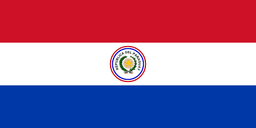
Alfredo Stroessner
General · Modern
50.8Total

Anastasio Somoza Garcia
General · Modern
46.7Total
Basic Information
Born
1912
1896
Died
2006
1956
Era
Modern
Modern
Nationality
Paraguay
Nicaragua
Occupation
General
General
Civilization
Western
Western
Score Comparison
Military (10%)
25.9
50.0
Political (20%)
48.0
46.6
Influence (20%)
54.9
56.4
Legacy (20%)
46.7
48.3
Leadership (15%)
78.0
40.0
Strategy (15%)
38.6
25.0
TOTAL
50.8
46.7
Alfredo Stroessner — Complete Timeline
1954 AD
1954 Coup and Rise to PowerPolitical Action◆ Major
General Alfredo Stroessner, with support from the military and the Colorado Party, led a coup d'
Coup d'étatCold WarDictatorship
Impact: nationaldestructive
Consolidation of Dictatorship and Repression (1954-1989)Political Action◆ Major
Stroessner established a repressive regime characterized by the suppression of political opposition, torture, and human rights abuses. He ruled under a state of siege for most of his tenure, using the military and police to crush dissent. His regime was marked by corruption and the concentration of power in the Colorado Party.
RepressionHuman RightsAuthoritarianism
Impact: nationaldestructive
1973 AD
Economic Development and Itaipu DamOther◆ Major
Stroessner's regime signed the Treaty of Itaipu with Brazil, leading to the construction of the Itaipu Dam, one of the world's largest hydroelectric plants. The project brought significant economic development and foreign investment to Paraguay, but also increased dependency on Brazil and was marred by corruption.
Itaipu DamEconomic DevelopmentHydroelectric
Impact: regionalconstructive
1989 AD
Overthrow and Exile (1989)Political Action◆ Major
Stroessner was overthrown in a coup led by his son-in-law, General Andr
CoupExileTransition to Democracy
Impact: nationalconstructive
Anastasio Somoza Garcia — Complete Timeline
1934 AD
Assassination of Sandino (1934)Political Action◆ Major
Anastasio Somoza Garc
AssassinationSandinoNational Guard
Impact: nationaldestructive
1937 AD
Presidency and Consolidation of Power (1937-1956)Political Action◆ Major
Somoza Garc
DictatorshipSomoza DynastyCorruption
Impact: nationaldestructive
1956 AD
Assassination (1956)Other◆ Major
Somoza Garc
AssassinationRigoberto López PérezDynasty
Impact: nationaltragic
Expert Analysis
Origins
Alfredo Stroessner was born on November 3, 1912, in Encarnación, Paraguay, to a German immigrant father and a Paraguayan mother. He entered the military academy at age 16, graduating as an artillery officer. His early career was marked by participation in the Chaco War (1932-1935) against Bolivia, where he gained combat experience. Stroessner rose through the ranks, becoming a general by 1948.
Anastasio Somoza García was born on February 1, 1896, in San Marcos, Nicaragua, to a wealthy coffee planter family. He studied in the United States at the Pierce School of Business Administration in Philadelphia. Upon returning to Nicaragua, he became involved in politics, serving as a deputy and later as a foreign minister. He was appointed as head of the National Guard in 1933 by President Juan Bautista Sacasa, his uncle by marriage.
Rise to Power
Stroessner's rise came through a coup on May 4, 1954, when he overthrew President Federico Chávez. He had the support of the military and the Colorado Party, and he quickly consolidated power. Stroessner was elected president in a controlled election later that year, beginning his 35-year dictatorship.
Somoza García's path to power was more gradual. He used his position as head of the National Guard to build a power base. On February 21, 1934, he ordered the assassination of rebel leader Augusto C. Sandino, removing a major obstacle. In 1936, he forced President Sacasa to resign and installed a puppet president. He was elected president in 1936 and took office on January 1, 1937.
Leadership & Governance
Stroessner ruled with an iron fist, suppressing all opposition through the use of torture, imprisonment, and exile. His regime was characterized by corruption and cronyism, with the Colorado Party serving as his political machine. He pursued economic development through the construction of the Itaipu Dam, a joint project with Brazil that became one of the largest hydroelectric plants in the world. However, the benefits largely went to the elite, and rural poverty remained widespread. Stroessner scored 78.0 in leadership, reflecting his ability to maintain power for decades.
Somoza García also established a repressive regime, using the National Guard to crush dissent. He amassed immense personal wealth through control of key industries, including land, mining, and transportation. His governance was deeply corrupt, with the Somoza family becoming one of the richest in Latin America. He was assassinated on September 29, 1956, by poet Rigoberto López Pérez. His leadership score of 40.0 indicates a less effective long-term rule compared to Stroessner.
Triumph & Tragedy
Stroessner's greatest triumph was his longevity in power, ruling for 35 years and overseeing the Itaipu Dam project, which transformed Paraguay's energy sector. His tragedy was the brutal repression that left thousands dead and a legacy of human rights abuses. His overthrow in 1989 by his son-in-law Andrés Rodríguez ended his rule in disgrace.
Somoza García's triumph was founding the Somoza dynasty, which ruled Nicaragua for over 40 years after his death. His tragedy was his assassination, which was a direct result of his oppressive policies. His son Luis Somoza Debayle and then his other son Anastasio Somoza Debayle continued the regime until 1979.
Character & Destiny
Stroessner was known for his cunning and patience. He skillfully balanced the military and the Colorado Party, ensuring loyalty through a network of patronage. His character was marked by a ruthless pragmatism that allowed him to survive numerous coup attempts. Historians often note his ability to adapt to changing circumstances, such as shifting alliances during the Cold War.
Somoza García was more flamboyant and direct. He used his personal charm and connections to build power, but his arrogance made enemies. His assassination revealed the vulnerability of a dictatorship dependent on one man. The dynasty he founded ultimately fell because of its inability to reform.
Legacy
Stroessner's legacy is mixed. The Itaipu Dam remains a major source of energy for Paraguay, but his human rights abuses continue to be condemned. He is remembered as a symbol of authoritarian rule. His scores: military 25.9, political 48.0, influence 54.9, legacy 46.7, leadership 78.0, strategy 38.6, total 50.8.
Somoza García's legacy is the Somoza dynasty, which left Nicaragua impoverished and divided. His family's rule led to the rise of the Sandinista revolution in 1979. He is viewed as a classic caudillo. His scores: military 50.0, political 46.6, influence 56.4, legacy 48.3, leadership 40.0, strategy 25.0, total 46.7.
Conclusion
Alfredo Stroessner had a greater impact on Paraguay than Somoza García had on Nicaragua, as evidenced by his higher total score (50.8 vs 46.7). Stroessner's 35-year rule was longer and more stable, and his influence on Paraguay's infrastructure and politics endures. Somoza García, while founding a dynasty, was cut down after 20 years in power, and his regime's collapse brought revolutionary change. Stroessner's leadership score of 78.0 far exceeds Somoza's 40.0, indicating a more effective control. Therefore, Stroessner's impact is greater.
Rankings
🥇
Alfredo StroessnerLeader
Mil: 25.9Pol: 48.0Inf: 54.9
50.8
🥈
Anastasio Somoza Garcia
Mil: 50.0Pol: 46.6Inf: 56.4
46.7
+4.1 behind
How This Comparison Works
Algorithm
Each figure is scored on 6 dimensions (0—100 scale) based on structured historical data: Military (10%), Political (20%), Influence (20%), Legacy (20%), Leadership (15%), Strategy (15%). The weighted total produces the final ranking.
Data Sources
Scores are computed from structured sub-indicators in the database. Scale factors adjust for era (Ancient ×0.85, Modern ×1.0) and civilization size (Eastern ×1.05, Other ×0.80) to account for differences in population and military scale.
Maximum 3 Figures
Comparisons are limited to 2—3 figures to ensure readability and statistical meaningfulness.
Error Margins
±5 points per dimension — Sub-scores are derived from historical records with inherent uncertainty. Two figures within 5 points on a dimension should be considered roughly equivalent in that area.
Total Score Accuracy
±3 points overall — The weighted combination of 6 dimensions produces a total score with approximately ±3 points of uncertainty. Differences of less than 3 points are not statistically significant— the figures are effectively tied.
Known Limitations
- Historical records are incomplete and uneven across civilizations
- Figures from oral-tradition societies may be underrepresented
- Occupation labels can misclassify multi-role figures
- Scores measure capability and impact, not moral character
- Quantitative scoring is a comparison tool, not absolute truth
Capability Radar
Military (10%) — Battles & Warfare
Battles
10
15
Win Rate
10
20
Expansion
10
10
Political (20%) — Governance & Reform
Reform
30
20
Diplomacy
40
50
Economy
35
30
Influence (20%) — Cultural & Global Reach
Cultural
20
20
Global
30
30
Legacy (20%) — Historical Impact
Historical
40
40
Longevity
30
40
Leadership (15%) — Power & Stability
Tenure
85
70
Stability
60
25
Strategy (15%) — Tactics & Innovation
Strategy
20
15
Tactics
15
10
Reform
25
10
Similar Comparisons
Comments & Discussion
No comments yet. Be the first to share your thoughts!