Loading...
Analysis will be generated on first visit.
Scores and timeline are available below. The page will refresh automatically when ready.
Alfonso X the Wise vs Napoleon Bonaparte
Napoleon Bonaparte leads by 16.2 pts · 2 figures compared
…
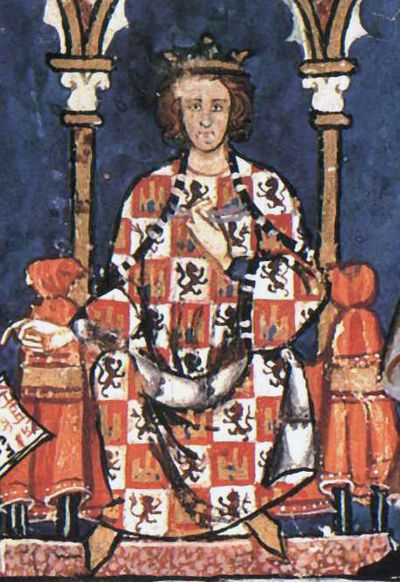
Alfonso X the Wise
Emperor · Medieval
66.2Total
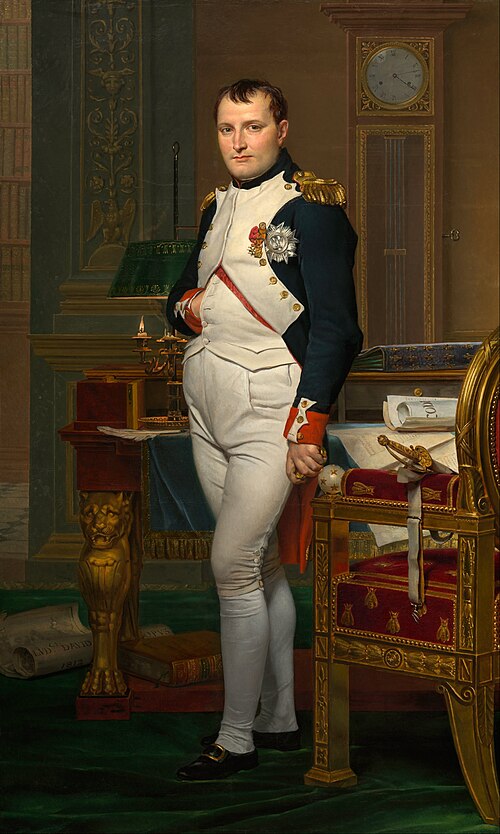
Napoleon Bonaparte
General · Modern
82.4Total
Basic Information
Born
1221
1769
Died
1284
1821
Era
Medieval
Modern
Nationality
Castile
France
Occupation
Emperor
General
Civilization
Western
Western
Score Comparison
Military (10%)
22.0
94.0
Political (20%)
83.9
75.0
Influence (20%)
70.5
82.0
Legacy (20%)
60.0
78.0
Leadership (15%)
82.2
80.0
Strategy (15%)
58.9
93.0
TOTAL
66.2
82.4
Rankings
🥇
Napoleon BonaparteLeader
Mil: 94.0Pol: 75.0Inf: 82.0
82.4
🥈
Alfonso X the Wise
Mil: 22.0Pol: 83.9Inf: 70.5
66.2
+16.2 behind
How This Comparison Works
Algorithm
Each figure is scored on 6 dimensions (0—100 scale) based on structured historical data: Military (10%), Political (20%), Influence (20%), Legacy (20%), Leadership (15%), Strategy (15%). The weighted total produces the final ranking.
Data Sources
Scores are computed from structured sub-indicators in the database. Scale factors adjust for era (Ancient ×0.85, Modern ×1.0) and civilization size (Eastern ×1.05, Other ×0.80) to account for differences in population and military scale.
Maximum 3 Figures
Comparisons are limited to 2—3 figures to ensure readability and statistical meaningfulness.
Error Margins
±5 points per dimension — Sub-scores are derived from historical records with inherent uncertainty. Two figures within 5 points on a dimension should be considered roughly equivalent in that area.
Total Score Accuracy
±3 points overall — The weighted combination of 6 dimensions produces a total score with approximately ±3 points of uncertainty. Differences of less than 3 points are not statistically significant— the figures are effectively tied.
Known Limitations
- Historical records are incomplete and uneven across civilizations
- Figures from oral-tradition societies may be underrepresented
- Occupation labels can misclassify multi-role figures
- Scores measure capability and impact, not moral character
- Quantitative scoring is a comparison tool, not absolute truth
Capability Radar
Military (10%) — Battles & Warfare
Battles
20
95
Win Rate
15
90
Expansion
10
95
Political (20%) — Governance & Reform
Reform
85
95
Diplomacy
50
80
Economy
40
85
Influence (20%) — Cultural & Global Reach
Cultural
85
85
Global
65
90
Legacy (20%) — Historical Impact
Historical
80
95
Longevity
75
90
Leadership (15%) — Power & Stability
Tenure
60
85
Stability
30
70
Strategy (15%) — Tactics & Innovation
Strategy
15
95
Tactics
10
98
Reform
30
92
Analysis will be generated on first visit.
Scores and timeline are available below. The page will refresh automatically when ready.
Alfonso X the Wise — Complete Timeline
1252 AD
Promotion of the Toledo School of TranslatorsCultural◆ Major
Alfonso X expanded the Toledo School of Translators, sponsoring the translation of Arabic works on astronomy, mathematics, philosophy, and medicine into Latin and Castilian. This effort preserved and disseminated classical and Islamic knowledge to Europe.
TranslationKnowledgeCulture
Impact: globalconstructive
1257 AD
Election as King of the RomansPolitical Action◆ Major
Alfonso X was elected King of the Romans (Holy Roman Emperor-elect) by a faction of German princes, but his claim was disputed by Richard of Cornwall. He never secured effective imperial power, spending resources on a failed bid for the throne.
ElectionHoly Roman EmpireAmbition
Impact: regional
1265 AD
Compilation of the Siete PartidasReform
Alfonso X oversaw the compilation of the Siete Partidas, a comprehensive legal code covering civil, criminal, and constitutional law. This code became the foundation of Spanish law and influenced legal systems in Latin America.
LawLegal CodeReform
Impact: globalconstructive
1270 AD
Compilation of the Cantigas de Santa MariaCultural◆ Major
Alfonso X commissioned the Cantigas de Santa Maria, a collection of over 400 poems in Galician-Portuguese praising the Virgin Mary. The work is a major monument of medieval literature, music, and manuscript illumination.
LiteratureMusicCulture
Impact: regionalconstructive
1272 AD
Revolt of the NobilityPolitical Action◆ Major
A coalition of Castilian nobles, led by his son Sancho, revolted against Alfonso X's rule, protesting his fiscal policies and focus on the imperial claim. The revolt weakened royal authority and led to a period of instability.
RevoltNobilityCivil Conflict
Impact: nationaldestructive
Similar Comparisons
Comments & Discussion
No comments yet. Be the first to share your thoughts!