Loading...
This comparison has not been analyzed yet.
One-time AI generation (~1 minute). Scores and timeline are already available below.
Alfonso VII of Leon vs Danjong of Joseon
Alfonso VII of Leon leads by 4.3 pts · 2 figures compared
…
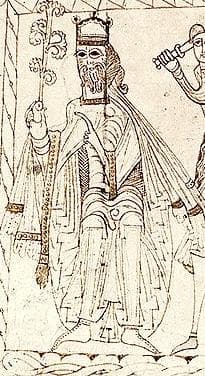
Alfonso VII of Leon
Emperor · Medieval
55.8Total

Danjong of Joseon
Emperor · Medieval
51.5Total
Basic Information
Born
1105
1441
Died
1157
1457
Era
Medieval
Medieval
Nationality
Leon
Korea
Occupation
Emperor
Emperor
Civilization
Western
Eastern
Score Comparison
Military (10%)
72.5
53.7
Political (20%)
68.0
68.0
Influence (20%)
58.0
52.5
Legacy (20%)
48.3
35.8
Leadership (15%)
40.0
45.0
Strategy (15%)
57.5
71.5
TOTAL
55.8
51.5
Alfonso VII of Leon — Complete Timeline
1135 AD
Coronation as Emperor of All SpainPolitical Action◆ Major
Alfonso VII was crowned Emperor of All Spain in the Cathedral of Leon, claiming imperial authority over all Christian and Muslim rulers in the Iberian Peninsula. This coronation asserted Leon's supremacy over Castile, Aragon, and Navarre.
CoronationImperial TitleLeon
Impact: regionalconstructive
1147 AD
Conquest of AlmeriaWar◆ Major
Alfonso VII led a coalition of Leon, Castile, Genoese, and Pisan forces to capture the wealthy Moorish port city of Almeria. The conquest opened the Mediterranean to Christian trade and was a major victory in the Reconquista.
ReconquistaConquestAlmeria
Impact: regionalconstructive
1151 AD
Treaty of TudejénPolitical Action
Alfonso VII signed the Treaty of Tudej
TreatyReconquistaPartition
Impact: regionalconstructive
1157 AD
Death and Division of the KingdomPolitical Action◆ Major
Alfonso VII died, dividing his kingdom between his sons: Sancho III received Castile and Ferdinand II received Leon. This division reversed the union achieved by his father and weakened Christian power in Iberia.
SuccessionDivisionLeonCastile
Impact: regionaldestructive
Danjong of Joseon — Complete Timeline
1452 AD
Accession to the thronePolitical Action◆ Major
Danjong became king of Joseon at age 12 following the death of his father, King Munjong. His youth made him vulnerable to power struggles among the court, particularly from his uncle, Grand Prince Suyang (later Sejo).
SuccessionJoseon Dynasty
Impact: national
1455 AD
Deposition by SejoPolitical Action
Danjong was forced to abdicate by his uncle, Grand Prince Suyang, who seized the throne as King Sejo. Danjong was demoted to the rank of prince and placed under house arrest, ending his brief reign.
CoupUsurpationJoseon Dynasty
Impact: nationaltragic
1456 AD
Execution of loyalist ministersPolitical Action◆ Major
Six loyalist ministers (Sayuksin) who plotted to restore Danjong to the throne were discovered and executed by Sejo. The failed plot intensified Sejo's persecution of Danjong's supporters.
PurgeLoyalistsJoseon Dynasty
Impact: nationaltragic
1457 AD
Murder by SejoPolitical Action
Danjong was murdered on Sejo's orders, likely by poisoning or forced suicide, at age 16. His death eliminated the last threat to Sejo's rule and solidified the usurper's hold on the throne.
AssassinationJoseon DynastyUsurpation
Impact: nationaltragic
This comparison has not been analyzed yet.
One-time AI generation (~1 minute). Scores and timeline are already available below.
Rankings
🥇
Alfonso VII of LeonLeader
Mil: 72.5Pol: 68.0Inf: 58.0
55.8
🥈
Danjong of Joseon
Mil: 53.7Pol: 68.0Inf: 52.5
51.5
+4.3 behind
How This Comparison Works
Algorithm
Each figure is scored on 6 dimensions (0—100 scale) based on structured historical data: Military (10%), Political (20%), Influence (20%), Legacy (20%), Leadership (15%), Strategy (15%). The weighted total produces the final ranking.
Data Sources
Scores are computed from structured sub-indicators in the database. Scale factors adjust for era (Ancient ×0.85, Modern ×1.0) and civilization size (Eastern ×1.05, Other ×0.80) to account for differences in population and military scale.
Maximum 3 Figures
Comparisons are limited to 2—3 figures to ensure readability and statistical meaningfulness.
Error Margins
±5 points per dimension — Sub-scores are derived from historical records with inherent uncertainty. Two figures within 5 points on a dimension should be considered roughly equivalent in that area.
Total Score Accuracy
±3 points overall — The weighted combination of 6 dimensions produces a total score with approximately ±3 points of uncertainty. Differences of less than 3 points are not statistically significant— the figures are effectively tied.
Known Limitations
- Historical records are incomplete and uneven across civilizations
- Figures from oral-tradition societies may be underrepresented
- Occupation labels can misclassify multi-role figures
- Scores measure capability and impact, not moral character
- Quantitative scoring is a comparison tool, not absolute truth
Capability Radar
Military (10%) — Battles & Warfare
Battles
55
45
Win Rate
60
50
Expansion
65
49
Political (20%) — Governance & Reform
Reform
50
0
Diplomacy
60
0
Economy
45
0
Influence (20%) — Cultural & Global Reach
Cultural
45
5
Global
35
0
Legacy (20%) — Historical Impact
Historical
50
10
Longevity
40
5
Leadership (15%) — Power & Stability
Tenure
65
5
Stability
50
0
Strategy (15%) — Tactics & Innovation
Strategy
55
55
Tactics
50
54
Reform
40
61
Similar Comparisons
Comments & Discussion
No comments yet. Be the first to share your thoughts!